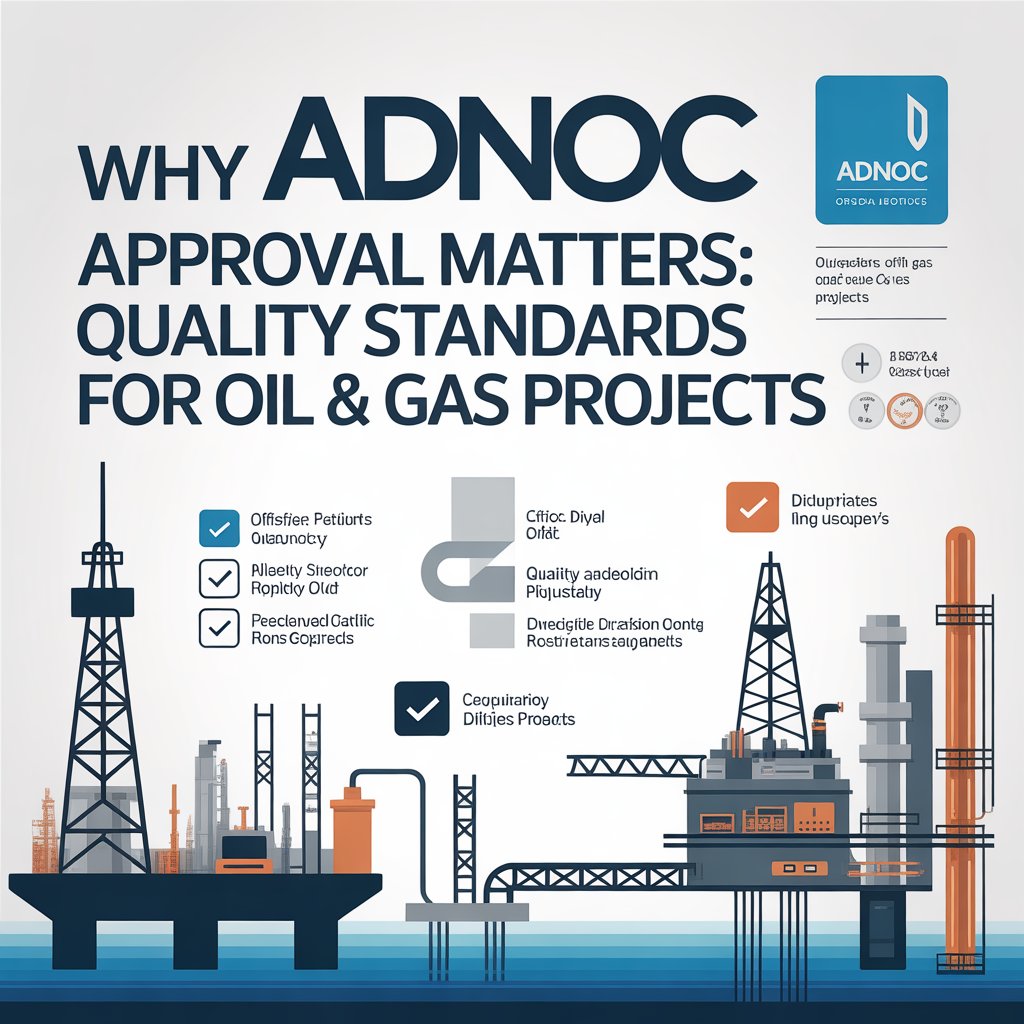
ADNOC Approval is a cornerstone of excellence in the oil and gas sector, ensuring that projects meet rigorous standards for safety, efficiency, and sustainability. As the Abu Dhabi National Oil Company (ADNOC) continues to lead global energy initiatives, obtaining ADNOC Approval has become indispensable for companies and professionals aiming to participate in high-stakes ventures. This certification not only upholds quality but also opens doors to lucrative opportunities in the UAE and beyond. In this blog, we’ll explore what ADNOC Approval entails, its significance, and how it benefits both domestic and international stakeholders.
What Is ADNOC Approval?
ADNOC Approval refers to the official certification or pre-qualification process issued by the Abu Dhabi National Oil Company. It verifies that individuals, contractors, vendors, or equipment meet ADNOC’s stringent criteria for technical expertise, safety protocols, and operational reliability. This approval is mandatory for anyone involved in ADNOC’s oil and gas projects, from engineers and supervisors to full-scale contractors.
At its core, ADNOC Approval acts as a gatekeeper, aligning participants with ADNOC’s commitment to world-class standards. For instance, it covers areas like Health, Safety, and Environment (HSE) compliance, technical qualifications, and experience in handling complex oil and gas operations. Without this endorsement, participation in ADNOC-led initiatives is restricted, emphasizing the company’s focus on risk mitigation and quality assurance.
For domestic audiences in the UAE, this process is familiar as a regulatory norm within the local energy ecosystem. Internationally, it represents a benchmark for global best practices, similar to certifications from organizations like API or ISO, but tailored to ADNOC’s specific operational environment.
The Importance of ADNOC Approval in the Oil & Gas Industry
In an industry where safety breaches can lead to catastrophic consequences, ADNOC Approval plays a pivotal role in maintaining integrity. ADNOC, one of the world’s largest energy producers, demands this approval to standardize operations across its vast portfolio of upstream, midstream, and downstream projects.
Why does it matter? First, it ensures compliance with ADNOC quality requirements, which include financial stability, environmental stewardship, and innovative practices. This reduces project risks, such as delays or accidents, by verifying that all parties adhere to high benchmarks. For example, approved entities must demonstrate proficiency in handling ultra-sour gas or high-pressure environments, which are common in UAE fields.
Globally, ADNOC Approval signals trustworthiness. International companies seeking partnerships with ADNOC view it as a mark of credibility, facilitating smoother collaborations and access to emerging markets. Domestically, it supports the UAE’s vision for economic diversification, as outlined in strategies like the UAE Energy Strategy 2050, by fostering a skilled workforce and reliable supply chains.
Moreover, in an era of energy transition, ADNOC Approval incorporates sustainability elements, aligning with global efforts to reduce carbon footprints. This makes it relevant for international investors focused on ESG (Environmental, Social, and Governance) criteria.
ADNOC Approval Standards Explained
Understanding ADNOC approval standards is key to appreciating their impact. These standards encompass a comprehensive evaluation framework, including:
- Technical Competence: Applicants must prove expertise in areas like drilling, pipeline integrity, and reservoir management. This involves submitting detailed portfolios and undergoing audits.
- Safety and HSE Protocols: Alignment with ADNOC quality requirements mandates rigorous safety training and compliance with international norms like OSHA or ADNOC’s own HSE guidelines.
- Financial and Operational Viability: Companies need to show financial health and operational track records to ensure they can sustain long-term projects.
- Environmental Compliance: Emphasis on low-emission technologies and waste management reflects ADNOC’s push toward net-zero goals.
These ADNOC approval standards are not static; they evolve with industry advancements, such as AI-driven monitoring or carbon capture integration. For domestic firms in Abu Dhabi or Dubai, this means staying updated with local regulations. Internationally, it requires adapting to UAE-specific requirements, often through partnerships with approved local entities.
By enforcing these standards, ADNOC minimizes liabilities and enhances project efficiency, ultimately contributing to the UAE’s hydrocarbon reserve management and global energy supply stability.
Benefits for Domestic and International Businesses
Securing ADNOC Approval offers tangible advantages. Domestically, it empowers UAE-based companies to compete in a thriving market, where ADNOC’s investments exceed $150 billion in the coming years. This creates jobs, boosts local economies, and promotes knowledge transfer.
For international businesses, ADNOC Approval unlocks access to one of the most stable oil markets. It facilitates joint ventures, technology exchanges, and entry into Middle Eastern supply chains. Companies from Europe, Asia, or the Americas can leverage this to diversify their portfolios, especially amid volatile global energy prices.
Additionally, approved status enhances a company’s reputation worldwide, making it easier to win contracts elsewhere. The focus on ADNOC quality requirements also drives innovation, encouraging investments in R&D for sustainable solutions.
In essence, whether you’re a local contractor in Al Ain or a multinational in Houston, ADNOC Approval levels the playing field by prioritizing quality over mere cost-cutting.
How to Obtain ADNOC Approval
Navigating the process requires preparation. Start by reviewing ADNOC’s official guidelines on their website or through authorized consultants. Key steps include:
- Application Submission: Provide documentation on qualifications, experience, and compliance with ADNOC approval standards.
- Evaluation and Audits: Undergo technical reviews, site inspections, and interviews.
- Training and Certification: Complete required HSE or technical training programs.
- Approval Issuance: Upon success, receive the endorsement, valid for a specified period.
Timelines vary, but thorough preparation can expedite it. Domestic applicants benefit from proximity to ADNOC’s Abu Dhabi headquarters, while international ones may need local representatives. Costs involve application fees and potential upgrades to meet ADNOC quality requirements.
Conclusion
ADNOC Approval is more than a certification—it’s a commitment to excellence that safeguards the future of oil and gas projects. By adhering to robust ADNOC approval standards and ADNOC quality requirements, stakeholders ensure safer, more efficient operations that benefit everyone from local communities to global markets. As ADNOC expands its influence, embracing this approval will be key for sustained success in the energy landscape.