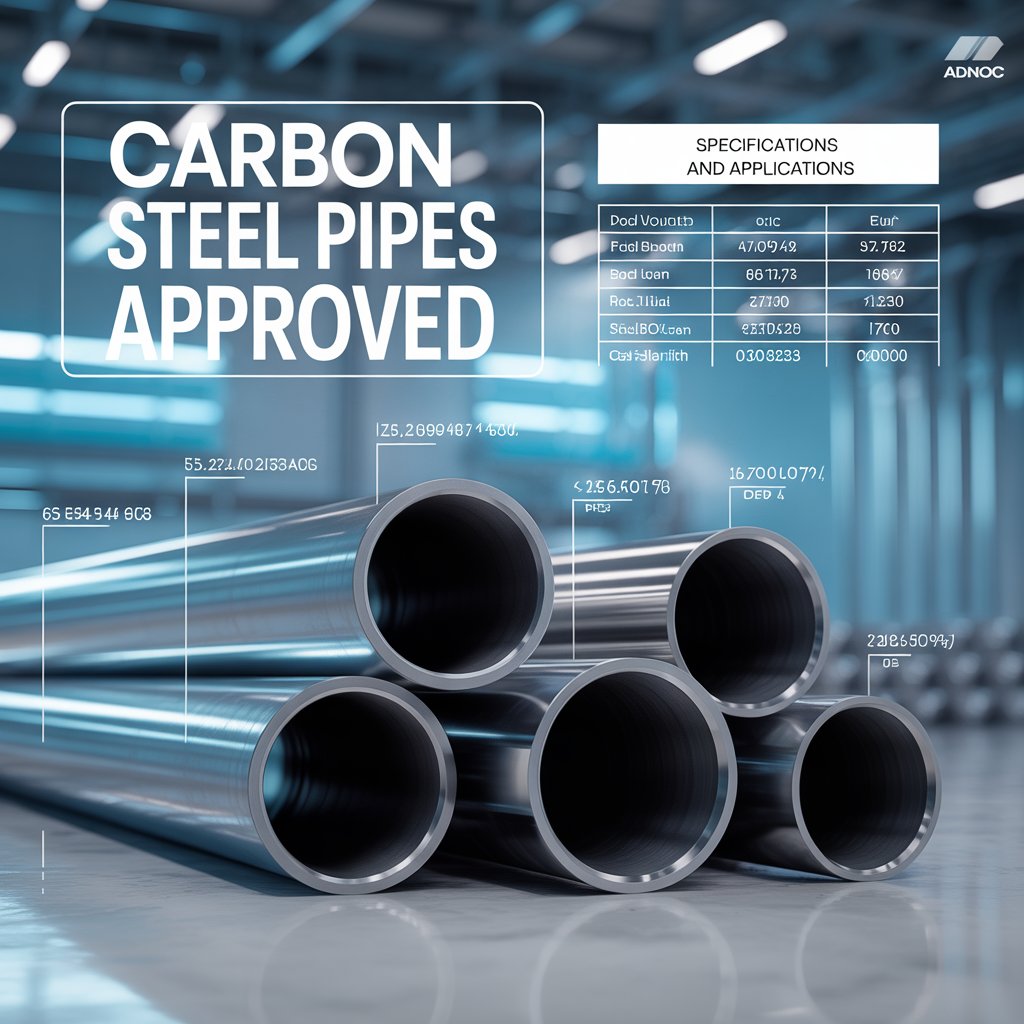
Carbon Steel Pipes play a critical role in modern industrial infrastructure, especially in sectors such as oil & gas, petrochemicals, power, and construction. For companies working with high-standard projects in the Middle East and global energy markets, using ADNOC Approved Pipes ensures reliability, safety, and compliance with strict operational requirements.
This guide explains the key Carbon Steel Pipe Specifications, major Carbon Steel Pipe Applications, and why ADNOC approval matters for both domestic and international industrial projects.
What Are Carbon Steel Pipes?
Carbon Steel Pipes are manufactured using steel with varying carbon content, which enhances strength, durability, and resistance to pressure and temperature. These pipes are widely used for fluid transportation, structural support, and process systems across multiple industries.
Their advantages include:
- High tensile strength
- Excellent durability under extreme conditions
- Cost-effectiveness compared to alloy materials
- Suitability for high-pressure environments
Because of these properties, Carbon Steel Pipes are a preferred choice for large-scale infrastructure and energy projects worldwide.
Importance of ADNOC Approval
The Abu Dhabi National Oil Company (ADNOC) follows strict quality and safety standards for materials used in its operations. ADNOC Approved Pipes meet rigorous testing, manufacturing, and certification requirements.
Why ADNOC approval matters:
- Ensures compliance with international oil & gas standards
- Guarantees material traceability and quality control
- Reduces operational risk and failure rates
- Enhances supplier credibility in global markets
For manufacturers and suppliers, offering ADNOC Approved Pipes improves trust and opens opportunities in high-value international projects.
Key Carbon Steel Pipe Specifications
Understanding Carbon Steel Pipe Specifications is essential for selecting the right material for industrial applications.
1. Material Grades
Common grades include:
- ASTM A106 (Seamless pipes for high temperature service)
- ASTM A53 (General structural and pressure applications)
- API 5L (Oil and gas transmission pipelines)
Each grade is designed to meet specific pressure, temperature, and environmental conditions.
2. Manufacturing Types
- Seamless Pipes – Ideal for high-pressure and critical systems
- ERW (Electric Resistance Welded) – Suitable for general industrial use
- LSAW/SSAW – Used for large-diameter pipeline projects
3. Size and Dimensions
Carbon Steel Pipe Specifications include:
- Nominal pipe size (NPS)
- Wall thickness (Schedule 10 to Schedule 160)
- Length (standard or custom)
4. Testing and Certification
Quality checks typically include:
- Hydrostatic testing
- Non-destructive testing (NDT)
- Chemical and mechanical analysis
- Mill test certificates (MTC)
These standards ensure Carbon Steel Pipes meet global performance and safety expectations.
Major Carbon Steel Pipe Applications
The versatility of Carbon Steel Pipe Applications makes them essential across multiple industries.
Oil and Gas Industry
One of the primary Carbon Steel Pipe Applications is transporting crude oil, natural gas, and refined products. ADNOC Approved Pipes are widely used in upstream, midstream, and downstream operations.
Petrochemical and Refining Plants
These pipes handle high-pressure fluids, steam, and chemical processes, where durability and corrosion resistance are critical.
Power Generation
Thermal and power plants rely on Carbon Steel Pipes for boiler systems, steam lines, and cooling water transport.
Water and Infrastructure Projects
Municipal and industrial water systems use carbon steel for large-scale distribution networks and structural support.
Construction and Structural Use
Another important area among Carbon Steel Pipe Applications includes structural frameworks, piling, and heavy engineering projects.
Benefits for Domestic and International Projects
For domestic manufacturers and global contractors, Carbon Steel Pipes offer several strategic advantages:
- Compliance with international standards (ASTM, API, ISO)
- Compatibility with large infrastructure and energy projects
- Long service life with proper coating and maintenance
- Easy availability and cost efficiency
When combined with ADNOC Approved Pipes, businesses gain access to Middle East energy projects and improve their global market positioning.
Quality Assurance and Coating Options
To enhance performance, Carbon Steel Pipes are often supplied with protective coatings such as:
- 3LPE / 3LPP coating for corrosion resistance
- Fusion Bonded Epoxy (FBE)
- Galvanization for general applications
- Internal lining for fluid transport systems
These protective measures extend service life and reduce maintenance costs, especially in harsh environments.
Choosing the Right Supplier
Selecting a reliable supplier is essential for ensuring compliance and performance.
Look for:
- Experience in supplying ADNOC Approved Pipes
- Complete documentation and certifications
- Strong quality control processes
- Global export capability
- Technical support for Carbon Steel Pipe Specifications
A trusted supplier ensures smooth project execution and long-term operational reliability.
Conclusion
Carbon Steel Pipes remain a backbone of modern industrial and energy infrastructure. With clearly defined Carbon Steel Pipe Specifications and wide-ranging Carbon Steel Pipe Applications, they support critical operations across domestic and international markets.
For high-value oil and gas projects, sourcing ADNOC Approved Pipes ensures compliance, safety, and performance under demanding conditions. By choosing quality-certified materials and experienced suppliers, businesses can achieve operational efficiency, regulatory compliance, and long-term project success.
As global infrastructure and energy demands continue to grow, investing in high-quality Carbon Steel Pipes is not just a technical decision—it is a strategic one for sustainable industrial development.