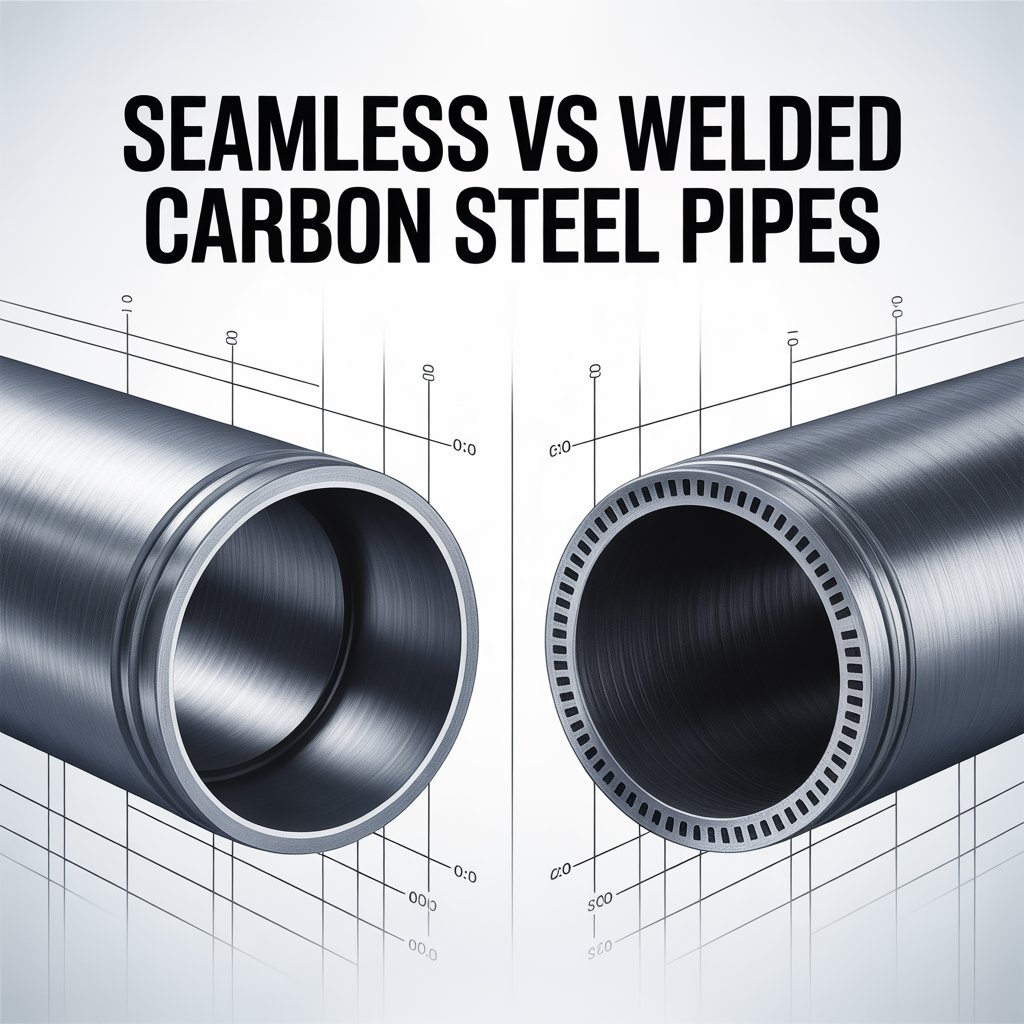
Seamless vs welded carbon steel pipes are fundamental components in modern industrial and commercial infrastructure. From oil refineries in the UAE to construction projects across the world, these pipes play a critical role in ensuring safe and efficient operations.
For domestic buyers, international contractors, and even business travelers exploring industrial markets, understanding the right type of pipe can significantly impact project success. This guide explains the key differences between seamless and welded pipes, along with insights into carbon steel pipe types and their applications.
Understanding Carbon Steel Pipes
Carbon steel pipes are made from an alloy of iron and carbon, offering high strength, durability, and cost-effectiveness. They are widely used in industries such as oil & gas, construction, water supply, and power generation.
Carbon steel pipes are mainly divided into two types:
- Seamless pipes
- Welded pipes
Each type has unique features suitable for specific applications.
What Are Seamless Pipes?
Seamless pipes are manufactured without any welding joints. They are formed by heating a solid steel billet and shaping it into a hollow tube.
Key Features
- No welded seam
- High pressure resistance
- Uniform structure
- Superior strength
Applications
- Oil and gas exploration
- Petrochemical industries
- Power plants
- High-temperature systems
Seamless pipes are highly preferred in critical environments where safety and performance are non-negotiable. Many industries in the UAE rely on them for projects requiring ADNOC-approved pipes,
which demand strict quality standards.
What Are Welded Pipes?
Welded pipes are produced by rolling steel plates or strips and joining the edges using a welding process. They are widely used across industrial and commercial applications.
Key Features
- Presence of a welded joint
- Cost-effective production
- Available in large diameters
- Flexible for various uses
Applications
- Water distribution systems
- Structural construction
- Low-pressure industries
- Transporting fluids
Welded pipes are a practical choice for projects where cost efficiency and easy availability are important.
Difference Between Seamless and Welded Pipes
Understanding these differences helps engineers, contractors, and procurement teams choose the right product.
- Manufacturing Process
- Seamless pipes are made without joints.
- Welded pipes are produced by joining metal edges.
- Strength & Durability
- Seamless pipes offer higher strength for high-pressure environments.
- Welded pipes are ideal for moderate conditions.
- Cost
- Seamless pipes are more expensive due to complex production.
- Welded pipes are budget-friendly.
- Performance
- Seamless pipes perform better under extreme temperatures and pressures.
- Welded pipes are suitable for standard applications.
- Availability
- Welded pipes are more widely available in large sizes.
Carbon Steel Pipe Types and Applications Across Industries
A closer look at carbon steel pipe types shows their importance across sectors:
Oil and Gas Industry
Seamless pipes are used for high-pressure drilling and transportation systems, ensuring safety in critical operations.
Construction Industry
Welded pipes are preferred for structural applications in buildings, bridges, and infrastructure projects.
Water and Utilities
Welded pipes are ideal for water supply systems due to cost-effectiveness and wide availability.
Power and Energy
Seamless pipes are used for boilers, heat exchangers, and systems requiring high-temperature resistance.
In UAE-based projects, materials often need to meet global certifications, including ADNOC-approved pipe standards, ensuring long-term reliability.
How to Choose the Right Pipe
Your choice depends on your project requirements:
Choose Seamless Pipes If:
- High pressure is involved
- Temperature conditions are extreme
- Safety is the top priority
Choose Welded Pipes If:
- Budget is limited
- You need large-diameter pipes
- Application involves low to medium pressure
Key Buying Factors for Local and Global Buyers
Whether in the UAE or internationally, consider the following:
- Quality certifications
- Compliance with global standards
- Supplier reputation
- Delivery timelines
- Cost vs performance
UAE industries often prioritize materials that meet ADNOC approval to ensure operational safety and efficiency.
Global Market Trends
Global demand for carbon steel pipes continues to rise due to rapid industrial growth and infrastructure development. The Middle East, especially the UAE, remains a major hub for industrial materials.
International buyers frequently look for accurate information about carbon steel pipe types before procurement. Understanding the difference between seamless and welded pipes provides a strong advantage in decision-making.
Conclusion
The comparison between seamless vs welded carbon steel pipes is essential for anyone involved in industrial projects. Each type offers unique benefits, and the right choice depends on your specific application.
By understanding the differences and exploring various carbon steel pipe applications, businesses can achieve better performance, improved safety, and optimized costs. Whether you are a local contractor or an international buyer, making an informed decision ensures long-term project success.