Pipe flange pressure ratings are a critical factor in industrial piping systems, helping engineers, contractors, and global buyers understand how much pressure a flange can safely handle. Whether you are sourcing components internationally or managing industrial projects, knowing these standards ensures safety, compatibility, and efficiency.
This guide simplifies Pipe flange pressure ratings for both domestic and international audiences, explaining key standards like ANSI, DIN, and JIS in an easy-to-understand way.
WHAT ARE PIPE FLANGE PRESSURE RATINGS?
Pipe flange pressure ratings refer to the maximum pressure a flange can withstand at a specific temperature. These ratings are standardized to ensure that flanges used in pipelines are safe and compatible across different systems.
Key factors influencing ratings include:
- Material type
- Temperature conditions
- Design and thickness
- Manufacturing standards
Understanding Pipe flange pressure ratings helps prevent leaks, failures, and costly downtime in industrial operations.
WHY ARE FLANGE STANDARDS IMPORTANT?
Global industries rely on standardized systems to ensure consistency. This is where ANSI DIN JIS flange standards explained becomes important.
Different regions follow different standards:
- ANSI (American)
- DIN (European/German)
- JIS (Japanese)
Using the correct standard ensures:
- Proper fitting and sealing
- International compatibility
- Safety compliance
ANSI FLANGE PRESSURE RATINGS
ANSI (American National Standards Institute) is widely used in the US and many international projects.
Common ANSI Pressure Classes
- Class 150
- Class 300
- Class 600
- Class 900
- Class 1500
- Class 2500
These classes are part of flange pressure rating chart and standards, defining pressure limits at different temperatures.
Key Features
- Measured in pressure classes (lbs)
- Widely accepted in oil & gas industries
- Compatible with ASME standards
DIN FLANGE PRESSURE RATINGS
DIN (Deutsches Institut für Normung) is commonly used in Europe and parts of Asia.
Common DIN Ratings
- PN6
- PN10
- PN16
- PN25
- PN40
These PN values are also included in flange pressure rating chart and standards.
Key Features
- Measured in PN (bar)
- Strong presence in European markets
- Metric-based system
JIS FLANGE PRESSURE RATINGS
JIS (Japanese Industrial Standards) is used mainly in Japan and some Asian countries.
Common JIS Ratings
- 5K
- 10K
- 16K
- 20K
These ratings differ from ANSI and DIN, making ANSI DIN JIS flange standards explained essential for global projects.
Key Features
- Measured in “K” ratings
- Used in marine and industrial sectors
- Requires careful compatibility checks
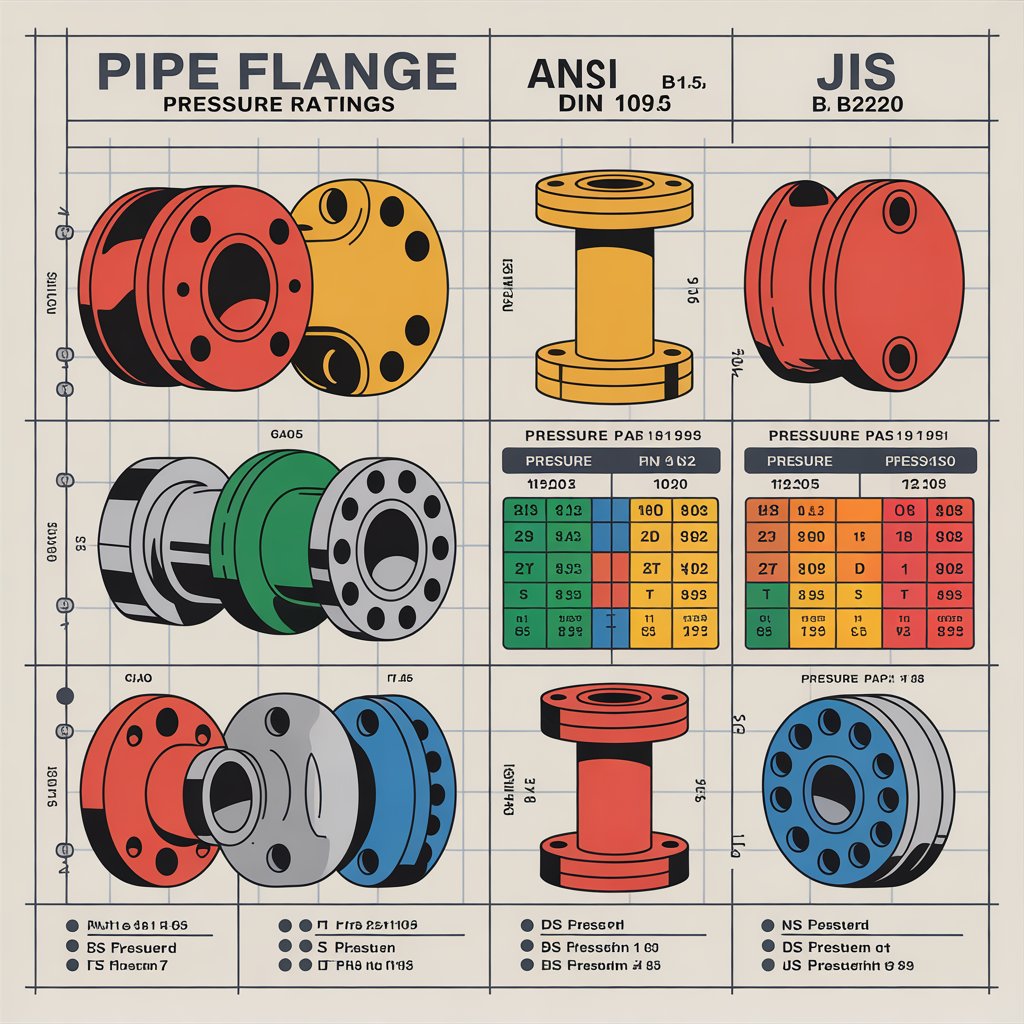
FLANGE PRESSURE RATING CHART AND STANDARDS
A flange pressure rating chart and standards reference helps compare different systems used across industries. Each standard follows its own rating method, such as class ratings in ANSI, PN values in DIN, and K ratings in JIS.
Understanding these differences is essential when selecting flanges for international or multi-standard projects. It ensures proper compatibility, safe operation, and accurate pressure handling across various industrial applications.
HOW TO CHOOSE THE RIGHT FLANGE RATING
Selecting the correct Pipe flange pressure ratings depends on:
1. Operating Pressure and Temperature
Higher temperatures reduce pressure capacity, so always check rating charts.
2. Industry Standards
Ensure compatibility with ANSI, DIN, or JIS depending on your project location.
3. Material Selection
Different materials (carbon steel, stainless steel) affect performance.
4. Application Type
Oil & gas, water supply, and chemical industries have different requirements.
COMMON MISTAKES TO AVOID
When dealing with Pipe flange pressure ratings, avoid:
- Mixing different standards without verification
- Ignoring temperature effects
- Using incorrect rating charts
- Overlooking compatibility between ANSI, DIN, and JIS
Understanding ANSI DIN JIS flange standards explained helps avoid these costly errors.
WHY THIS KNOWLEDGE MATTERS GLOBALLY
For international buyers and suppliers, understanding Pipe flange pressure ratings ensures:
- Smooth procurement processes
- Reduced risk in cross-border projects
- Better communication with manufacturers
- Compliance with global safety standards
FREQUENTLY ASKED QUESTIONS (AEO OPTIMIZED)
What is the difference between ANSI and DIN flange ratings?
ANSI uses class ratings, while DIN uses PN (pressure nominal) values.
Can ANSI, DIN, and JIS flanges be used together?
Not always. Compatibility depends on dimensions and pressure ratings.
Where can I find a flange pressure rating chart?
You can refer to standard engineering charts or manufacturer specifications under flange pressure rating chart and standards.
FINAL THOUGHTS
Pipe flange pressure ratings play a vital role in ensuring safety, efficiency, and compatibility in industrial piping systems. By understanding ANSI DIN JIS flange standards explained, businesses and engineers can make informed decisions and avoid costly mistakes.
Whether you are working on local projects or international supply chains, having a clear understanding of flange pressure rating chart and standards will help you choose the right components with confidence.