Flange types in Sharjah form the backbone of safe and efficient piping systems across the emirate’s dynamic oil, gas, and petrochemical sectors. Located in the heart of the UAE’s industrial landscape, Sharjah hosts numerous facilities where these critical components connect pipelines, valves, and equipment under extreme pressures, temperatures, and corrosive conditions.
This expert guide explains the most common flange types in Sharjah, their applications, and selection factors. Whether you are a local engineer, international project manager, or procurement professional, you will find clear, practical insights tailored for both domestic and global audiences.
Why Flanges Matter in Sharjah’s Industrial Landscape
Sharjah’s strategic position, modern free zones, and proximity to major ports make it a hub for energy and petrochemical activities. Flanges must withstand high-pressure pipelines, aggressive chemicals, and harsh desert climates.
Proper selection ensures leak-free connections, regulatory compliance, and long-term operational reliability. Most flange types in Sharjah follow international standards such as ASME B16.5, which is widely adopted across the UAE.
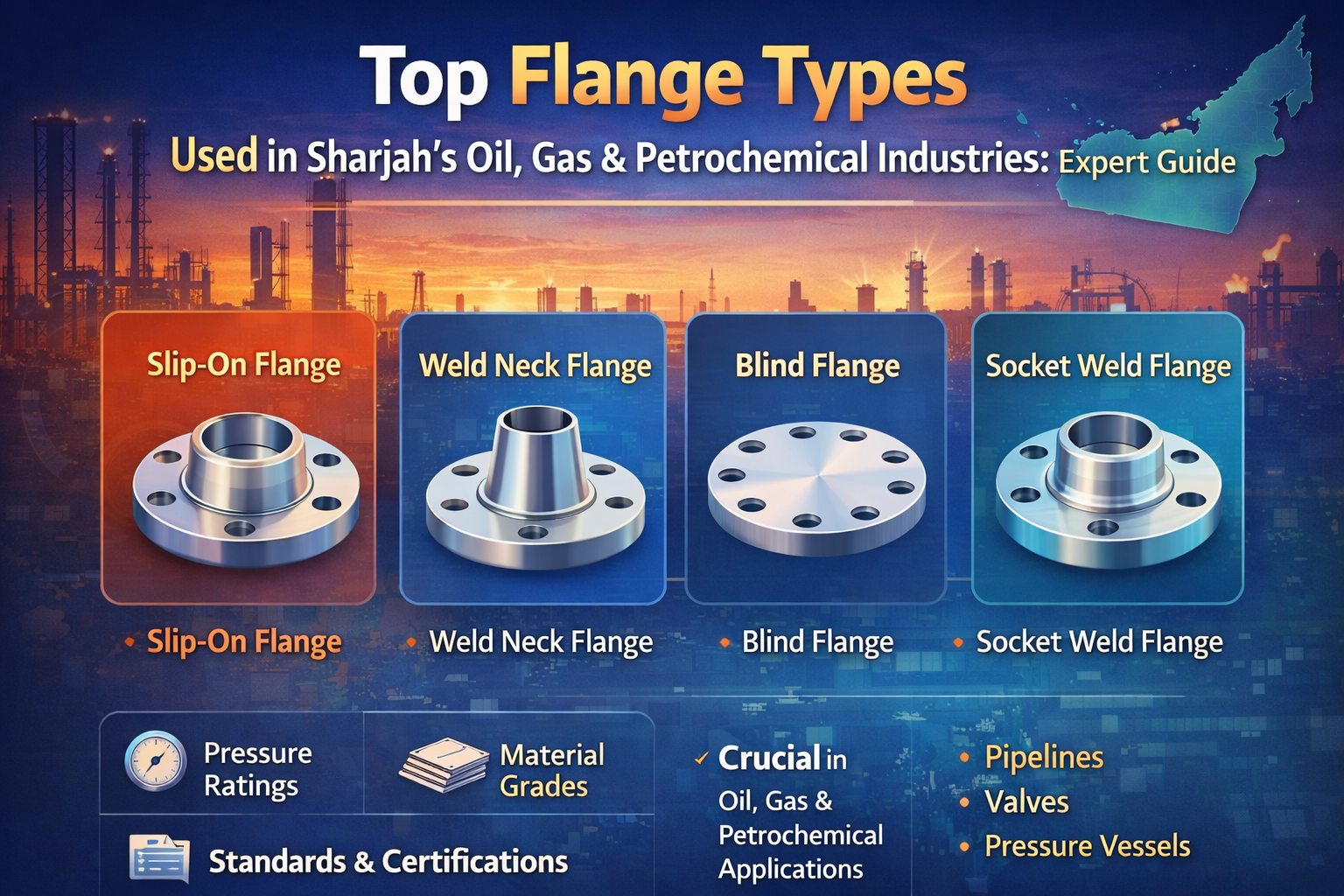
Top Flange Types Used in Sharjah’s Oil, Gas & Petrochemical Industries
Here are the leading flange types in Sharjah commonly specified for these sectors, each with distinct advantages.
Weld Neck Flanges
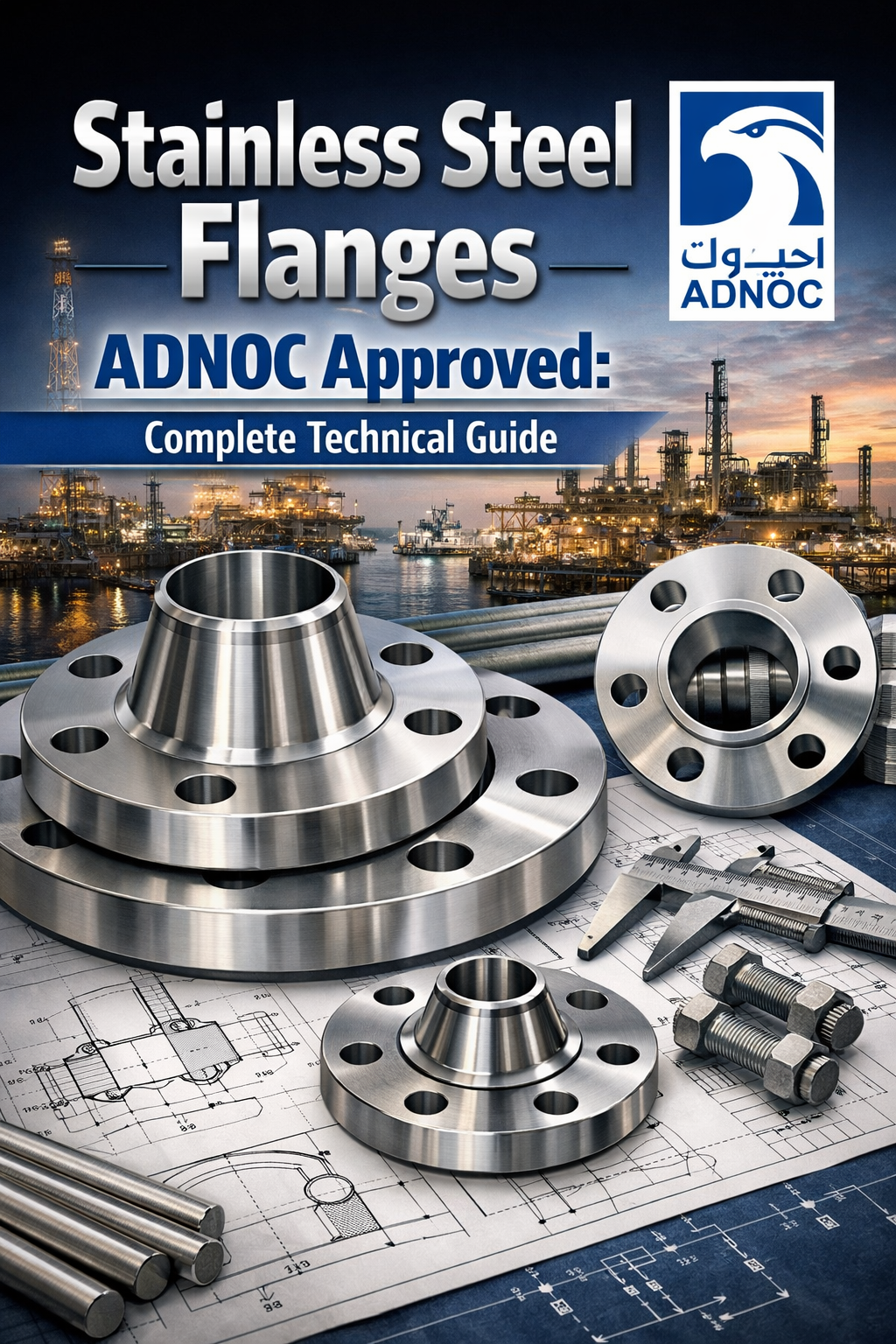
Weld neck flanges feature a long tapered hub that is butt-welded to the pipe. This design provides excellent strength and stress distribution, making them the preferred choice for high-pressure pipeline flanges in critical oil and gas applications.
In Sharjah’s refineries and petrochemical plants, weld neck flanges handle extreme pressures and temperatures while minimizing turbulence and erosion. They are ideal for high-integrity systems where safety is paramount.
Slip-On Flanges
Slip-on flanges are easy to install and cost-effective. The pipe slips into the flange before fillet welding on both sides. They suit lower-pressure applications and are popular in non-critical piping within Sharjah’s processing facilities.
Their simplicity reduces installation time, which benefits fast-track projects common in the region.
Socket Weld Flanges
Socket weld flanges work well for small-diameter, high-pressure lines. The pipe inserts into a recessed socket and is fillet-welded. These flanges offer good fatigue resistance and are frequently used in Sharjah’s instrumentation and auxiliary piping systems in petrochemical plants.
Threaded Flanges
Threaded flanges connect to pipes without welding, using internal threads. They are convenient for low-pressure, non-hazardous services or areas where welding is impractical, such as explosive atmospheres.
In Sharjah’s maintenance and repair operations, they enable quick assembly and disassembly.
Lap Joint Flanges
Lap joint flanges pair with a stub end for easy alignment and rotation. They are useful when frequent dismantling is required or when the flange material differs from the pipe (e.g., using a cheaper carbon steel flange with a corrosion-resistant stub end).
This versatility serves expansion and modification projects in Sharjah’s growing industrial zones.
Blind Flanges
Blind flanges seal the end of a piping system or vessel. They allow for pressure testing and future expansions. In Sharjah’s oil and gas networks, blind flanges isolate sections during maintenance or emergencies.
High-Pressure Pipeline Flanges: Special Considerations
High-pressure pipeline flanges demand robust designs like weld neck or ring-type joint (RTJ) variants. In Sharjah’s upstream and midstream operations, these flanges manage pressures exceeding 10,000 psi in some cases.
Key factors include material selection (carbon steel, stainless steel, or alloys), facing type (raised face or RTJ), and precise dimensional compliance. Always verify ratings against operating conditions to prevent failures.
ASME Flanges UAE: Standards and Compliance
ASME flanges UAE refer to products manufactured to American Society of Mechanical Engineers specifications, primarily ASME B16.5 for sizes up to 24 inches and B16.47 for larger diameters. These standards govern pressure-temperature ratings, materials, dimensions, and testing.
In the UAE, including Sharjah, adherence to ASME (often alongside API standards) is essential for regulatory approval and insurance. Reputable manufacturers and suppliers provide full material traceability and third-party certifications, ensuring flange types in Sharjah meet both local and international project requirements.
Choosing a Petrochemical Flanges Supplier Sharjah
Selecting the right petrochemical flanges supplier Sharjah can significantly impact project timelines and quality. Look for suppliers with:
- Extensive stock of ASME-compliant flanges in various materials and sizes.
- Proven experience serving the local oil, gas, and petrochemical sectors.
- Capabilities for custom fabrication and rapid delivery.
- Strong quality assurance processes, including mill test certificates.
Local suppliers in Sharjah’s industrial areas offer advantages such as shorter lead times, easier site visits, and understanding of regional environmental challenges compared to distant imports.
Best Practices for Selecting Flange Types in Sharjah
- Match the flange to the pipe material and service conditions (pressure, temperature, corrosion).
- Consider installation method — welded for permanence, threaded for flexibility.
- Factor in facing and gasket compatibility for leak prevention.
- Consult with engineers and petrochemical flanges supplier Sharjah early in the design phase.
- Prioritize long-term reliability over initial cost savings in critical applications.
For international teams working in Sharjah, partnering with experienced local suppliers helps navigate logistics, customs, and compliance smoothly.
Conclusion
Flange types in Sharjah are far more than simple connectors — they are vital safety and performance components in one of the world’s most demanding industrial environments. From robust weld neck designs for high-pressure pipeline flanges to versatile options for everyday use, understanding these types helps ensure successful project outcomes.
Whether sourcing ASME flanges UAE or working with a trusted petrochemical flanges supplier Sharjah, focus on quality, compliance, and application-specific requirements. This approach delivers safe, efficient, and cost-effective operations in Sharjah’s thriving energy sector and beyond.
For tailored advice on your next project, consult experienced suppliers and engineers familiar with local conditions. The right flange types in Sharjah choice today prevents costly issues tomorrow.