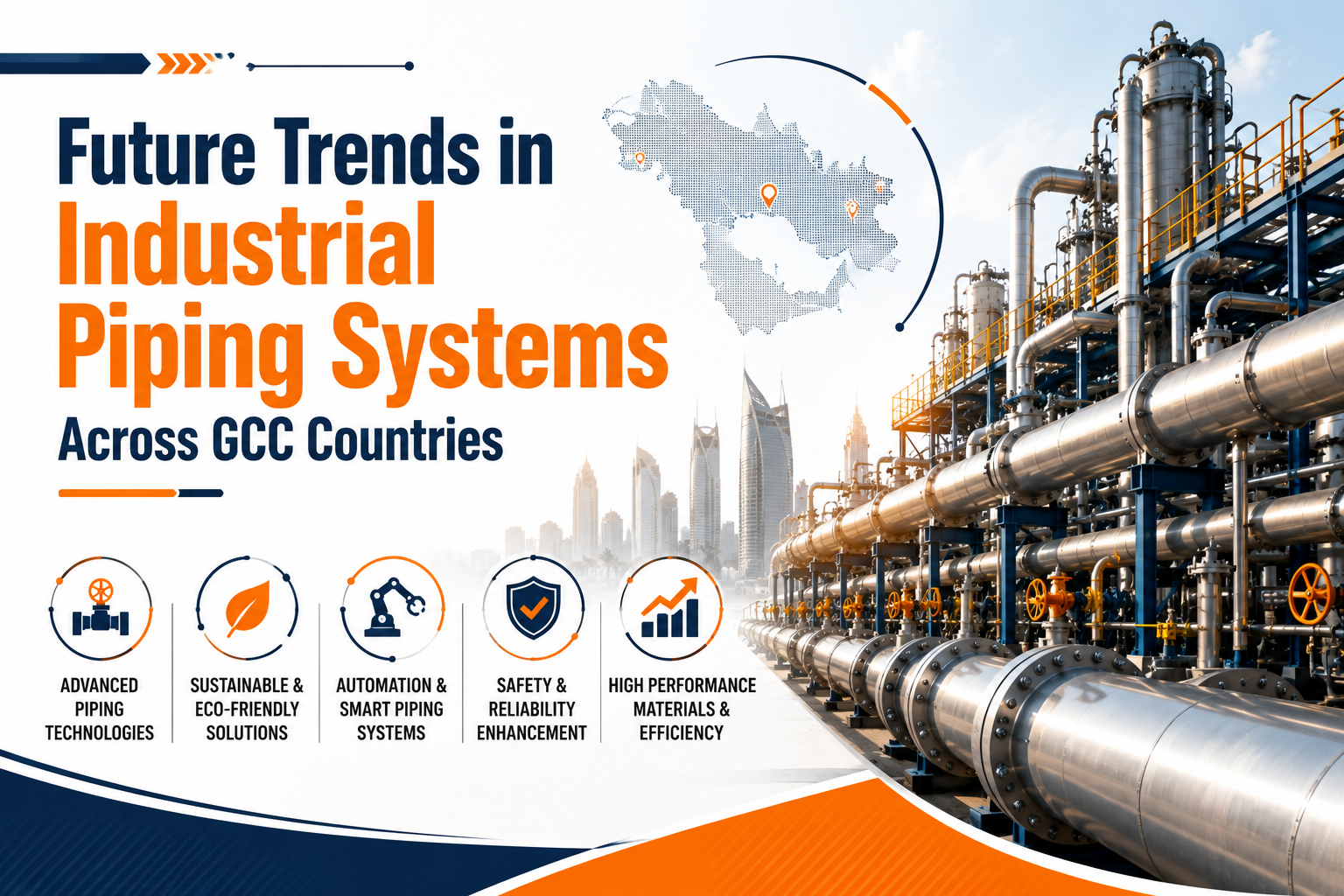
Future Trends in Industrial piping Systems across GCC Countries engineers and project owners are following in 2026 point to one clear conclusion: smarter, safer, and more corrosion-resistant systems are no longer optional — they’re becoming the baseline expectation for industrial infrastructure across the region.
From Sharjah’s manufacturing belt to Dubai’s construction pipeline and Qatar’s LNG expansion, the GCC’s industrial backbone runs through its piping networks. As projects scale up and environmental conditions grow harsher, plant owners, EPC contractors, and procurement teams need to understand where this industry is heading — and how to plan for it now.
Why Industrial Piping Systems in Sharjah Are Evolving Faster Than Ever
Sharjah has become one of the busiest industrial hubs in the UAE, home to dense industrial zones, oil and gas suppliers, and manufacturing plants that depend on continuous, reliable piping infrastructure. Industrial piping systems in Sharjah face unique pressures: high ambient temperatures, humid coastal air, and 24/7 operational demands that push materials to their limits.
This environment is exactly why Sharjah has become a testing ground for newer piping technologies before they roll out across the wider GCC. Suppliers like Leema Engineering, a trusted pipe supplier in Sharjah, are seeing steady demand shift toward higher-grade materials and smarter monitoring as standard specification rather than premium add-ons.
Industrial Piping Solutions GCC Companies Are Investing In
Across the GCC, procurement teams are prioritizing a few consistent categories of industrial piping solutions GCC projects increasingly demand:
- Corrosion-resistant alloys for coastal and offshore installations
- Modular pipe spooling to cut on-site fabrication time
- Pre-fabricated flange and fitting assemblies for faster installation
- Digitally trackable materials with certified test reports
- Higher pressure-class ratings for expanding oil and gas throughput
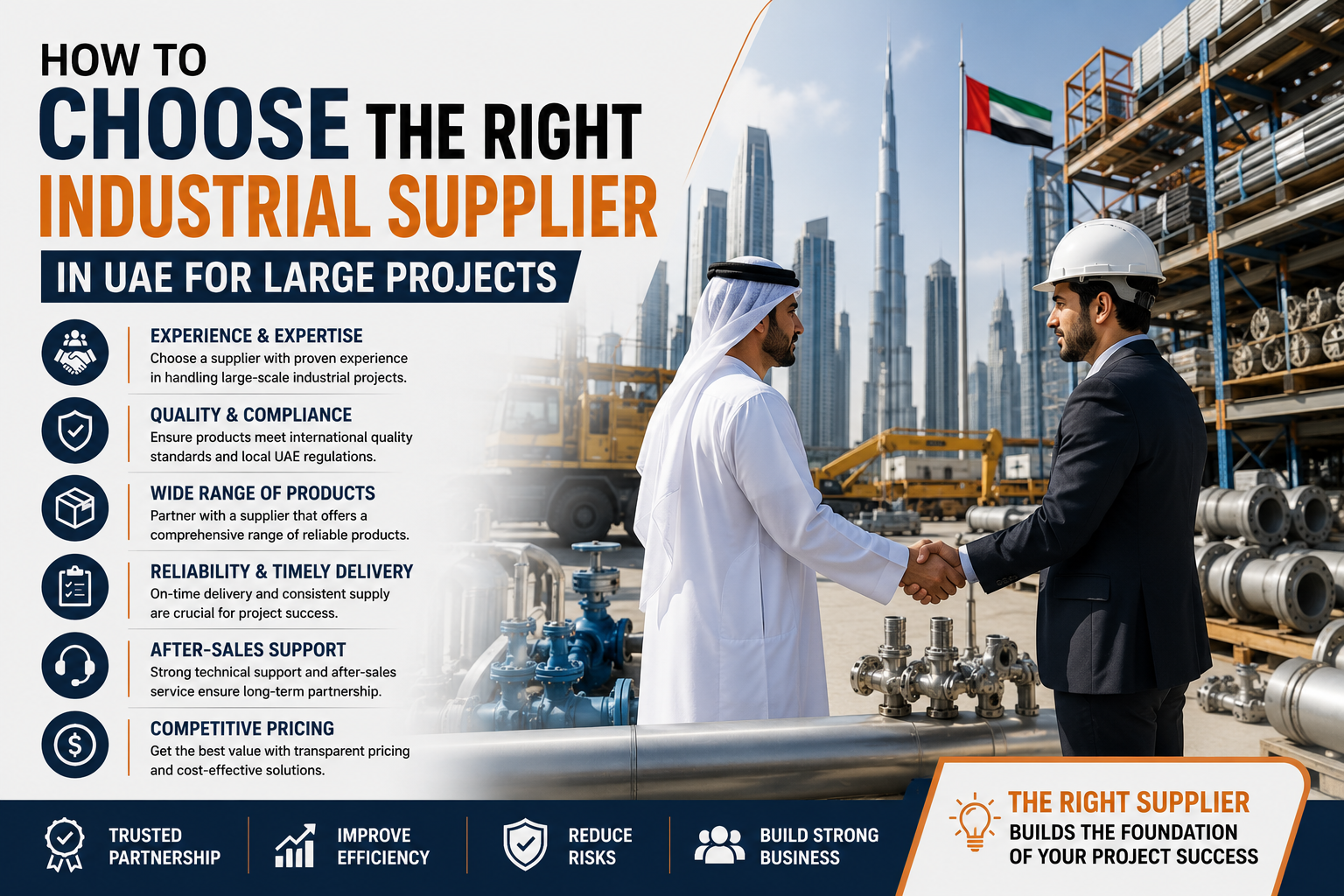
These priorities reflect a broader shift: GCC industrial buyers are no longer choosing suppliers purely on price, but on documented quality, delivery speed, and technical support — a theme we explored in our guide on choosing the right industrial supplier in the UAE.
Advanced Industrial Piping Technologies GCC Projects Are Adopting
Several advanced industrial piping technologies GCC facilities are now specifying include:
- High-density polyethylene (HDPE) systems for water and wastewater infrastructure, valued for flexibility and corrosion immunity.
- Fiberglass-reinforced piping (FRP) for chemical and offshore applications where metal corrodes quickly.
- Duplex and super-duplex stainless steel for high-chloride environments common along the Gulf coastline.
- Automated welding and orbital welding systems that improve weld consistency on large-diameter pipelines.
- Digital pressure and flow sensors embedded directly into pipeline sections for real-time monitoring.
These aren’t experimental technologies anymore — they’re increasingly the default spec on major EPC tenders across Sharjah, Abu Dhabi, and Qatar.
Smart Industrial Piping Systems UAE Facilities Are Deploying
Smart industrial piping systems UAE operators are installing typically combine IoT sensors with centralized monitoring dashboards. This allows plant managers to track pressure fluctuations, detect leaks early, and schedule predictive maintenance before a failure causes downtime.
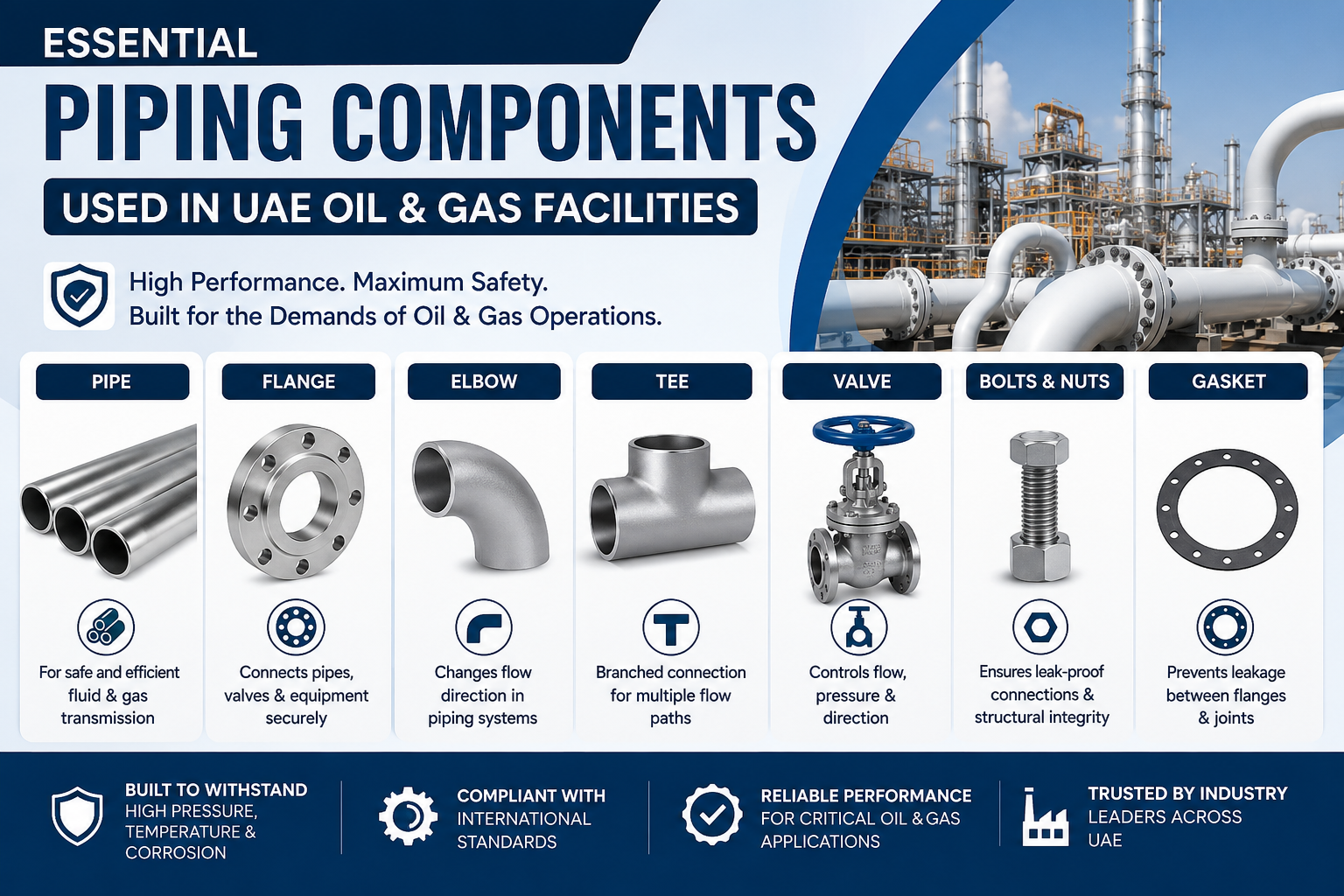
For oil and gas operators specifically, this shift matters even more. Our breakdown of essential piping components used in UAE oil and gas facilities covers how these individual components now increasingly ship with embedded sensor-ready fittings as standard.
Corrosion-Resistant Piping Systems GCC Facilities Need
Given the Gulf’s high humidity, salt exposure, and extreme summer temperatures, corrosion-resistant piping systems GCC facilities rely on aren’t a luxury — they’re a operational necessity. Common corrosion-resistant approaches include:
- Epoxy and polymer coatings on carbon steel pipework
- Stainless steel and duplex alloys for offshore and marine applications
- Cathodic protection systems for buried pipelines
- Regular inspection cycles to catch early-stage pitting corrosion
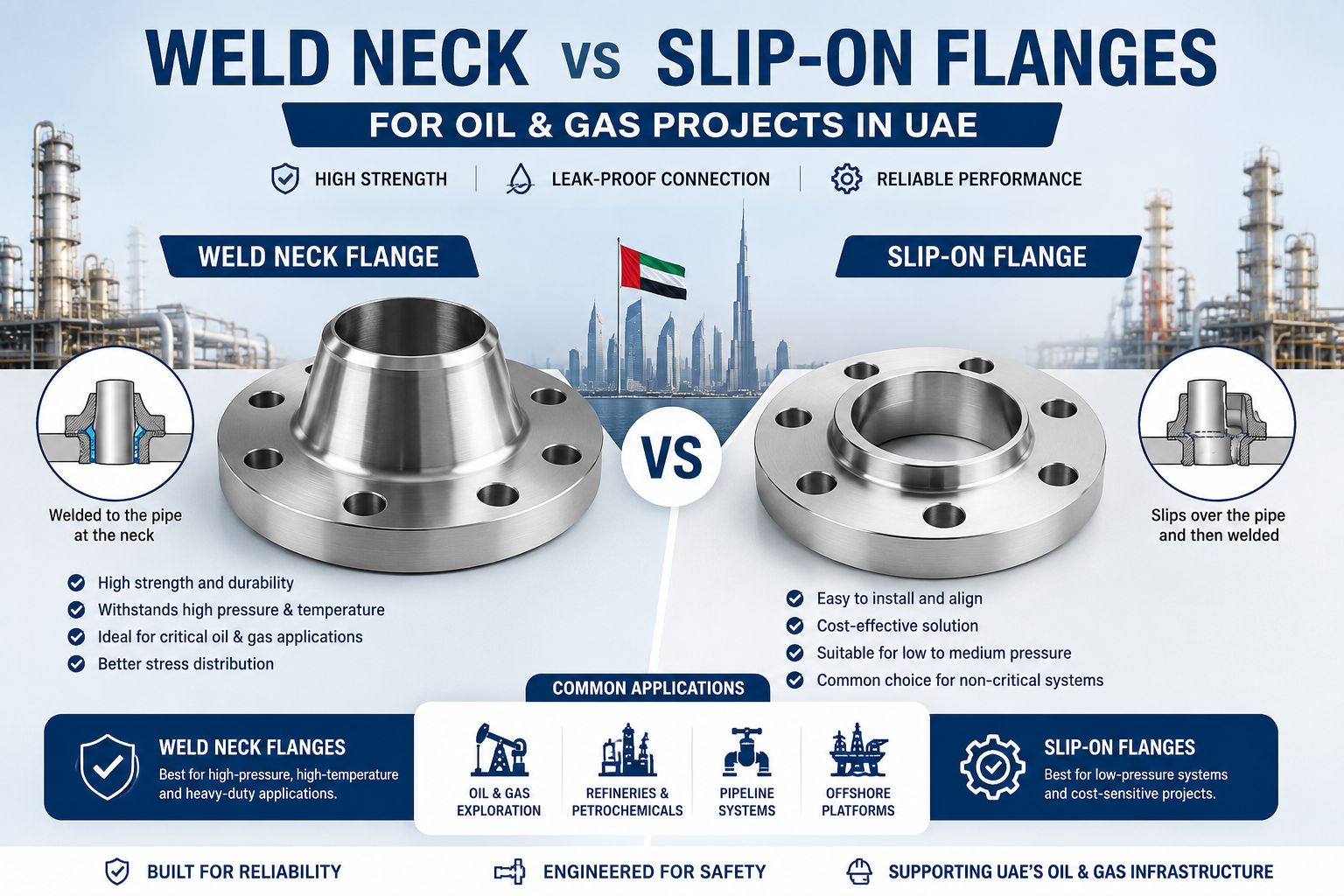
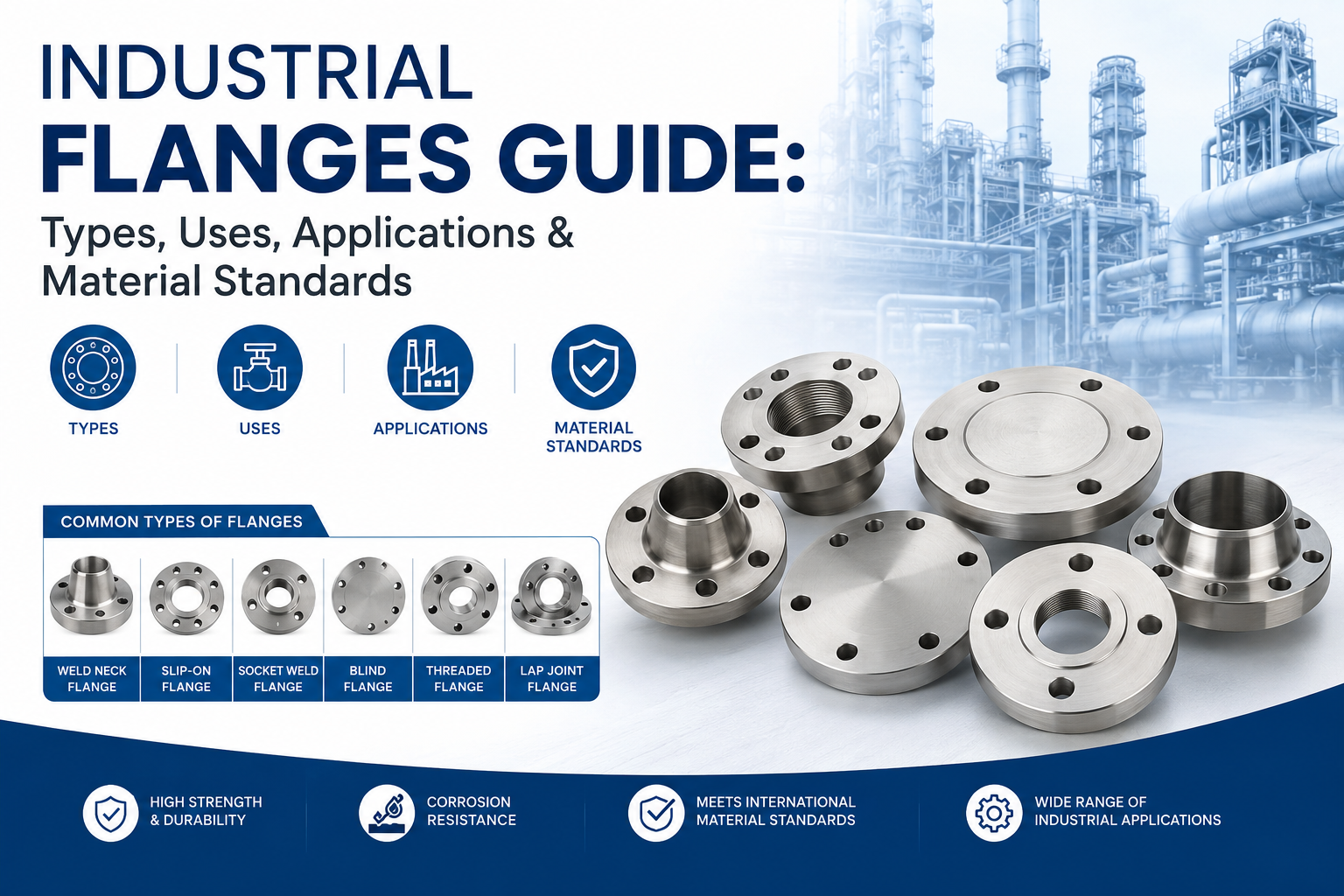
Choosing the wrong flange material in these conditions creates long-term reliability issues — a point we detailed in our comparison of weld neck versus slip-on flanges for oil and gas projects.
Sharjah Industrial Piping Contractors: What to Look For
When selecting Sharjah industrial piping contractors, project managers should evaluate more than price. Key criteria include:
- ISO 9001 and relevant international material certifications
- Proven experience with your specific industry (oil & gas, marine, construction, power)
- In-house fabrication and machining capability for custom specifications
- Fast turnaround on quotations and material delivery
- Access to non-China stockist inventory for faster lead times on premium-grade materials
Industrial Pipeline Engineering in Sharjah: Design Considerations
Good industrial pipeline engineering in Sharjah starts with matching pipe schedule, material grade, and jointing method to the specific operating pressure and temperature range of the application. Engineers increasingly factor in future capacity expansion during initial design, avoiding costly retrofits later.
Industrial Piping Installation Sharjah: Best Practices
Reliable industrial piping installation Sharjah projects follow a consistent sequence: verified material inspection on arrival, correct alignment and support spacing, certified welding procedures, and pressure testing before commissioning. Skipping any of these steps is the most common cause of early-stage leaks and rework.
Industrial Piping Maintenance Services Sharjah: Extending Asset Life
Ongoing industrial piping maintenance services Sharjah facilities schedule typically include periodic corrosion inspection, gasket and seal replacement, pressure testing, and thermal imaging to detect insulation failures. Preventive maintenance schedules consistently cost less than emergency repairs and unplanned shutdowns.
Future of Industrial Piping in the GCC Region: What’s Next
Looking ahead, the future of industrial piping in the GCC region points toward greater standardization around smart monitoring, wider adoption of corrosion-resistant alloys as default rather than upgrade, and closer supplier partnerships that combine fabrication, delivery, and technical support under one roof. Sustainability pressure is also pushing more facilities toward materials with longer service life and lower lifecycle replacement costs.
Frequently Asked Questions
What are the biggest industrial piping trends in the GCC right now? Corrosion-resistant alloys, smart sensor-embedded pipework, and modular pre-fabrication are the three trends seeing the fastest adoption across GCC industrial projects.
Why is corrosion resistance such a priority in Gulf piping systems? High humidity, salt air, and extreme heat accelerate corrosion in standard carbon steel, making resistant alloys and coatings essential for long-term reliability.
How do I choose a reliable industrial piping contractor in Sharjah? Look for ISO certification, industry-specific experience, in-house fabrication capability, and fast, transparent quotation turnaround.
Are smart piping systems worth the investment for smaller facilities? Yes — predictive maintenance from embedded sensors typically reduces unplanned downtime costs enough to offset the initial sensor investment within a few years.
What certifications should GCC industrial piping materials carry? Look for ASTM, ASME, ANSI, ISO, DIN, and BS certifications, along with material test reports and compliance documentation.
Partner With a Trusted GCC Piping Supplier
Leema Engineering Works has supplied pipes, fittings, flanges, and industrial accessories across Sharjah, Dubai, and the wider GCC for over 50 years, serving oil & gas, power, marine, and construction sectors with certified, corrosion-resistant materials. Visit our homepage to explore our full product range, or reach out through our contact page to discuss your project’s piping specifications.
Request a Quote for Your Piping Project →971 6 533 8167
Leema Engineering Works (LEW) Industrial Area 2, Industrial Area, Sharjah, United Arab Emirates Warehouse: Industrial Area 2, 27th Street, Old BMW Road, Sharjah Phone: +971 6 533 8167 | +971 50 425 1818 Email: sales@leemaeng.com