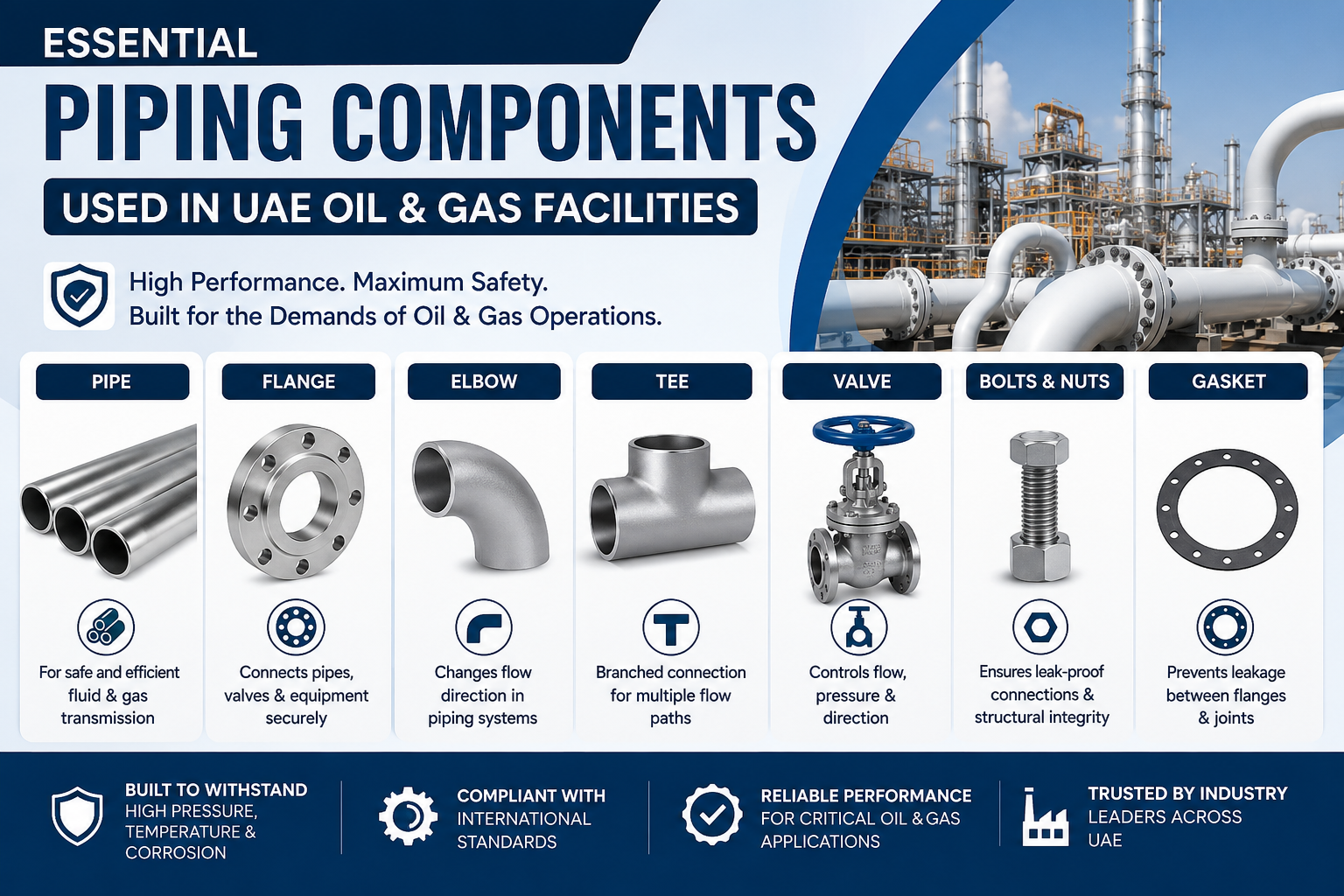
Behind every functioning refinery, gas processing plant, or offshore platform in the UAE sits a piping network built from dozens of individual components — each one selected for a specific pressure, temperature, or corrosion challenge. Understanding Essential Piping Components used in UAE Oil & Gas facilities isn’t optional knowledge for engineers and procurement teams — it’s foundational to safe, compliant plant design.
From pipes and valves to gaskets and supports, every component plays a distinct role in keeping hydrocarbons flowing safely under demanding conditions.
This guide walks through the essential piping components found across UAE oil and gas facilities, explaining what each does, why it matters, and what standards govern its specification.
Why Piping Components Deserve Careful Specification in Oil and Gas
Oil and gas facilities operate under some of the harshest conditions any piping system faces — high pressure, extreme temperature swings, corrosive media, and continuous operation spanning decades.
Getting piping components oil and gas UAE specifications right at the design stage prevents costly failures, unplanned shutdowns, and safety incidents that far outweigh any upfront cost savings from under-speccing components.
As a trusted pipe supplier in Sharjah, Dubai and UAE, we work with EPC contractors and plant operators to ensure every component in a piping system meets the specific demands of the oil and gas sector.
Pipes: The Backbone of Every Piping System
Pipes form the core pathway through which hydrocarbons, water, and process fluids travel across a facility. Selecting the right pipe material and grade is the first decision in any piping system design.
Common Pipe Materials in Oil and Gas
- Carbon steel — standard for general process piping
- Stainless steel — for corrosive or sour service applications
- Alloy steel — for extreme temperature or pressure conditions
- HDPE and PVC — for lower-pressure water and utility lines
Pipe wall thickness, diameter, and material grade must all align with the specific service conditions of each line segment within the facility.
Pipe Fittings for Oil and Gas Industry: Connecting the System
Beyond straight pipe runs, pipe fittings for oil and gas industry applications connect, redirect, and adapt piping systems to match facility layout requirements.
Pipe Elbows, Tees, Reducers Oil and Gas: Core Fitting Types
- Elbows — change flow direction, typically 45° or 90°
- Tees — create branch connections for splitting or combining flow
- Reducers — transition between different pipe diameters
- Couplings and unions — join pipe sections, allowing disassembly where needed
Each fitting type must match the pipe’s material grade and pressure class to maintain system integrity across the entire network.
Valves Used in Oil and Gas Piping: Controlling the Flow
Valves regulate, direct, and isolate flow throughout a facility, making them among the most critical valves used in oil and gas piping systems.
Common Valve Types in Oil and Gas Facilities
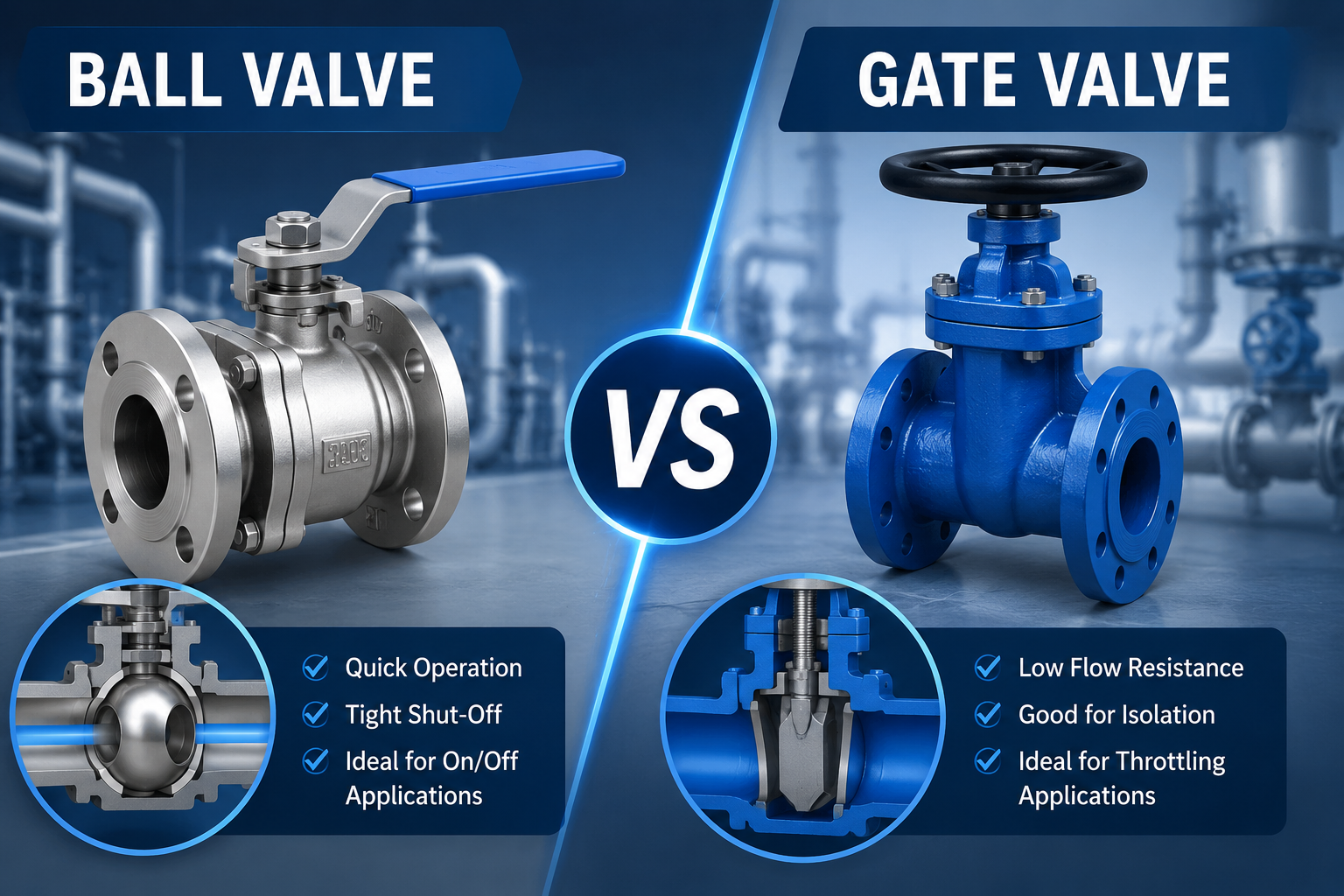
- Gate valves — for full on/off shutoff with minimal flow resistance
- Ball valves — for fast quarter-turn shutoff, ideal for emergency isolation
- Globe valves — for precise flow throttling and regulation
- Check valves — prevent backflow in one-directional systems
- Pressure reducing valves — control downstream pressure in complex distribution networks
Selecting the correct valve type for each application — shutoff, throttling, or backflow prevention — directly affects both system safety and operational efficiency.
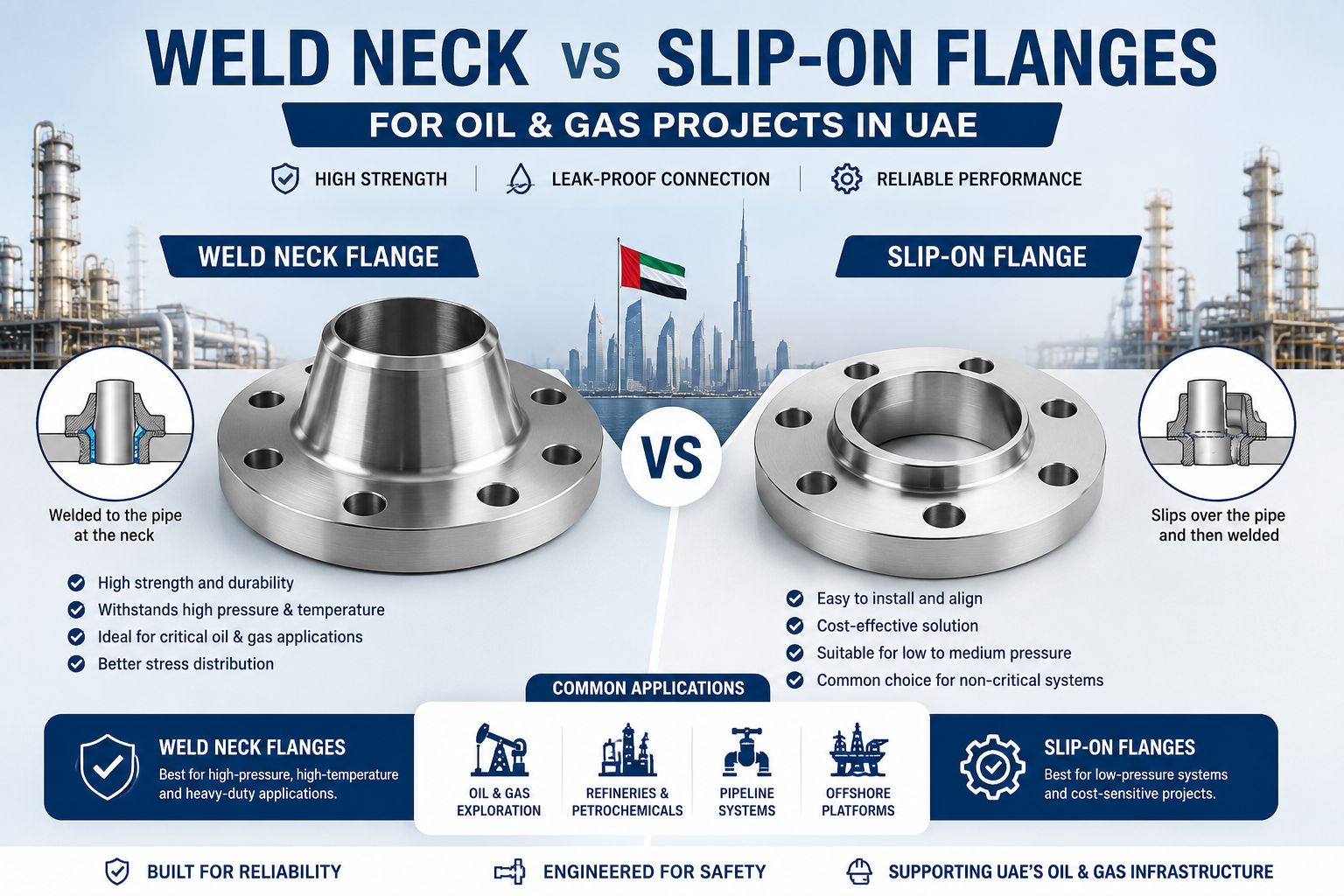
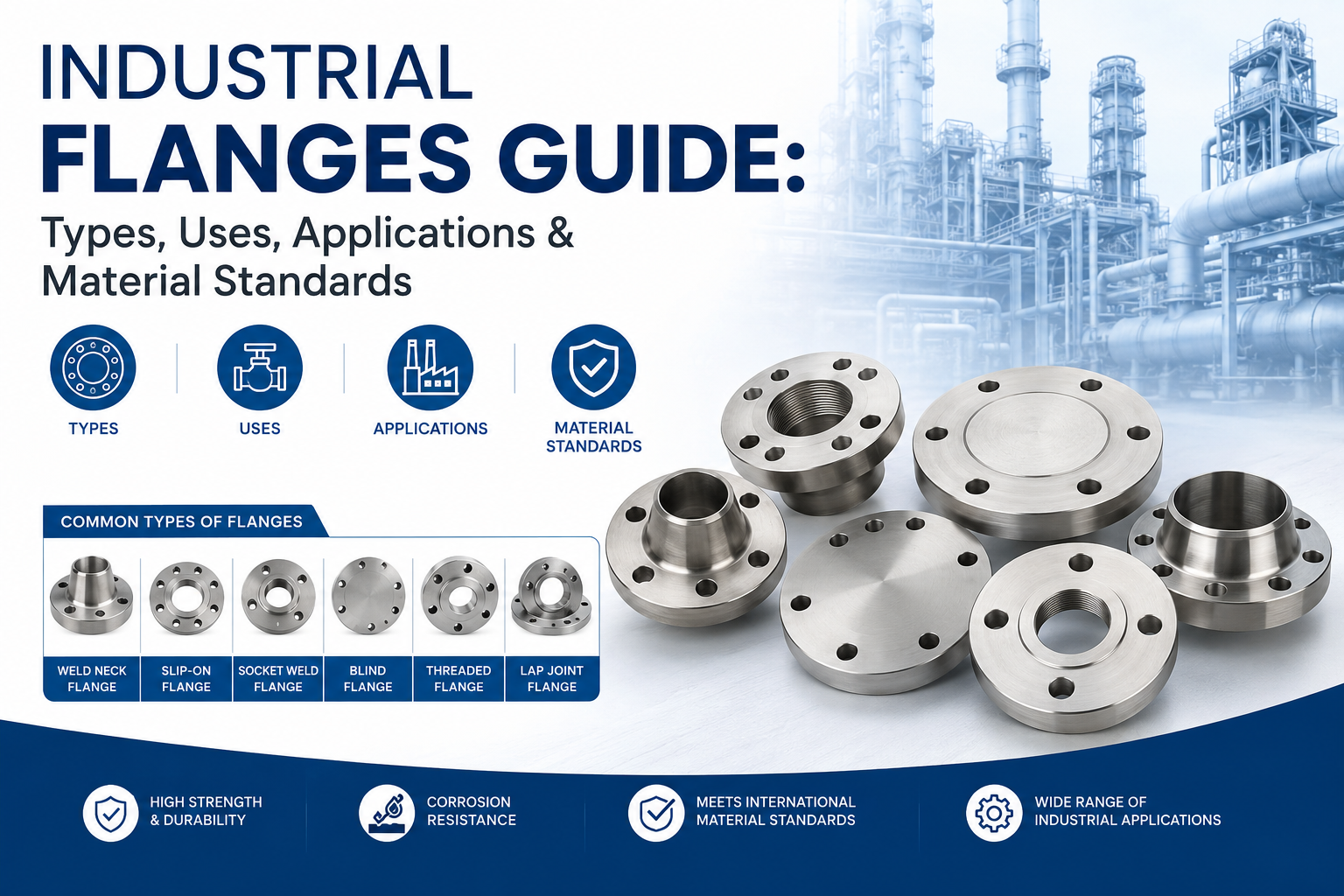
Flanges and Gaskets Oil and Gas UAE: Creating Removable Joints
Understanding flanges and gaskets oil and gas UAE facilities rely on is essential, since flanged connections allow maintenance access that welded joints simply don’t provide.
Why Flanges and Gaskets Matter Together
- Flanges provide the mechanical clamping force for a bolted connection
- Gaskets create the actual pressure-tight seal between flange faces
- Material compatibility between flange, gasket, and process media prevents premature failure
- Proper torque sequencing during installation ensures even sealing pressure
Mismatched gasket selection remains one of the most common causes of flange leaks in oil and gas facilities — always match gasket material to the specific media, temperature, and pressure conditions.
Pipe Spools Oil and Gas UAE: Prefabricated Efficiency
Understanding pipe spools oil and gas UAE projects increasingly rely on helps explain how modern facility construction improves both quality and installation speed.
What Pipe Spools Offer
- Prefabricated pipe sections with fittings and flanges pre-welded in controlled shop conditions
- Higher weld quality control compared to extensive field welding
- Faster on-site installation, reducing overall project timelines
- Reduced field welding exposure to weather and site conditions
Facilities increasingly specify prefabricated spools for complex piping runs, reserving field welding for final tie-in connections only.
Expansion Joints Oil and Gas Piping: Managing Thermal Movement
Oil and gas facilities experience significant temperature swings, making expansion joints oil and gas piping systems require a critical component for managing thermal expansion and contraction.
Why Expansion Joints Matter
- Absorb pipe movement caused by temperature-driven expansion and contraction
- Reduce mechanical stress on fixed equipment connections (pumps, vessels)
- Compensate for vibration in rotating equipment piping
- Prevent premature fatigue failure in long, straight pipe runs
Without properly specified expansion joints, thermal stress can cause pipe buckling, joint failure, or damage to connected equipment over time.
Pipe Supports and Hangers Oil and Gas: Structural Integrity
Often overlooked in component discussions, pipe supports and hangers oil and gas systems require proper structural support to prevent sagging, vibration damage, and stress concentration.
Types of Pipe Support Systems
- Rigid supports — fixed points anchoring the pipe at specific locations
- Spring hangers — accommodate vertical thermal movement while supporting pipe weight
- Sliding supports — allow horizontal thermal movement while bearing vertical load
- Guides — control lateral movement without restricting axial expansion
Proper support spacing and type selection prevents excessive pipe sagging, which can lead to premature fatigue failure at welded or flanged joints.
Strainers and Filters Oil and Gas Piping: Protecting Downstream Equipment
Understanding strainers and filters oil and gas piping systems use helps protect sensitive downstream equipment like pumps, meters, and control valves from debris damage.
Common Strainer Types
- Y-strainers — compact, simple debris removal for general service
- Basket strainers — larger debris capacity, suited for high-flow applications
- Duplex strainers — allow continuous operation during cleaning via parallel basket switching
Strainers are typically installed upstream of pumps, control valves, and metering equipment to prevent particulate damage to precision components.
Instrumentation Fittings Oil and Gas: Enabling Process Monitoring
Modern oil and gas facilities depend heavily on accurate process monitoring, making instrumentation fittings oil and gas systems use essential for connecting sensors and control equipment to the main piping network.
Common Instrumentation Fitting Applications
- Pressure gauge and transmitter connections
- Temperature sensor thermowells
- Flow measurement device tie-ins (orifice flanges, venturi meters)
- Sample point connections for process monitoring
These fittings must maintain the same pressure rating and material compatibility as the main piping system, since they represent direct connection points to the process media.
ASME Piping Components Standards: The Compliance Framework
Every component discussed above must comply with recognized ASME piping components standards to ensure safety, interoperability, and regulatory approval across UAE oil and gas projects.
Key Standards Referenced
- ASME B31.3 — process piping design and construction standard
- ASME B16.5 — pipe flanges and flanged fittings
- ASME B16.9 — factory-made wrought steel buttwelding fittings
- API standards — specific to wellhead and production equipment
Compliance documentation, including Material Test Certificates, should accompany every component shipment to ensure full traceability from mill to installation.
Corrosion Resistant Piping Components UAE: Facing the Local Climate
The UAE’s combination of high humidity, coastal salinity, and extreme heat makes corrosion resistant piping components UAE facilities specify particularly important for long-term reliability.
Corrosion-Resistant Material Options
- Stainless steel (304/316) — excellent resistance to chloride-induced corrosion
- Galvanized steel — zinc coating protection for less aggressive environments
- Duplex stainless steel — superior strength and corrosion resistance for demanding offshore applications
- Corrosion-resistant alloy linings — for particularly aggressive process media
Coastal and offshore facilities across Sharjah, Dubai, and Abu Dhabi consistently specify higher corrosion-resistant grades given the UAE’s challenging marine climate.
Piping Material Selection Oil and Gas: A Practical Framework
Bringing everything together, piping material selection oil and gas projects require follows a consistent evaluation framework across every component type.
Material Selection Checklist
- Identify the process media and its corrosivity profile
- Confirm operating pressure and temperature ranges
- Evaluate environmental exposure (coastal, offshore, desert conditions)
- Cross-reference applicable ASME, API, or ASTM material standards
- Balance material cost against expected service life and maintenance requirements
Applying this framework consistently across pipes, fittings, valves, and flanges ensures a coherent, reliable piping system rather than mismatched component specifications.
Oil and Gas Piping System Design: Bringing Components Together
Ultimately, sound oil and gas piping system design depends on how well individual components work together as an integrated system, not just how each performs in isolation.
Design Considerations for Integrated Systems
- Consistent pressure class across all connected components
- Compatible material selection preventing galvanic corrosion between dissimilar metals
- Proper support and expansion joint placement throughout the piping run
- Adequate isolation valve placement for maintenance and emergency shutdown
For projects requiring a fully integrated component package, our services page details our capability across pipes, fittings, flanges, and valves for complete UAE facility design.
Piping Components Supplier UAE: Choosing the Right Partner
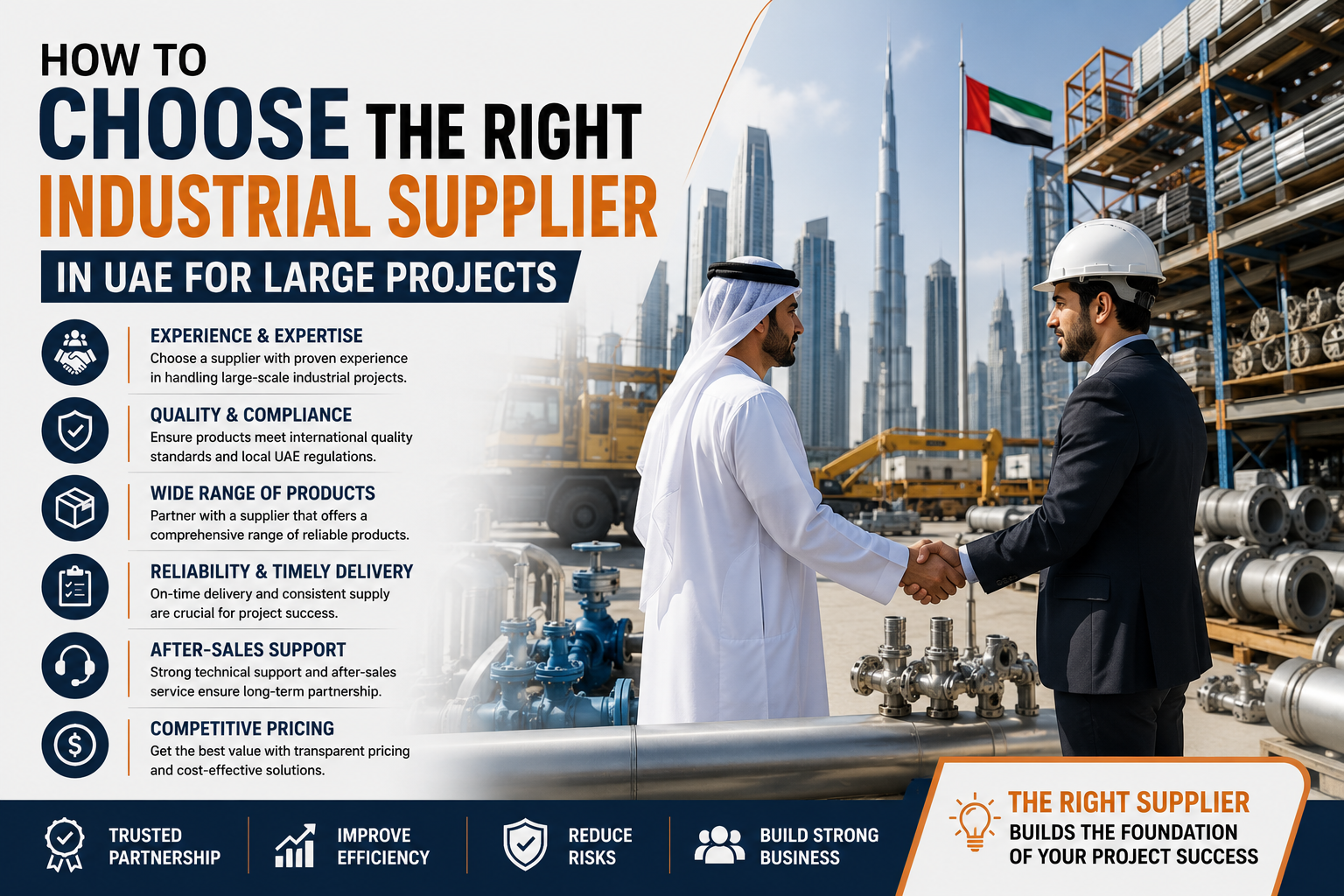
Working with the right piping components supplier UAE projects can depend on ensures consistent quality, certification, and availability across your entire component list.
What to Look For in a Supplier
- Comprehensive product range spanning pipes, fittings, flanges, and valves
- Full certification (ASME, ASTM, API, DIN) with Material Test Certificates
- Experience specifically with regional oil and gas sector projects
- Ability to support both standard and custom-fabricated components
For projects requiring certified flanges alongside your broader component list, our flanges supplier in Sharjah page details our full inventory across major pressure classes and materials, while our pipe supplier services in Dubai and UAE page covers our complete pipe and fitting range for integrated procurement.
Frequently Asked Questions
1. What’s the difference between a pipe fitting and a valve?
Fittings (elbows, tees, reducers) redirect or adapt flow paths without controlling flow rate, while valves actively regulate, throttle, or shut off flow within the system.
2. Why are expansion joints necessary in oil and gas piping?
Expansion joints absorb pipe movement caused by thermal expansion and contraction, preventing mechanical stress that could otherwise damage fixed equipment connections or cause premature fatigue failure.
3. What material is best for piping components in coastal UAE facilities?
Stainless steel (grade 316) or duplex stainless steel are commonly specified for coastal and offshore UAE facilities due to superior resistance to chloride-induced corrosion.
4. Are prefabricated pipe spools better than field-welded piping?
Prefabricated spools generally offer higher weld quality control and faster installation, though final tie-in connections still require field welding regardless of prefabrication level.
5. What standards govern piping component specifications in oil and gas facilities?
ASME B31.3 governs process piping design broadly, with additional standards like ASME B16.5 and API specifications applying to specific components like flanges and wellhead equipment.
Final Thoughts
Every piping component in a UAE oil and gas facility — from the largest pipe spool to the smallest instrumentation fitting — plays a role in overall system safety and reliability. Understanding how these components work together, and specifying each to the correct standard, ensures your facility operates safely for decades, not just through initial commissioning.
Need certified piping components for your next UAE oil and gas project? Visit the Leema Engineering Works to explore our full range of pipes, fittings, flanges, and valves, or contact our technical team for expert specification guidance tailored to your facility.