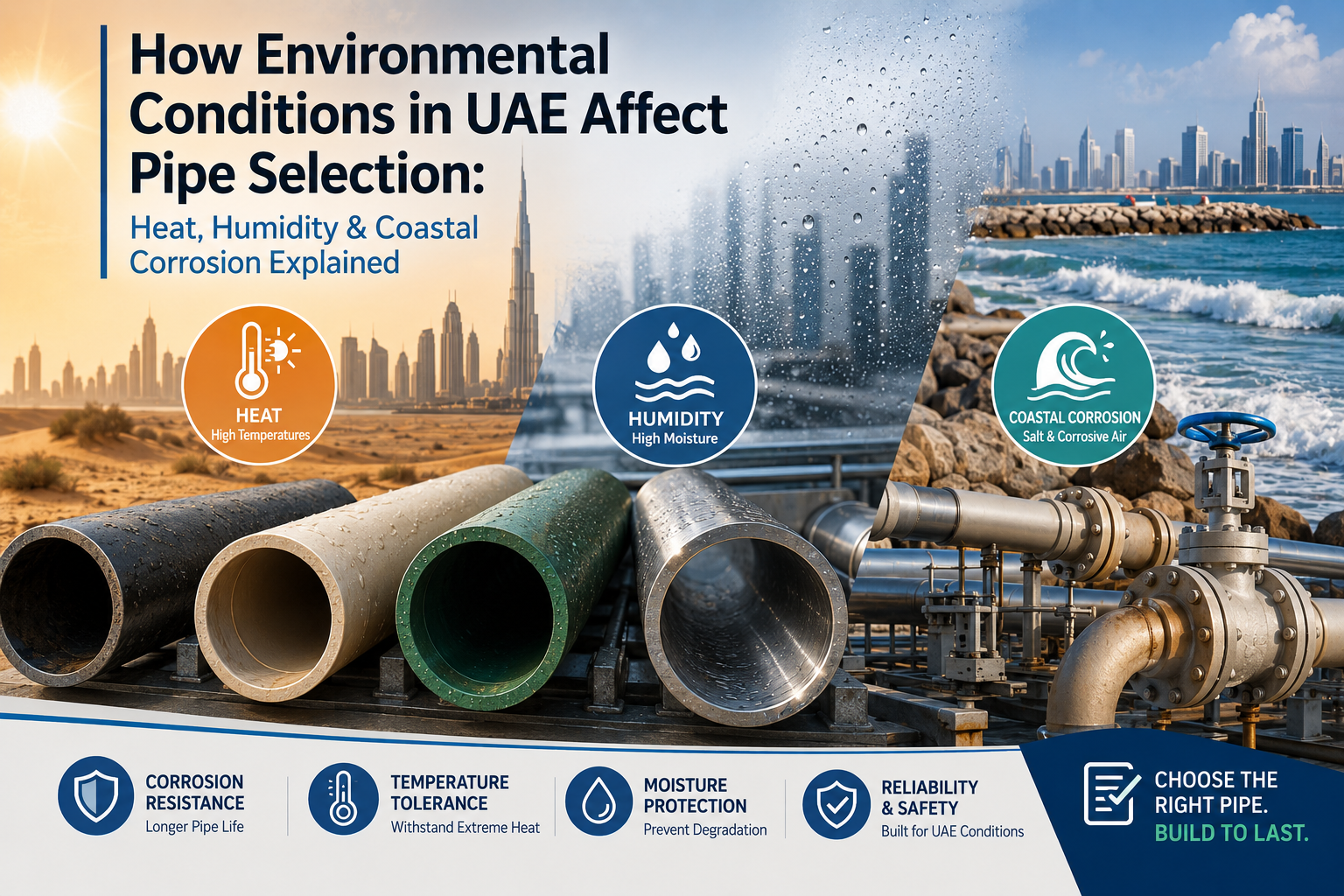
Specify a pipe material that works perfectly in a temperate European climate, and it might fail within a fraction of its expected lifespan once installed in the UAE. Understanding exactly How Environmental Conditions in UAE Affect Pipe Selection is what separates piping systems that perform reliably for decades from those requiring costly premature replacement.
Between extreme heat, coastal humidity, salt-laden air, and challenging soil conditions, the UAE presents a genuinely demanding environment that standard material assumptions from other regions simply don’t account for.
This guide breaks down every major environmental factor affecting pipe selection in the UAE, and exactly what material choices address each challenge.
Why UAE Climate Impact on Pipes Deserves Dedicated Attention
Engineers trained or experienced primarily in temperate climates often underestimate how aggressively the UAE’s environment accelerates material degradation compared to more moderate conditions.
Understanding UAE climate impact on pipes genuinely means recognizing that multiple environmental stressors — heat, humidity, salinity, and UV exposure — often act simultaneously rather than in isolation, compounding degradation in ways single-factor material specifications fail to anticipate.
As a supplier working across every emirate, our pipe supplier services in Dubai and UAE page details exactly how we guide material selection for the UAE’s specific environmental challenges.
Best Pipe Material for UAE Heat: Managing Extreme Temperature Exposure
Understanding the best pipe material for UAE heat conditions requires recognizing that extreme ambient temperatures affect both material properties and system design in ways many specifications overlook.
How Extreme Heat Affects Pipe Materials
- Plastic pipes (PVC, HDPE) can soften or deform under prolonged direct sun exposure without proper UV stabilization
- Metal pipes expand significantly under thermal cycling, requiring expansion joint consideration
- Insulation becomes critical for hot water and chilled water lines to manage thermal load efficiently
- Above-ground plastic piping requires UV-stabilized formulations rather than standard grades
For UAE conditions specifically, UV-stabilized PVC/HDPE or coated metal pipes provide better protection against intense solar radiation and thermal cycling compared to standard, non-stabilized alternatives.
UV Resistant Pipes UAE: Protecting Above-Ground Installations
Given the UAE’s intense year-round sun exposure, understanding UV resistant pipes UAE requirements matters significantly for any piping run installed above ground or exposed to direct sunlight.
Why UV Resistance Matters
- Standard, non-stabilized plastic pipes become brittle and prone to cracking under prolonged UV exposure
- UV-stabilized formulations incorporate additives specifically resisting degradation from solar radiation
- Exposed piping without adequate UV protection can fail years earlier than properly specified alternatives
- Even metal pipes benefit from UV-resistant coatings in exposed installations to prevent coating breakdown
Desert installations specifically require UV-stabilized PVC/HDPE or coated metal pipes protecting against intense solar radiation and thermal cycling — a consideration that’s easy to overlook when specifying based on pressure and flow requirements alone.
Coastal Corrosion Pipe Selection UAE: The Salt Air Challenge
Along the UAE’s extensive coastline — Dubai, Abu Dhabi, Sharjah, Ajman, RAK, and Fujairah — understanding coastal corrosion pipe selection UAE projects require becomes one of the most consequential material decisions engineers make.
Why Coastal Conditions Accelerate Corrosion
- Salt-laden air significantly accelerates degradation of standard carbon steel and lesser-grade materials
- Humidity combined with salinity creates a persistent corrosive environment, not just occasional exposure
- Metal fasteners, brackets, and supports are equally vulnerable if not specified with matching corrosion resistance
- Coastal buildings and facilities require more conservative material specification than inland equivalents
Effective corrosion prevention strategies for coastal areas like Sharjah include specifying galvanized (GI) or stainless steel materials — a principle our pipe supplier team in Sharjah applies daily when advising contractors on coastal-facing projects.
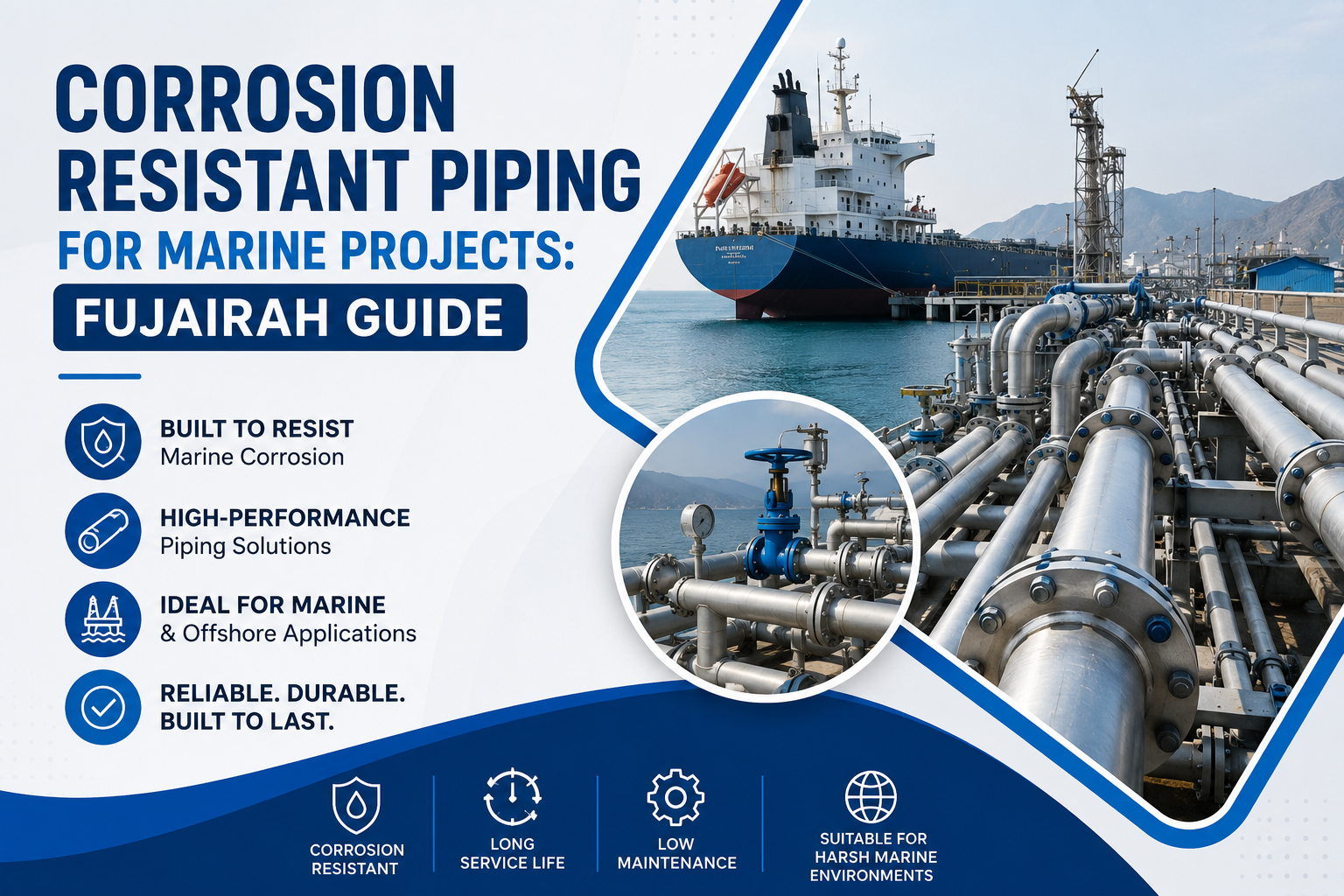
For marine and offshore-specific applications facing even more extreme corrosion exposure, our detailed guide on corrosion resistant piping for marine projects in Fujairah covers material grades suited to continuous seawater exposure.
Salt Air Corrosion Pipes UAE: Material Grades That Actually Hold Up
Building on the coastal corrosion challenge, understanding which salt air corrosion pipes UAE projects should specify helps engineers move beyond generic “use stainless steel” advice toward genuinely appropriate grade selection.
Recommended Materials for Salt-Exposed Environments
- Stainless steel grades 316/316L — the standard baseline for coastal and marine-adjacent applications, offering strong chloride resistance
- HDPE — inherently corrosion-immune, well-suited for buried or exposed coastal applications
- Heavily galvanized materials — providing meaningful protection where full stainless steel isn’t economically justified
For coastal areas, stainless steel grades 316/316L, HDPE, or heavily galvanized materials provide superior corrosion resistance against salt spray and humidity — standard 304 stainless or untreated carbon steel typically underperforms in genuinely coastal-exposed installations.
Humidity Effects on Pipe Materials: The Year-Round Factor
Beyond coastal salinity specifically, understanding humidity effects on pipe materials matters across the entire UAE, given consistently high humidity levels for much of the year, particularly in summer months.
How Humidity Accelerates Degradation
- Persistent moisture accelerates corrosion even in materials with moderate resistance ratings
- Condensation on chilled water and HVAC piping requires proper insulation to prevent secondary moisture damage
- Humid conditions can accelerate degradation of certain gasket and sealant materials if not properly specified
- Ventilation and moisture management in mechanical rooms affects overall system longevity
Even in areas not immediately coastal, the UAE’s ambient humidity levels justify more conservative corrosion-resistant material selection than might be assumed based on distance from the coastline alone. Our MEP contractors pipe supply guide for Dubai and UAE projects covers exactly how humidity factors into material choice for commercial HVAC and plumbing systems.
Desert Environment Piping UAE: Inland Considerations
For installations away from the coast, understanding desert environment piping UAE conditions require highlights a different, though equally demanding, set of environmental stressors.
Desert-Specific Piping Challenges
- Intense solar radiation requiring UV-stabilized above-ground materials
- Significant day-night temperature swings causing thermal cycling stress
- Sand and dust exposure potentially affecting exposed mechanical components
- Lower humidity than coastal areas, but still requiring appropriate material specification for temperature extremes
Desert installations require UV-stabilized PVC/HDPE or coated metal pipes protecting against intense solar radiation and thermal cycling — the same UV protection coastal installations need, but often with less corrosion-driven urgency and more thermal-cycling emphasis. Our Abu Dhabi commercial pipe solutions guide covers material selection specifically for inland desert-climate commercial construction.
Underground Pipe Conditions UAE: What Changes Below Grade
Understanding underground pipe conditions UAE projects encounter requires recognizing that buried piping faces an entirely different set of environmental factors than above-ground installations.
Key Underground Considerations
- HDPE offers flexibility accommodating ground movement, particularly valuable given the UAE’s variable soil conditions
- Properly coated steel with cathodic protection addresses corrosion risk where metal piping is specified underground
- Soil chemistry and moisture content should inform material selection, not just standard practice assumptions
- Ground movement from thermal expansion of surrounding soil can stress rigid materials over time
For underground applications, HDPE provides flexibility accommodating ground movement, or properly coated steel with cathodic protection where required — the right choice depends on specific soil conditions and project requirements.
UAE Soil Conditions Pipe Selection: Regional Variation Matters
Understanding that UAE soil conditions pipe selection decisions should account for isn’t uniform across the country helps engineers avoid a one-size-fits-all underground specification approach.
Why Soil Conditions Vary Across the UAE
- Coastal areas often have higher salinity soil affecting buried metal pipe corrosion rates
- Desert-inland areas may present different moisture retention and thermal cycling characteristics
- Sandy, shifting soil conditions in some areas benefit from HDPE’s flexibility over rigid pipe materials
- Local soil testing, where available, should inform final material and protection system decisions
Rather than assuming a single underground material specification applies uniformly across a large or multi-site project, evaluating actual soil conditions at each specific location produces more reliable long-term performance.
Thermal Expansion Pipes UAE Climate: Designing for Movement
Given the UAE’s significant temperature swings between day and night, and across seasons, understanding thermal expansion pipes UAE climate conditions create requires proper system design, not just material selection alone.
Managing Thermal Expansion
- Expansion joints absorb pipe movement caused by temperature-driven expansion and contraction
- Proper support spacing accommodates thermal movement without excessive stress at fixed points
- Material selection affects the degree of expansion — different metals and plastics expand at different rates
- Long, straight pipe runs particularly benefit from designed-in expansion accommodation
Failing to account for thermal expansion in system design — regardless of how corrosion-resistant the chosen material is — can lead to joint failure, buckling, or damage to connected equipment over time.
Pipe Selection for Extreme Temperature UAE: Balancing Multiple Factors
Bringing heat and thermal cycling together, understanding pipe selection for extreme temperature UAE projects genuinely requires means balancing several simultaneous considerations rather than optimizing for a single factor.
Integrated Temperature-Related Selection Criteria
- Material’s inherent temperature tolerance range
- UV stability for any above-ground exposure
- Thermal expansion characteristics and required expansion joint design
- Insulation requirements for hot or chilled water applications
- Compatibility with the specific pressure class required at maximum operating temperature
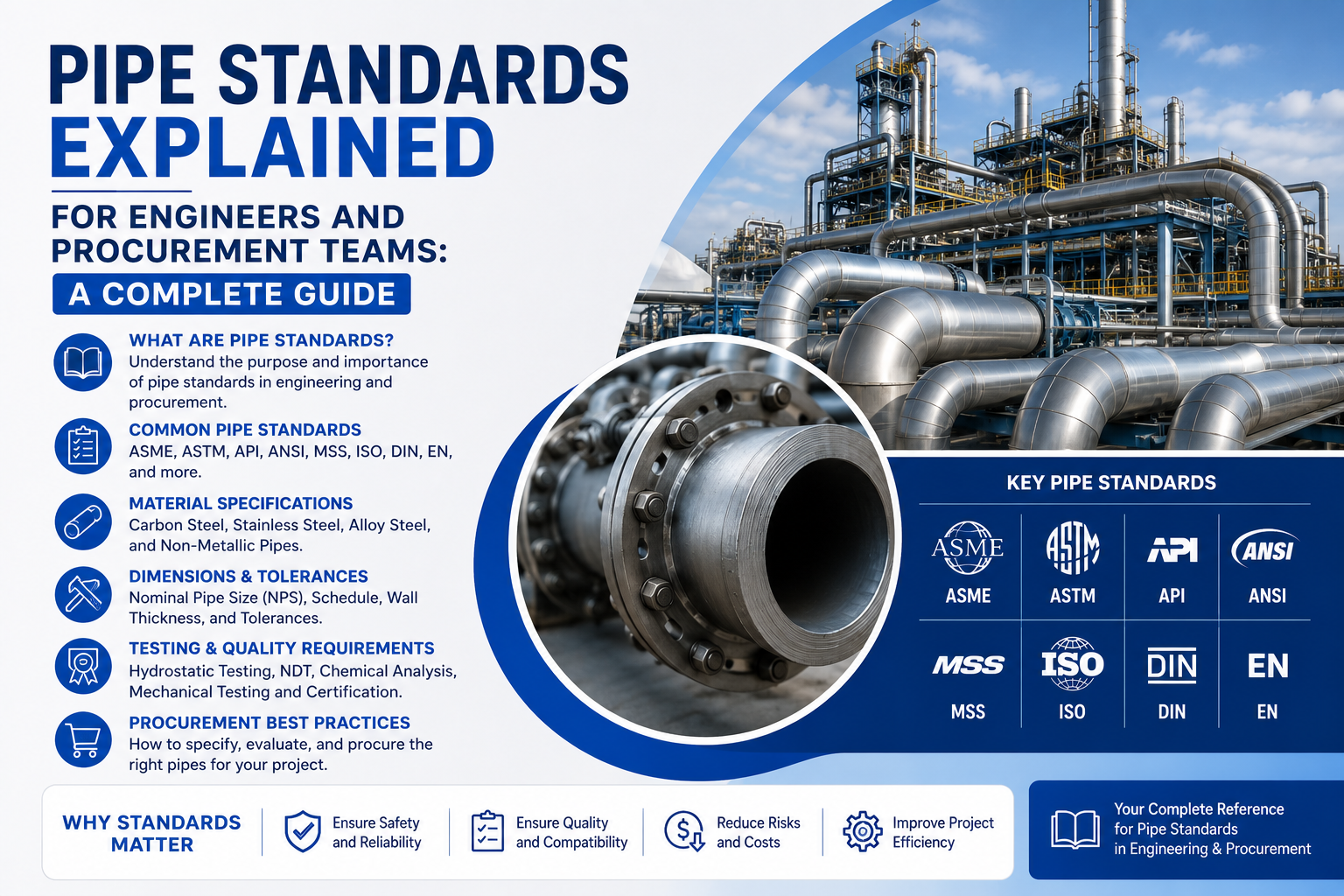
Since allowable pressure decreases as temperature increases for most materials, always cross-reference manufacturer pressure-temperature tables specific to your chosen grade — our detailed pipe standards guide for engineers and procurement teams covers exactly how to read these tables correctly.
Pipe Material Durability UAE Climate: Long-Term Performance Expectations
Ultimately, understanding pipe material durability UAE climate conditions genuinely support helps set realistic expectations for system lifespan and maintenance planning.
Durability Expectations by Material Category
- HDPE — excellent long-term durability for buried and many exposed applications, given inherent corrosion immunity
- Stainless steel (316/316L) — strong multi-decade performance in coastal and humid conditions when properly specified
- UV-stabilized PVC — solid performance for exposed applications when UV-rated grades are specifically chosen
- Standard carbon steel without protection — significantly shortened lifespan in UAE conditions without coating or cathodic protection
Choosing materials based on genuine UAE-specific durability data, rather than generic manufacturer specifications developed for temperate climates, prevents the common mistake of underestimating environmental degradation rates. For projects specifically requiring verified material origin and traceability alongside durability, our non-China pipe supplier switching guide explains why origin verification increasingly matters for long-term performance assurance.
Weather Resistant Piping UAE: A Practical Material Selection Framework
Bringing everything together, here’s a practical weather resistant piping UAE selection framework accounting for the full range of environmental factors covered in this guide.
Selection Checklist by Application
- Coastal, above-ground exposed piping → UV-stabilized materials with strong corrosion resistance (316 stainless, coated GI)
- Coastal, underground piping → HDPE or properly coated/cathodically protected steel
- Desert-inland, above-ground exposed piping → UV-stabilized PVC/HDPE or coated metal
- Desert-inland, underground piping → HDPE for flexibility, or coated steel based on soil conditions
- Indoor, climate-controlled piping → Standard material selection based on process requirements, with reduced environmental concern
This framework helps engineers move from generic material defaults toward genuinely environment-appropriate specification for each specific installation scenario.
UAE Environmental Factors Piping Design: Integrating Everything Into System Planning
Understanding how UAE environmental factors piping design decisions should incorporate means recognizing that environmental resilience isn’t a single material choice — it’s a system-wide design consideration.
System-Level Design Integration
- Material selection addresses the primary environmental stressor for each application
- Expansion joints and supports address thermal cycling regardless of material choice
- Coatings and cathodic protection supplement material selection where full premium-grade material isn’t specified
- Regular inspection schedules account for the accelerated degradation UAE conditions can cause compared to temperate-climate assumptions
Treating environmental resilience as a comprehensive design consideration, rather than a single line-item material decision, produces piping systems that genuinely perform reliably across the UAE’s demanding conditions.
Climate Based Pipe Material Guide: Quick Reference Summary
For a fast climate based pipe material guide reference, here’s how the major environmental factors map to recommended material responses.
| Environmental Factor | Primary Material Response |
|---|---|
| Coastal salt air | Stainless steel 316/316L, HDPE, heavy galvanizing |
| Intense solar UV | UV-stabilized PVC/HDPE, coated metal |
| High humidity | Corrosion-resistant grades, proper insulation |
| Thermal cycling | Expansion joints, appropriate support design |
| Variable soil conditions | HDPE for flexibility, coated/protected steel where rigid material needed |
This table serves as a starting reference point — always confirm final material selection against your project’s specific location, application, and regulatory requirements.
Frequently Asked Questions
1. Is stainless steel always necessary for UAE piping projects?
Not always — stainless steel is strongly recommended for coastal, humid, or corrosive applications, while indoor, climate-controlled, or inland applications may perform well with properly specified carbon steel, GI, or PPR depending on the specific service condition.
2. Why do standard, non-UV-stabilized plastic pipes fail faster in the UAE?
Intense, prolonged UV exposure causes non-stabilized plastic materials to become brittle and prone to cracking significantly faster than in more moderate climates, making UV-stabilized formulations essential for exposed installations.
3. Does the UAE’s climate affect underground piping differently than above-ground piping?
Yes, underground piping primarily faces soil chemistry, moisture, and ground movement challenges, while above-ground piping must contend with UV exposure, thermal cycling, and direct humidity/salt air exposure.
4. How much does coastal proximity actually affect required material grade?
Significantly — coastal installations generally require stainless steel 316/316L, HDPE, or heavy galvanizing, while inland installations may perform adequately with standard carbon steel or lighter protective coatings depending on application.
5. Can proper coating substitute for choosing an inherently corrosion-resistant material?
Coatings and cathodic protection can extend the service life of more economical materials like carbon steel, but they require ongoing inspection and maintenance — inherently resistant materials often prove more cost-effective over a system’s full lifecycle.
Final Thoughts
The UAE’s combination of extreme heat, coastal salinity, high humidity, and variable soil conditions makes environmental factors a central — not secondary — consideration in pipe material selection. Matching material choice and system design to your project’s specific environmental exposure ensures reliable performance for decades rather than premature, costly failure.
Need expert guidance on pipe material selection for your UAE project’s specific environmental conditions? Visit the Leema Engineering Works to explore our full range of coastal, desert, and climate-appropriate piping solutions, or contact our engineering team for complimentary material selection consultation.
📞 Have questions about material selection for your project’s specific location or environment? Contact our technical sales team directly through the Leema Engineering Works website —