Walk through any modern water treatment plant, and you’ll find one valve type doing the heavy lifting across nearly every large-diameter line — compact, lightweight, and remarkably efficient at handling massive fluid volumes. Understanding Butterfly Valve Applications in Water Treatment projects genuinely means recognizing why this specific valve type has become the default choice across municipal and industrial water infrastructure in the UAE.
From intake lines to filtration systems and distribution networks, water treatment facilities present unique demands — large pipe diameters, frequent cycling, and corrosive or abrasive media — that butterfly valves are specifically engineered to handle efficiently.
This guide breaks down exactly where and why butterfly valves excel in water treatment applications, what types and materials to specify, and how to avoid common selection mistakes.
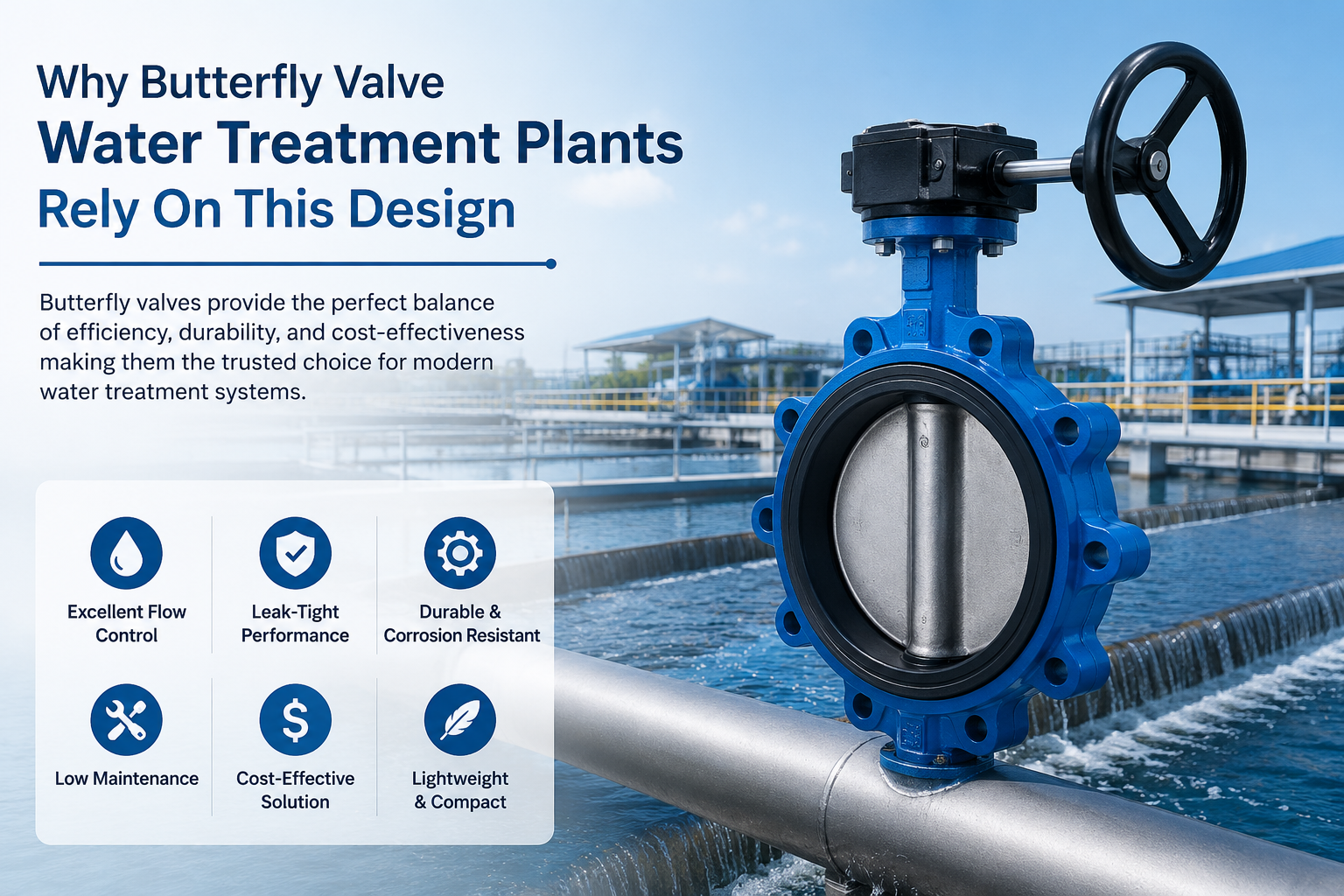
Why Butterfly Valve Water Treatment Plants Rely On This Design
Water treatment facilities typically involve extremely large pipe diameters carrying enormous fluid volumes — conditions where valve weight, installation space, and operating speed become just as important as raw pressure rating.
Butterfly valve water treatment plants specify so consistently because this design offers a rare combination: a compact, lightweight body that still delivers reliable shutoff and flow control across large-diameter lines, without the bulk and cost of gate valves at equivalent sizes.
For water treatment projects requiring certified valves alongside compatible pipes and fittings, our pipe supplier services in Dubai and UAE page details our full capability across municipal and industrial water infrastructure materials.
Butterfly Valve Types for Water Systems: Understanding Your Options
Before specifying a valve, understanding the range of butterfly valve types for water systems available helps engineers match design to specific application demands.
Core Butterfly Valve Design Categories
- Concentric (zero-offset) — stem and disc centered, using a resilient rubber or elastomer seat; ideal for general, low-pressure water service
- Double-offset (high-performance) — shaft positioned off-center, reducing seat friction and wear for improved durability under cycling
- Triple-offset — metal-seated design for high-temperature, high-pressure, or zero-leakage critical applications
For standard water treatment distribution and process lines, concentric and double-offset designs cover the vast majority of applications, while triple-offset variants are typically reserved for more demanding process conditions.
Wafer Type Butterfly Valve Applications: Compact Installation Between Flanges
Understanding wafer type butterfly valve applications clarifies why this specific configuration dominates space-constrained water treatment installations.
Why Wafer-Type Valves Are So Widely Used
- Compact design fits directly between two pipe flanges, minimizing installation footprint
- Lightweight construction reduces support structure requirements compared to heavier valve types
- Cost-effective for high-volume installations across large treatment facility footprints
- Quick installation and removal simplifies maintenance scheduling
Wafer-type valves work best in applications where the line won’t need to be fully disconnected on one side without affecting the other — an important design consideration for treatment plant piping layouts.
Lug Type Butterfly Valve Water Treatment: End-of-Line Flexibility
Where wafer valves fall short, understanding lug type butterfly valve water treatment applications require highlights a genuinely important distinction for facility design.
Key Advantages of Lug-Type Design
- Threaded lugs allow the valve to be bolted independently on each side, supporting true end-of-line service
- One side of the pipeline can be disconnected for maintenance while the valve remains sealed on the other side
- Particularly valuable for isolation points near pumps, filters, or equipment requiring frequent servicing
- Slightly heavier and more expensive than wafer-type equivalents, but offers genuine operational flexibility
Facilities frequently specify lug-type valves specifically at isolation points where equipment maintenance access matters more than minimizing initial cost.
Butterfly Valve vs Gate Valve Water Treatment: Making the Right Call
Understanding the butterfly valve vs gate valve water treatment comparison helps engineers avoid defaulting to familiar valve types out of habit rather than genuine application fit.
Key Comparison Points
| Factor | Butterfly Valve | Gate Valve |
|---|---|---|
| Weight and footprint | Significantly lighter, more compact | Heavier, larger footprint |
| Large-diameter cost | More economical at scale | Costs increase sharply with size |
| Operating speed | Fast quarter-turn operation | Slower multi-turn operation |
| Throttling capability | Better suited to moderate throttling | Poor throttling performance |
For a deeper comparison of valve operating mechanisms relevant to water and process piping generally, our detailed guide on Ball Valve vs Gate Valve covers additional context on quarter-turn versus multi-turn valve selection.
Butterfly valves consistently outperform gate valves specifically in large-diameter water treatment applications, where gate valve weight and cost scale unfavorably compared to butterfly designs at equivalent sizes.
Butterfly Valve Material Selection Water: Matching Grade to Media
Understanding butterfly valve material selection water treatment applications require ensures long-term reliability against the specific media and conditions each valve will face.
Common Material Categories
- Cast iron or ductile iron body — cost-effective for general water distribution service
- Stainless steel — corrosion resistance for aggressive water chemistry or coastal-adjacent facilities
- PVC/plastic bodies — lightweight, corrosion-immune options for smaller, less demanding lines
- Rubber or elastomer seat materials — critical for sealing performance and must match water chemistry and temperature
Material selection should always account for both the treated water’s chemistry and any pre-treatment stages involving more aggressive raw water or chemical dosing.
Rubber Lined Butterfly Valve Water Treatment: Enhanced Corrosion Protection
For particularly demanding applications, understanding rubber lined butterfly valve water treatment options helps address corrosion challenges that standard metal-seated designs can’t fully resolve.
Why Rubber Lining Matters
- Fully lined valve bodies prevent direct media contact with metal surfaces, dramatically reducing corrosion risk
- Particularly valuable for seawater intake lines, desalination pre-treatment, or acidic process water
- Extends service life significantly compared to unlined valves in aggressive media
- Requires periodic inspection of lining integrity as part of routine maintenance
Desalination and seawater intake applications specifically benefit from rubber-lined designs, given the UAE’s extensive coastal water treatment infrastructure.
Butterfly Valve Pressure Rating Water Systems: Understanding Your Limits
Understanding butterfly valve pressure rating water systems typically operate under helps engineers avoid both under- and over-specifying valve pressure class.
Pressure Considerations for Water Treatment
- Most water treatment distribution lines operate at moderate pressure compared to oil and gas applications
- Concentric butterfly valves generally suit lower-pressure water distribution effectively
- Higher-pressure pumping stations or specific process lines may require double or triple-offset designs
- Always confirm pressure rating against actual system operating pressure, including surge or water hammer considerations
Water hammer events during pump start/stop cycles can create pressure spikes well above steady-state operating pressure — factor this into valve pressure class selection rather than sizing to steady-state conditions alone.
Butterfly Valve for Sewage Treatment: Handling Challenging Media
Beyond clean water applications, understanding butterfly valve for sewage treatment requirements addresses the additional challenges wastewater and sewage present compared to potable water systems.
Sewage-Specific Considerations
- Solids and debris content requires valve designs resistant to fouling and jamming
- Corrosive gases (hydrogen sulfide) common in sewage systems demand appropriate material resistance
- Larger clearance and full-bore designs help prevent solids accumulation at the valve seat
- Regular maintenance access becomes even more critical given the more demanding media
Lug-type butterfly valves are frequently specified in sewage treatment applications specifically because their end-of-line serviceability supports the more frequent maintenance these systems typically require.
Butterfly Valve Actuator Options: Manual to Fully Automated
Understanding available butterfly valve actuator options helps facilities match control method to the specific automation requirements of each application.
Common Actuation Methods
- Manual lever operation — suitable for smaller valves and infrequent operation
- Manual gearbox operation — provides mechanical advantage for larger valves requiring more torque
- Pneumatic actuators — fast, reliable automated operation where compressed air is available
- Electric actuators — precise, remotely controllable operation integrated with plant control systems
Water treatment facilities increasingly specify pneumatic or electric actuation for valves integrated into automated control systems, while manual operation remains common for isolation valves requiring only occasional adjustment.
Butterfly Valve Sizing Guide: Matching Valve to Pipeline
A practical butterfly valve sizing guide helps engineers avoid the common mistake of simply matching valve size to nominal pipe diameter without considering flow characteristics.
Sizing Considerations
- Confirm required flow capacity (Cv) matches system design flow rate, not just nominal pipe size
- Account for pressure drop across the valve at the specified opening position
- Consider whether the valve will be used primarily for shutoff, throttling, or both
- Verify actuator torque rating matches the valve size and operating pressure combination
Undersized valves create excessive pressure drop and premature wear, while oversized valves add unnecessary cost — proper sizing calculation, not just matching pipe diameter, produces the most reliable long-term result.
Butterfly Valve Installation Guide: Best Practices for Water Systems
Following a proper butterfly valve installation guide ensures valves perform as designed once integrated into the piping system.
Installation Best Practices
- Verify flange face compatibility and proper gasket selection for wafer or lug configurations
- Ensure adequate clearance for full disc rotation without obstruction from adjacent fittings
- Support valve weight appropriately, particularly for larger diameter installations
- Confirm actuator orientation allows for accessible manual override if automated
Installing a butterfly valve too close to an elbow or other fitting can restrict disc rotation or create uneven flow patterns affecting valve performance — always maintain manufacturer-recommended clearance distances.
Butterfly Valve Maintenance Water Treatment: Extending Service Life
Understanding proper butterfly valve maintenance water treatment facilities should follow helps maximize valve lifespan and prevent unexpected failures.
Routine Maintenance Priorities
- Periodic inspection of seat and seal condition, particularly in abrasive or corrosive media
- Actuator lubrication and mechanical inspection per manufacturer schedules
- Verification of full open/close cycling to prevent seizing from infrequent operation
- Prompt investigation of any unusual noise, leakage, or operating resistance
Facilities that maintain valves reactively, only after failure, consistently face higher replacement costs than those following scheduled preventive maintenance protocols.
Industrial Valves for Water Treatment Plants: Beyond Butterfly Valves
While butterfly valves dominate large-diameter applications, understanding the broader category of industrial valves for water treatment plants require helps ensure complete, properly specified systems.
Complementary Valve Types in Water Treatment
- Gate valves — for smaller-diameter isolation applications where full-bore flow matters
- Check valves — preventing backflow at pump discharge points
- Pressure reducing valves — managing pressure across zones with differing elevation or demand
Our services page details our complete capability across valves, pipes, fittings, and flanges, ensuring water treatment projects can source a fully compatible system from a single supplier.
Butterfly Valve Supplier UAE: What to Look For
Choosing the right butterfly valve supplier UAE water treatment projects can depend on involves evaluating more than just price per unit.
Key Supplier Evaluation Criteria
- Comprehensive stock across wafer, lug, concentric, and offset designs
- Material certification and test reports suitable for municipal water authority submissions
- Experience specifically with water and wastewater treatment project references
- Ability to supply matched actuators, whether manual, pneumatic, or electric
As a certified pipe and valve supplier in Sharjah, we support water treatment contractors with fully certified materials and technical guidance from initial specification through installation.
Frequently Asked Questions
1. Why are butterfly valves preferred over gate valves in water treatment plants?
Butterfly valves offer significantly lower weight, smaller footprint, and lower cost at large diameters compared to gate valves, while still providing reliable shutoff and reasonable throttling performance for most water treatment applications.
2. What’s the difference between wafer and lug type butterfly valves?
Wafer-type valves fit between two pipe flanges and require both sides bolted together, while lug-type valves have independent threaded lugs allowing one side of the pipeline to be disconnected for maintenance without affecting the other.
3. Do butterfly valves work well for sewage and wastewater applications?
Yes, properly designed butterfly valves with appropriate clearance and corrosion-resistant materials handle sewage and wastewater effectively, though lug-type designs are often preferred given their easier maintenance access.
4. What material should I choose for a butterfly valve in a coastal desalination plant?
Rubber-lined or stainless steel butterfly valves are commonly specified for desalination and seawater intake applications, given the corrosive nature of seawater and the need for long-term reliability.
5. How do I determine the right actuator for my butterfly valve?
Actuator selection depends on valve size, required operating speed, and whether automated control integration is needed — always confirm actuator torque rating matches the specific valve size and operating pressure combination.
Final Thoughts
Butterfly valves have earned their dominant position in water treatment infrastructure through a genuine combination of compact design, cost efficiency, and reliable performance across large-diameter systems. Matching the right type, material, and actuation method to your specific application ensures your water treatment project performs reliably for decades of continuous service.
Need certified butterfly valves for your next UAE water treatment project? Visit the Leema Engineering Works to explore our full range of wafer, lug, and offset butterfly valves, or contact our technical team for expert selection guidance tailored to your facility.