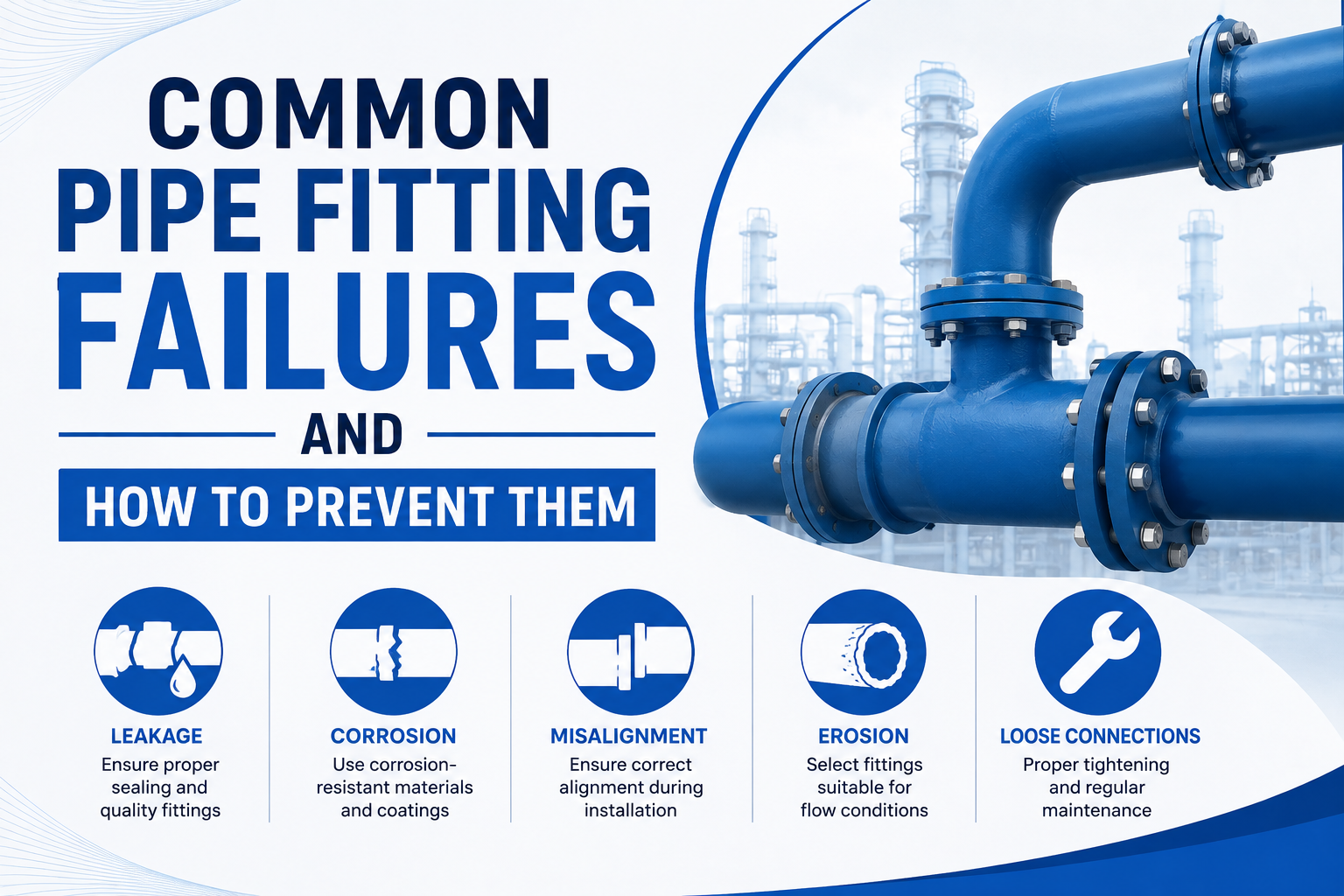
Unplanned downtime from a failed pipe fitting rarely comes as a genuine surprise to those who investigate the root cause afterward. Nearly every documented case of common pipe fitting failures and how to prevent them traces back to a handful of well-understood mechanisms, corrosion, fatigue, improper installation, that were identifiable well before the actual failure occurred.
This guide walks maintenance engineers, plant operators, and procurement managers through exactly what causes pipe fitting failures, how to spot warning signs early, and the specific preventive measures that meaningfully reduce risk across industrial and oil and gas facilities in Abu Dhabi and the wider UAE.
Pipe Fitting Failure Causes: The Core Categories
Understanding pipe fitting failure causes starts with recognizing that most failures fall into a small number of well-documented categories: corrosion, mechanical fatigue, erosion, and installation-related stress. While each has distinct mechanisms, they frequently compound each other, a fitting weakened by corrosion becomes more vulnerable to fatigue cracking, while installation stress can accelerate corrosion at a joint that would otherwise have performed adequately.
Recognizing which category is driving a specific failure, rather than treating “leak” or “failure” as a single generic problem, is the first step toward genuinely effective prevention rather than repeated, reactive patching.
Common Causes of Pipe Joint Failure: A Closer Look
Digging into the common causes of pipe joint failure specifically, joints and connections consistently rank among the weakest points in any industrial piping system. Improper installation, ongoing vibration, and repeated thermal cycling all contribute to joints loosening or failing over time, often resulting in leaks before progressing to more serious separations if left unaddressed.
Misalignment is a particularly common contributing factor, whether caused by installation error, thermal expansion, or gradual settling of supporting structures, since a misaligned joint concentrates stress unevenly rather than distributing it as the connection was originally designed to handle.
Pipe Fitting Corrosion Prevention: Addressing the Leading Cause
Corrosion remains the single most common driver behind industrial pipe fitting failure, which makes pipe fitting corrosion prevention the highest-priority focus for most maintenance programs. Chemical reactions between the fitting material and the fluid being transported gradually weaken the metal, while galvanic corrosion, caused by combining dissimilar metals at a connection, creates a particularly vulnerable weak point that’s often overlooked during initial specification.
Effective prevention starts with proper material selection matched to the actual service fluid and environment, supplemented by protective coatings, cathodic protection where appropriate, and consistent periodic inspection to catch early-stage corrosion before it compromises structural integrity.
How to Prevent Pipe Leaks: Practical Preventive Measures
Understanding how to prevent pipe leaks effectively means addressing root causes rather than simply reacting to symptoms after they appear. Key preventive measures include:
- Matching material selection to service conditions, avoiding galvanic corrosion risk from combining dissimilar metals
- Ensuring proper installation practices, including correct alignment, appropriate torque on threaded connections, and adequate sealant application
- Implementing a scheduled inspection program, using ultrasonic testing, radiography, or dye penetrant testing to detect early-stage wear before failure
- Managing vibration through flexibility joints, expansion joints, and proper support spacing
- Monitoring for erosion in high-velocity sections, particularly at elbows and bends where turbulent flow concentrates wear
Implementing these measures proactively, as part of a planned maintenance program rather than only after a failure occurs, consistently proves far more cost-effective than emergency repairs and unplanned downtime.
Pipe Fitting Inspection Checklist: What to Actually Look For
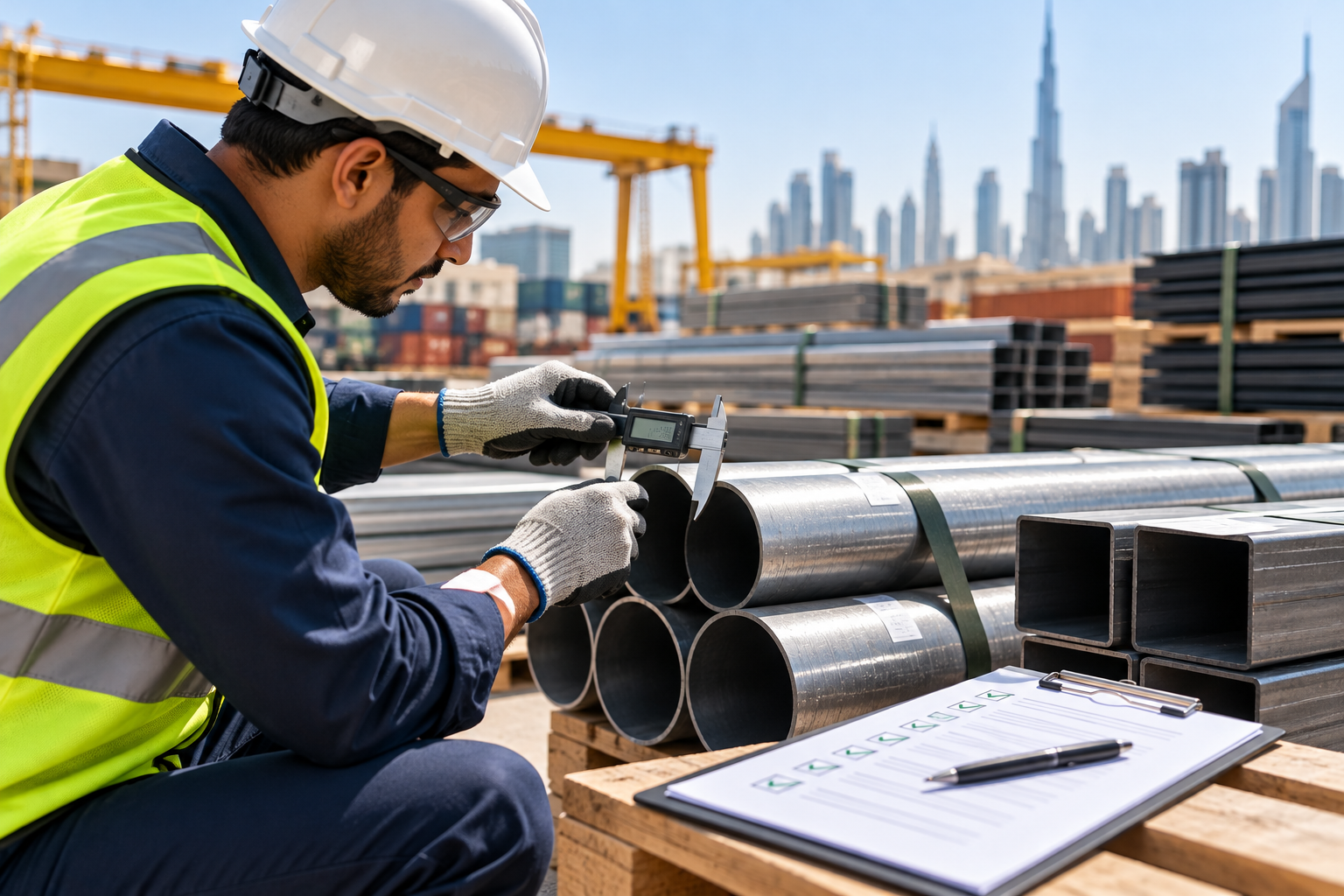
A practical pipe fitting inspection checklist should guide routine maintenance rounds rather than relying on informal visual scans alone. Inspectors should check for visible corrosion or discoloration at joints, signs of leakage or staining around fittings, unusual vibration or noise during operation, evidence of misalignment or stress at connection points, and wall thinning at elbows or bends where erosion typically concentrates first.
Documenting findings consistently over time, rather than treating each inspection as an isolated event, helps identify developing trends before they progress into an actual failure requiring emergency intervention.
Industrial Pipe Fitting Maintenance: Building a Sustainable Program
A genuinely effective industrial pipe fitting maintenance program moves beyond reactive repairs toward scheduled, data-driven upkeep. This typically includes routine inspection intervals appropriate to the specific service conditions, tracking corrosion or wear trends over successive inspections rather than evaluating each check in isolation, and maintaining clear documentation that helps identify recurring problem areas across the facility.
Facilities that invest consistently in this kind of structured maintenance program consistently report fewer unplanned shutdowns and lower overall lifecycle costs than those relying primarily on reactive repair after failures occur. Understanding the full range of pipe fittings and their proper specification helps maintenance teams ensure replacement components genuinely match original design intent rather than introducing new material or compatibility risks.
Pipe Fitting Failure Analysis: Learning From What Actually Happened
When a failure does occur, thorough pipe fitting failure analysis matters significantly for preventing recurrence. Rather than simply replacing the failed component and moving on, identifying the specific root cause, whether corrosion, fatigue, erosion, or installation error, informs whether the replacement needs a different material, additional protective measures, or a design change to the surrounding system.
Skipping this analysis step and simply swapping in an identical replacement often means the same failure mechanism will eventually recur, particularly if the underlying environmental or operational conditions driving the original failure remain unaddressed.
Preventing Pipe Fitting Leaks UAE Facilities Should Prioritize
Preventing pipe fitting leaks UAE industrial and oil and gas facilities specifically should prioritize accounting for the region’s demanding operating environment, high ambient temperatures accelerating thermal cycling stress, and in coastal areas, elevated humidity and salt exposure compounding corrosion risk beyond what standard material specifications might anticipate for more temperate climates.
Facilities operating in this environment benefit from specifying corrosion-resistant materials appropriately upgraded for local conditions, rather than defaulting to standard specifications developed for less demanding climates elsewhere.
Pipe Fitting Installation Mistakes: The Most Common Errors
A significant share of pipe fitting failures trace directly back to pipe fitting installation mistakes rather than material defects or normal wear. Over-tightening threaded connections, insufficient sealant application, and pipe misalignment during installation all create concentrated stress points that can develop into cracks or leaks well before the fitting’s expected service life would otherwise suggest.
Proper installer training and adherence to manufacturer torque and alignment specifications, rather than relying on installer experience or judgment alone, meaningfully reduces this entirely preventable category of failure.
Signs of Pipe Fitting Failure: Catching Problems Early
Recognizing signs of pipe fitting failure before a full leak or rupture occurs gives maintenance teams valuable lead time to intervene. Watch for gradual staining or discoloration around joints, small drips or moisture accumulation that may indicate a developing leak, unusual vibration or noise suggesting loosening connections, and visible surface pitting or roughness that can indicate active corrosion or erosion at the fitting’s internal surface.
Training maintenance staff to recognize and report these early indicators, rather than waiting for an obvious failure, is one of the most cost-effective prevention measures any facility can implement. For guidance on selecting appropriately rated replacement components, our comparison of butt weld and socket weld fitting types covers how connection type affects failure risk and inspection capability.
Frequently Asked Questions
1. What’s the single most common cause of pipe fitting failure? Corrosion is generally considered the leading cause, gradually weakening fitting walls until leaks, cracks, or in severe cases, complete rupture occur if left unaddressed.
2. How often should industrial pipe fittings be inspected? Inspection intervals should be based on specific service conditions and risk level, but facilities in demanding environments like the UAE generally benefit from more frequent scheduled inspections than standard, less corrosive settings would require.
3. Can improper installation really cause a fitting to fail years later? Yes, installation-related stress points, from misalignment or over-tightening, can create weaknesses that develop into fatigue cracks or leaks well after the initial installation, sometimes years into service.
4. What inspection methods are used to detect early-stage pipe fitting problems? Common methods include ultrasonic testing, radiography, dye penetrant testing, and thermal imaging, each suited to detecting different types of wear, cracking, or wall thinning before failure occurs.
5. Does root cause analysis really matter if a fitting can just be replaced? Yes, without identifying the actual failure mechanism, a like-for-like replacement often experiences the same failure again if the underlying material, environmental, or installation issue driving the original failure isn’t addressed.
Final Thoughts on Preventing Pipe Fitting Failures
Understanding common pipe fitting failures and how to prevent them comes down to recognizing that most failures, corrosion, fatigue, erosion, and installation error, are genuinely identifiable and preventable well before they result in costly downtime or safety incidents. Building a structured, proactive maintenance and inspection program, rather than relying on reactive repairs, remains the most reliable way to protect both operational continuity and safety across UAE industrial and oil and gas facilities.
Leema Engineering Works Baniyas Najda Street, Al Danah, Zone 1, Abu Dhabi, United Arab Emirates Phone: +971 6 533 8167 / +971 50 425 1818 | Email: sales@leemaeng.com