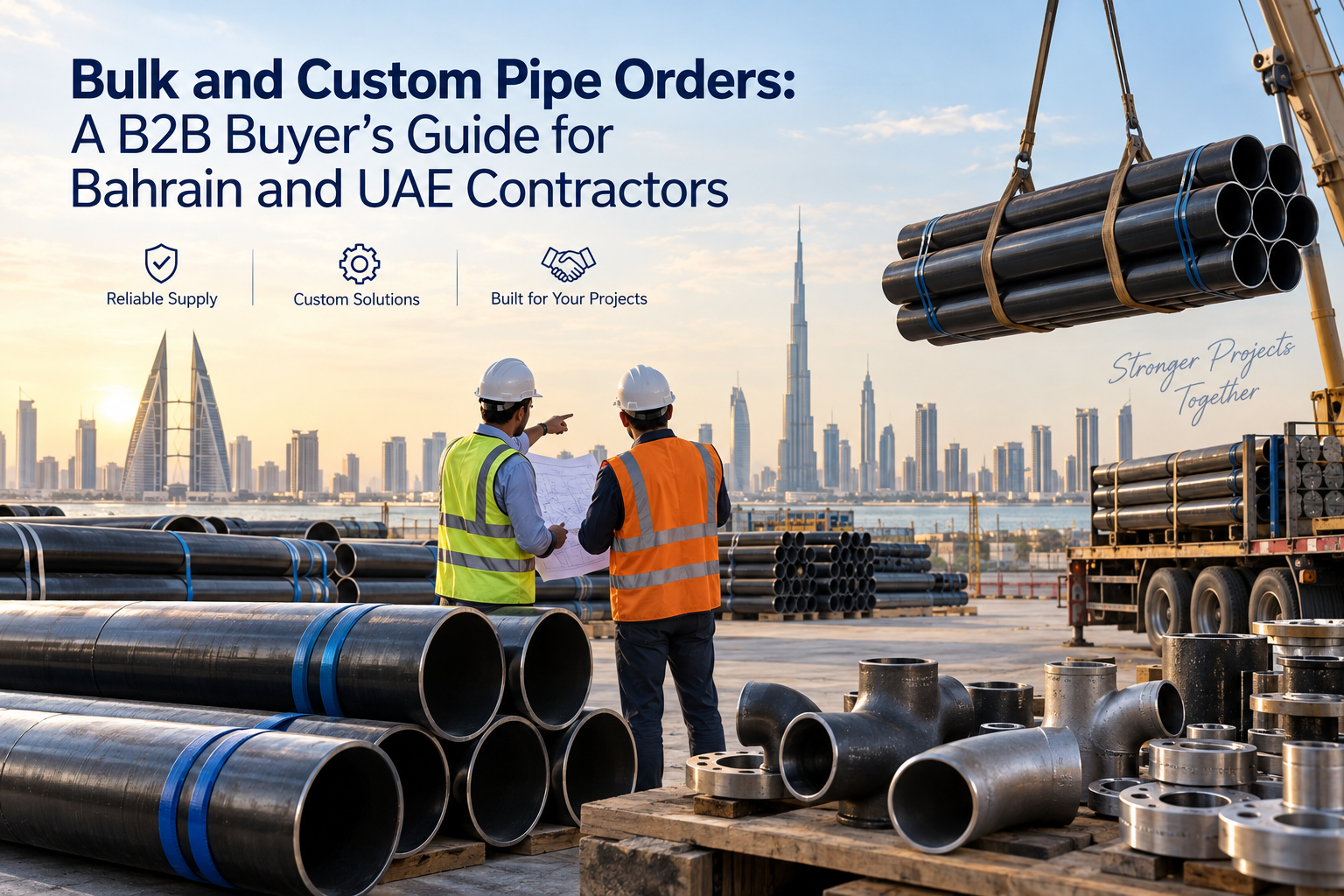
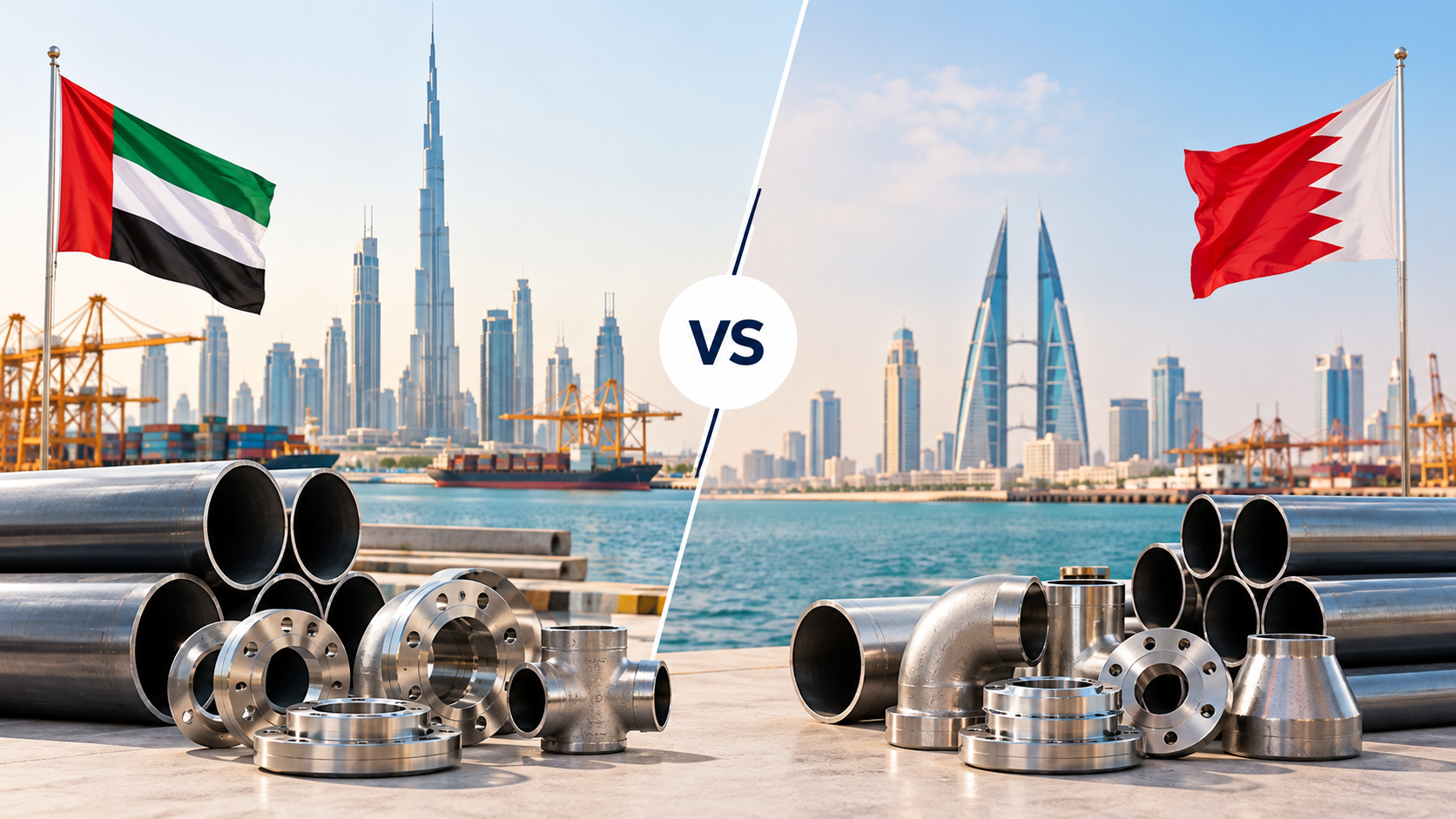
UAE vs Bahrain industrial procurement decisions shape project costs, schedules and compliance long before the first pipe reaches your site. For procurement managers, EPC contractors and project engineers, choosing where to source pipes, fittings, flanges and valves is a strategic call, not just a price comparison.
Both markets serve oil and gas, power, marine and construction. Yet they work differently. The UAE offers scale, deep stock and several major ports. Bahrain offers a compact market, close supplier relationships and quick access to the wider Gulf.
This guide shows where each market wins, where the risks hide, and how to build a sourcing plan that works in both. It draws on the experience of Leema Engineering Works, an ISO 9001 certified supplier with more than 50 years in the piping industry.
Why UAE vs Bahrain Industrial Procurement Needs a Closer Look
Many buyers treat Gulf markets as interchangeable. That assumption costs money. Each market has its own supplier base, approval culture, logistics routes and tax rules.
A project in Sharjah may need ready stock within days. A turnaround in Sitra may depend on a supplier who already holds client approvals. Knowing these differences early prevents rework, delays and rejected materials.
Buyers who compare both markets also gain leverage. They can split orders, protect against stock-outs and negotiate better terms.
Market Size, Stock and Supplier Base: UAE vs Bahrain
Where the UAE Leads
The UAE has the larger industrial ecosystem. Sharjah, Dubai and Abu Dhabi host stockists, fabrication yards and testing facilities within a short drive of each other.
- Wide product range: carbon steel, stainless steel, alloy and non-metallic pipes in many schedules.
- Large inventory: bulk quantities are often available ex-stock.
- Port access: Jebel Ali and other ports support fast import and re-export.
- Free zones: these help with customs flexibility for project cargo.
Where Bahrain Leads
Bahrain is smaller, but it is efficient. Buyers often deal directly with decision-makers, which speeds up approvals and technical clarification.
- Short distances: almost any site can be reached within hours.
- Strong energy focus: refining and petrochemical demand shapes local supplier expertise.
- Regional connectivity: the King Fahd Causeway links Bahrain to Saudi Arabia’s Eastern Province.
If your project needs breadth and volume, the UAE usually has the advantage. If you need agility on a compact site, Bahrain is hard to beat.
Cost, Lead Time and Logistics in UAE vs Bahrain Industrial Procurement
Price per unit is only one part of landed cost. Smart buyers look at the full chain.
Pricing and VAT
The UAE applies 5% VAT, while Bahrain applies 10%. Check current rates with your tax advisor, because they affect budgets and cash flow. Larger UAE stock levels also tend to create more competitive quotations on standard items.
Freight and Delivery Time
Distance matters. Delivery within a single UAE emirate is often same-day or next-day. Cross-border shipments to Bahrain add customs clearance, documentation and transit time.
Consider these factors:
- Stock location versus project location
- Customs and inspection requirements
- Packing standards for sea or road transport
- Backup options if a shipment is delayed
For many EPC contractors, holding critical spares in the UAE and delivering to Bahrain on demand is the best balance.
Certification and Quality Standards in the UAE and Bahrain
Quality failures are expensive in oil and gas and power projects. Whichever market you buy from, insist on traceable, certified materials.
Documentation Rules in UAE vs Bahrain Industrial Procurement
Expect clients and consultants in both countries to ask for:
- Mill test certificates (EN 10204 3.1 or 3.2 where required)
- Material data sheets and heat numbers
- Compliance with ASTM, ASME, ANSI, DIN, ISO and BS standards
- Third-party inspection reports
- Approved vendor list (AVL) status with the end client
Large operators such as ADNOC and Bapco Energies maintain strict vendor requirements. Starting the approval process early saves weeks.
A supplier with strong credentials reduces risk. For example, Leema’s certified industrial pipe supplier service in Bahrain is built around documented quality and traceable stock.
Real-World Use Cases Across Sectors
Oil and Gas
Midstream and downstream projects need high-pressure pipes, forged fittings and precision flanges. In UAE vs Bahrain industrial procurement for oil and gas, approvals and test reports often decide the winner, not the lowest price.
Construction and MEP
Contractors need consistent supply for plumbing, HVAC and firefighting systems. UAE stockists usually have the advantage for large, mixed orders delivered in phases.
Marine and Shipbuilding
Corrosion resistance is critical. Buyers look for stainless steel and duplex grades with documented origin. Port proximity in both countries supports repair and offshore work.
Example Scenario
An EPC contractor in Bahrain needs 300 weld neck flanges within two weeks. Local stock covers 120 pieces. The team sources the remaining 180 from a UAE warehouse that already holds certified inventory. Our page on a trusted industrial flanges supplier in Bahrain explains how cross-border supply can be arranged.
A Practical Checklist for Buyers
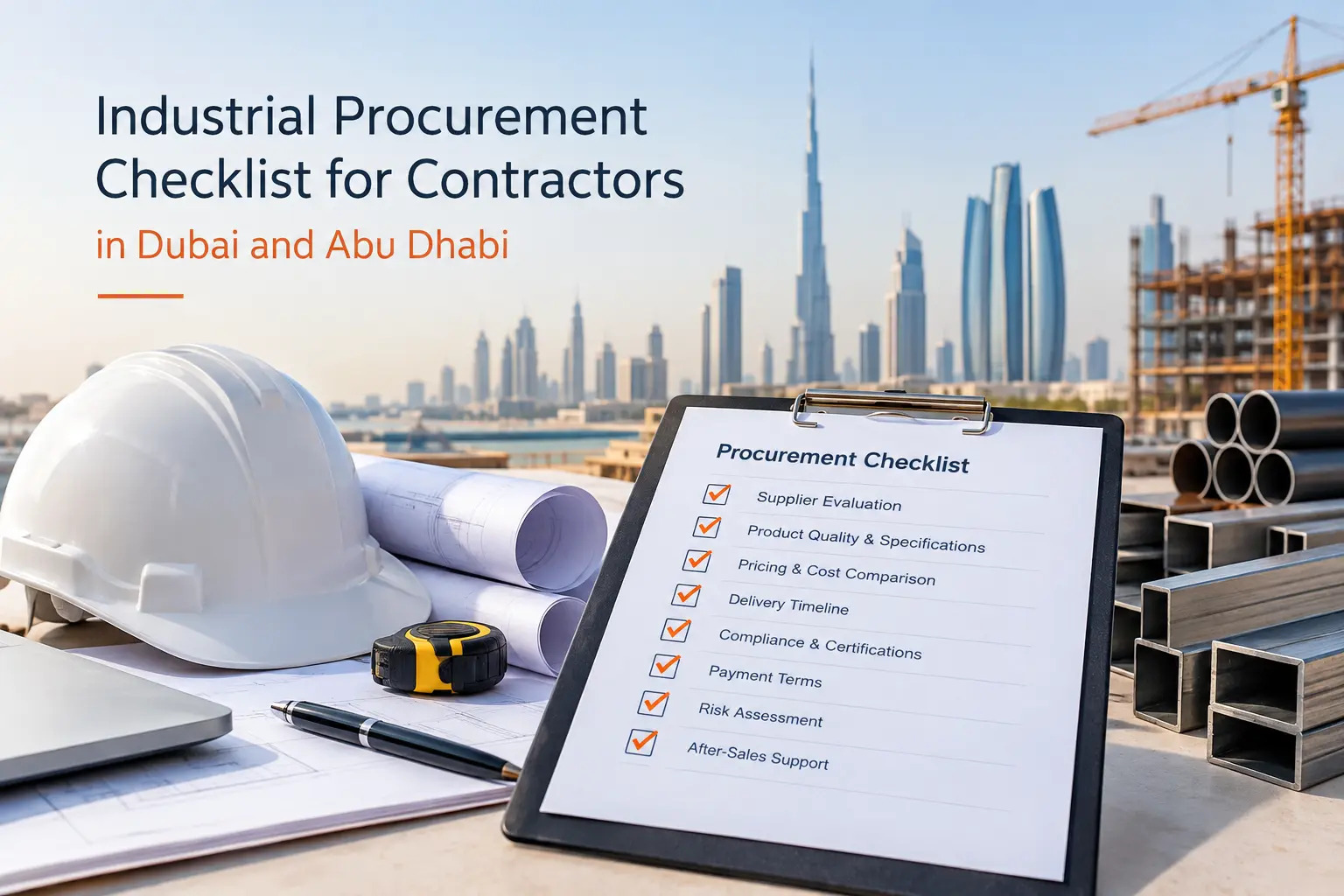
Use this checklist to simplify UAE vs Bahrain industrial procurement before you issue a purchase order:
- Define specifications: grade, schedule, pressure class and standard.
- Check supplier credentials: ISO certification, client references and AVL status.
- Request full documentation: certificates and test reports before shipment.
- Compare landed cost: include freight, duty, VAT and inspection.
- Confirm lead times in writing: with penalties or alternatives if delays occur.
- Plan for spares: order extra consumables like gaskets, bolts and small-bore fittings.
- Audit the warehouse: visit if the order is critical.
Building a Dual-Market Sourcing Strategy
The best results often come from using both markets together. A dual-market approach reduces dependency on one supplier, one port or one customs route.
Many procurement teams now follow this model for UAE vs Bahrain industrial procurement:
- Keep standard, high-volume items stocked in the UAE.
- Use Bahrain-based contacts for urgent site support and local approvals.
- Choose one partner who understands both regions and can coordinate delivery.
Frequently Asked Questions
What is the biggest difference in UAE vs Bahrain industrial procurement?
The UAE offers greater stock depth, more suppliers and more ports. Bahrain offers a smaller, faster-moving market with direct access to decision-makers.
Is it cheaper to buy industrial pipes in the UAE?
Often yes for standard items, thanks to higher volumes and competition. However, total cost depends on freight, VAT and documentation, so compare landed prices.
Can UAE suppliers deliver to Bahrain?
Yes. Many UAE suppliers ship to Bahrain by road or sea. Confirm customs documents and lead times before ordering.
Which certificates should buyers request?
Ask for mill test certificates, material data sheets, heat numbers and any third-party inspection reports required by your client.
How can I reduce procurement risk in the Gulf?
Use certified suppliers, verify documents before dispatch, hold safety stock and work with a partner who can support both markets.
Final Thoughts
UAE vs Bahrain industrial procurement is not about choosing a winner. It is about matching each market’s strengths to your project’s needs. The UAE brings scale and inventory. Bahrain brings speed and proximity. Combined with certified materials and clear documentation, both can deliver reliable results.
Ready to plan your next order? Share your item list with our team and receive a fast, accurate quotation.
👉 Request a Quote Now
Leema Engineering Works (LEW)
Industrial Area 2, Sharjah, United Arab Emirates
Abu Dhabi Branch: Baniyas Najda Street, Al Danah, Zone 1, Abu Dhabi
Phone: +971 6 533 8167 | +971 50 425 1818
Email: sales@leemaeng.com