To verify industrial material quality UAE project teams need more than a price quote and a brochure. One batch of non-compliant pipes, fittings or flanges can cause leaks, shutdowns, failed inspections and expensive rework.
The UAE environment raises the stakes. Heat, humidity, coastal salt and high-pressure oil and gas service push materials hard, so a wrong grade or weak batch fails early.
This guide explains how to verify industrial material quality UAE buyers can rely on, from paperwork checks to physical testing. It draws on the experience of Leema Engineering Works, an ISO 9001 certified supplier in Sharjah with more than 50 years in the piping industry.
Why You Must Verify Industrial Material Quality UAE Projects Depend On
Procurement is where quality is won or lost. Once material reaches site, fixing a mistake costs far more than catching it at the order stage.
Skipping verification can lead to:
- Leaks and pressure failures during hydrotesting
- Corrosion in marine and coastal installations
- Material rejected by consultants or end clients
- Project delays and contractual penalties
- Safety incidents that put people and assets at risk
Strong industrial material testing UAE practice protects your budget, your schedule and your reputation. It also gives consultants and clients confidence in your submittals.
Step-by-Step Process to Verify Industrial Material Quality UAE Suppliers Must Pass
Use this sequence on every order. It works for carbon steel, stainless steel, alloy and plastic piping.
Step 1: Confirm the Specification and Standards
Start with a clear purchase specification. Define the grade, size, schedule, pressure class and end connection.
Then match each item to ASTM and ASME material standards. For example, ASTM A106 covers seamless carbon steel pipe, and ASME B16.5 covers pipe flanges.
Many UAE projects also reference ANSI, DIN, ISO, BS and JIS. Write the exact standard on the purchase order, because vague wording like “equivalent” invites substitution.
Step 2: Review the Material Test Certificate
A material test certificate (MTC) proves the chemical composition and mechanical properties of a batch. Check that it shows:
- The heat number
- Chemical analysis results
- Tensile strength, yield strength and hardness
- The manufacturer’s name and applicable standard
- An authorised signature or stamp
For critical service, ask for an EN 10204 3.1 certificate. The manufacturer issues it, and its inspection representative must be independent of the production department. A Type 3.2 certificate adds verification by an independent third party.
Step 3: Match Heat Numbers and Markings
A certificate only helps if it matches the product in your hands. Compare the heat number stamped or marked on each pipe, fitting or flange against the MTC.
Also check the grade, size, schedule and manufacturer logo. Any mismatch is a reason to reject the item, because traceability is the backbone of quality assurance.
Step 4: Carry Out PMI Testing
PMI testing stainless steel and alloy items is fast and non-destructive. A handheld XRF analyser confirms elements such as chromium, nickel and molybdenum within seconds.
It catches classic substitutions, such as grade 304 supplied as 316. Test a sample from each heat lot, or test every piece for critical service.
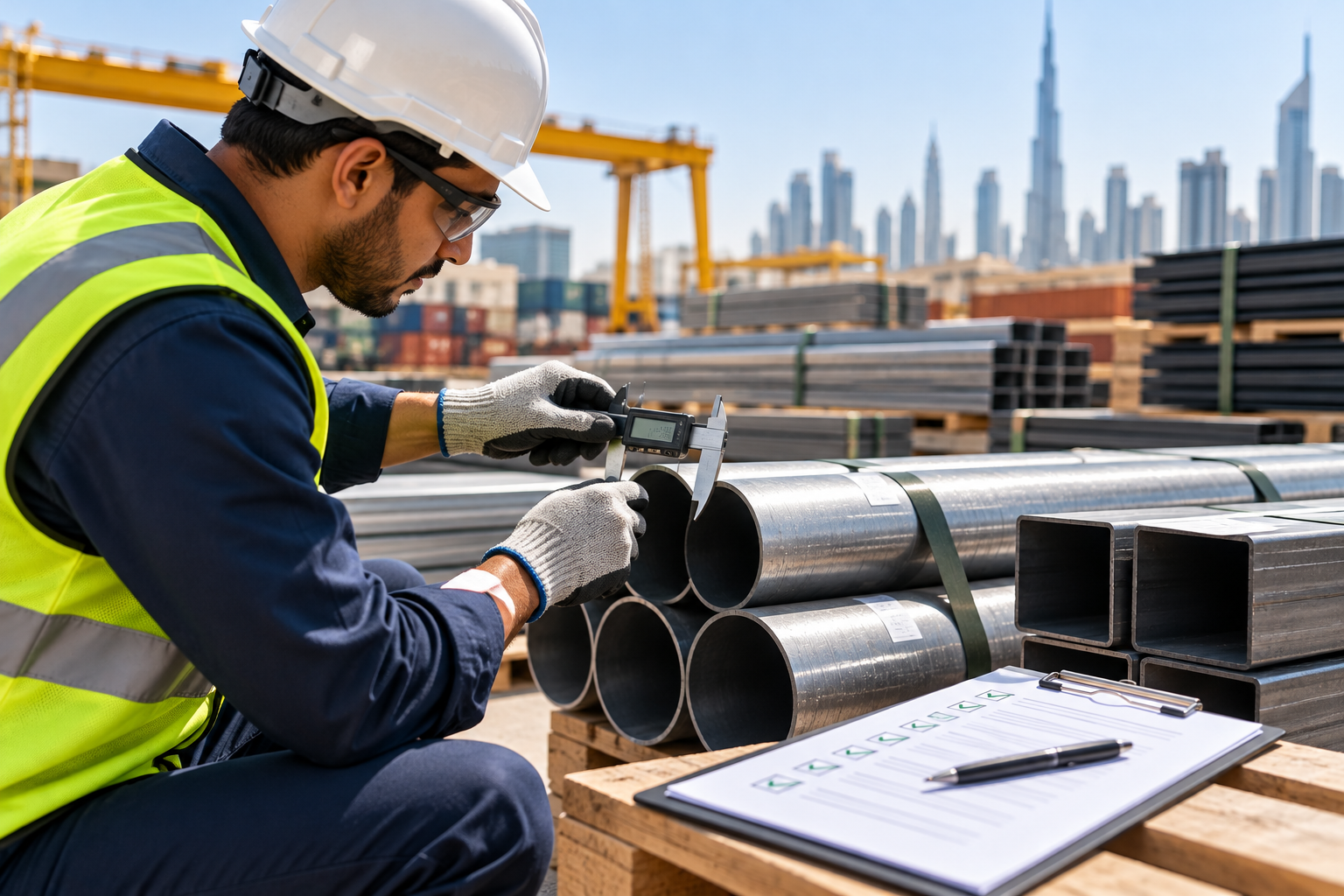
Step 5: Inspect Dimensions, Surface and Coating
Next, check the physical product. Measure wall thickness, outside diameter, ovality, bevel angle and flange face finish.
Use calipers and an ultrasonic thickness gauge. Look for pitting, laminations, dents, weld defects and rust, and confirm that the coating is uniform.
Step 6: Arrange Third-Party Inspection
For high-value or safety-critical orders, appoint an independent agency. Third-party inspection UAE providers can witness tests, review documents and issue an inspection release note before shipment.
Independent verification adds a layer of trust that owners and consultants value.
Pipes and Flanges Quality Inspection: What to Check on Each Product
Different products need different checks. A focused pipes and flanges quality inspection saves time and avoids missed defects.
Pipes
- Seamless or welded construction matches the specification
- Wall thickness is within tolerance
- Hydrostatic test records are available
- Ends are straight and correctly prepared
When you buy from a pipe supplier in Dubai and UAE, ask for test reports for every heat lot, not just a general datasheet.
Flanges
Verify the type (weld neck, slip-on, blind), pressure rating, facing style and material grade. Look for forging marks and legible stamping.
A dependable industrial flanges supplier should provide dimensional reports and certificates without delay.
Fittings
For elbows, tees and reducers, measure wall thickness at the thinnest point. Check markings, weld bevels and surface finish against the relevant ASME or ISO standard.
Good pipe fittings arrive with clear markings and matching documents, which makes your receiving inspection quicker.
Run a Supplier Quality Audit Before You Place the Order
Material quality is only as good as the supplier behind it. A simple supplier quality audit should cover:
- A valid ISO 9001 certificate
- An approved list of manufacturers and mills
- Inspection and testing capability
- Warehouse storage with stock separated by grade
- A track record in oil and gas, power, marine and construction
- Willingness to share documents before payment
Visit the warehouse if you can. Stock labelled by heat number signals disciplined control.
Working with a certified pipe supplier in UAE who keeps full traceability also reduces your own inspection burden.
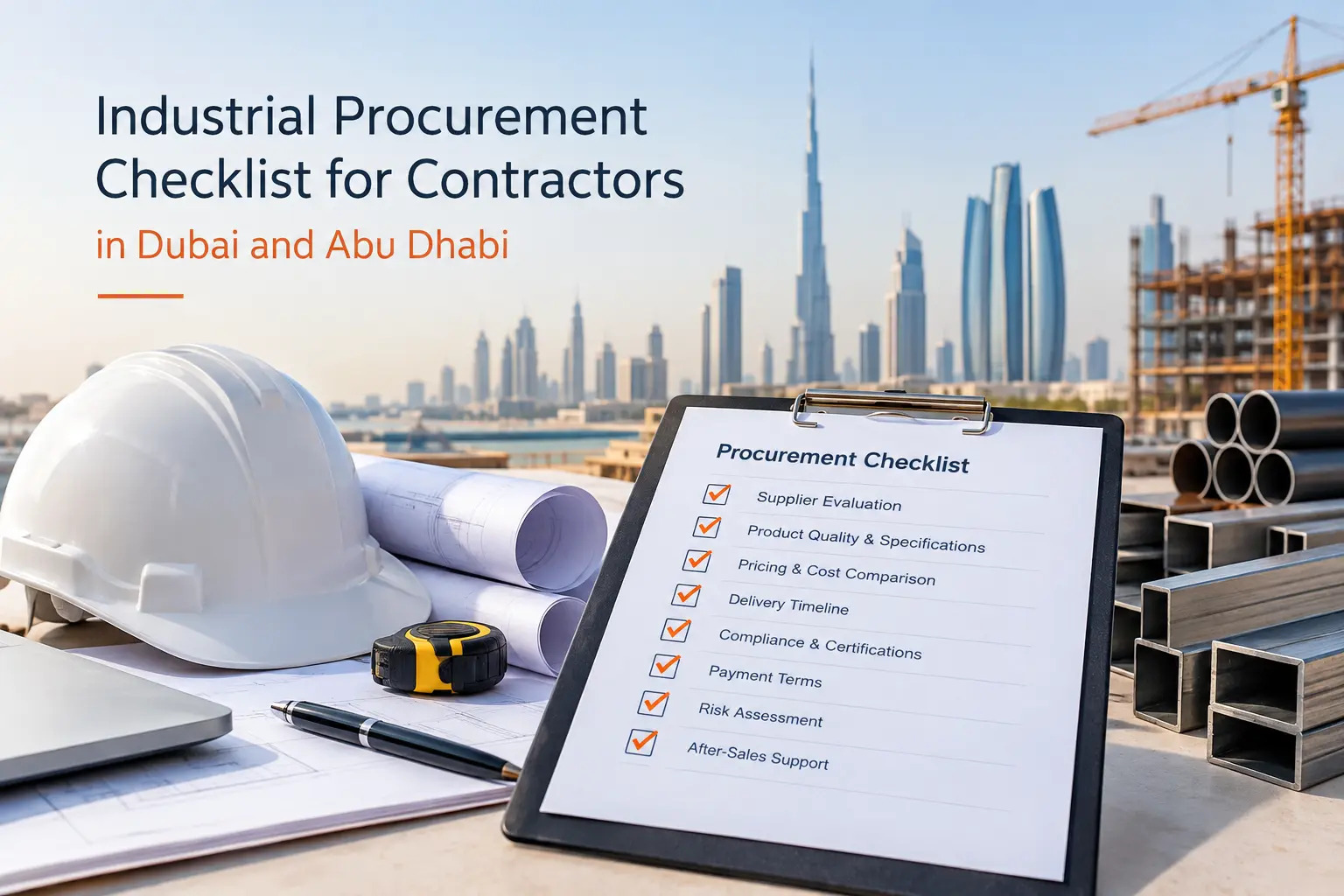
Procurement Quality Checklist for UAE Buyers
Use this procurement quality checklist before you release payment:
- Specification and standards are written on the purchase order
- Supplier is approved and audited
- MTC or EN 10204 3.1 certificate is received and reviewed
- Heat numbers match the physical material
- PMI is completed on alloy and stainless items
- Dimensional and visual inspection is signed off
- Third-party report is attached where required
- Packing, marking and shipping documents are verified
- A non-conformance process is agreed in writing
Following this list helps you verify industrial material quality UAE consultants and auditors will accept at handover.
Red Flags When You Verify Industrial Material Quality UAE Suppliers Present
Watch for these warning signs:
- Certificates with no heat numbers or visible edits
- Prices far below the market average
- A supplier who cannot name the mill
- Missing or faded markings on products
- Refusal to allow inspection or testing
- Documents issued by a trader instead of the manufacturer
Any one of these is a reason to pause and investigate before you order.
Industrial Material Testing UAE: Local Factors That Change Your Decision
Local conditions matter. Coastal sites in Sharjah, Dubai and Abu Dhabi demand strong corrosion resistance, and marine and offshore work often calls for duplex or coated materials.
Oil and gas service may require sour-service compliance. Choose the grade for the environment, not just the price.
When arranging industrial material testing UAE labs offer, confirm the lab holds ISO/IEC 17025 accreditation. This ensures chemical, mechanical and non-destructive test results are credible.
That is how to verify industrial material quality UAE site conditions will actually reward over the project’s life.
Frequently Asked Questions
How do I verify industrial material quality UAE suppliers provide?
Review the material test certificate, match heat numbers to markings, run PMI on alloys and inspect dimensions. For critical items, add third-party inspection and a supplier audit.
What is an EN 10204 3.1 certificate?
It is an inspection certificate issued by the manufacturer. It confirms the product meets the order requirements and lists actual test results. An independent inspection representative must validate it.
Is PMI testing necessary for stainless steel?
Yes, in most cases. PMI testing stainless steel confirms the real alloy content and prevents grade substitution, which visual checks cannot detect.
Which standards apply to pipes and flanges in the UAE?
Common references include ASTM, ASME, ANSI, DIN, ISO, BS and JIS. Your project specification decides which applies, so state it clearly on the purchase order.
Can I request test certificates before delivery?
Yes. A reputable supplier should share MTCs, data sheets and compliance documents on request. Leema Engineering Works provides these for every order.
Conclusion
Quality problems are cheapest to fix before purchase. To verify industrial material quality UAE buyers should check standards, review the MTC, match heat numbers, run PMI, inspect physically and use independent inspection when risk is high.
Pair that discipline with a transparent supplier, and your project avoids costly surprises.
Need Verified, Certified Piping Materials?
Talk to Leema Engineering Works and get certified pipes, fittings and flanges with full documentation.
👉 Request a Quote Now
Leema Engineering Works
Industrial Area 2, 27th Street, Old BMW Road, Sharjah, United Arab Emirates
Phone: +971 6 533 8167 | +971 50 425 1818
Email: sales@leemaeng.com
Abu Dhabi branch: Baniyas Najda Street, Al Danah, Zone 1, Abu Dhabi