A single undersized or wrongly specified fitting on a high-pressure line can turn a routine tie-in into an unplanned shutdown, or worse, a safety incident. Selecting the best pipe fittings for high-pressure systems isn’t just a procurement checkbox, it’s a decision that directly affects pipeline integrity, inspection outcomes, and long-term operating cost. As a trusted pipe, fittings and flanges supplier working across the UAE’s oil & gas sector, we’ve put together this guide for procurement managers, project engineers, and technical buyers who need to know what actually separates the best pipe fittings for high-pressure systems from ones that fail under real operating conditions.
Why High-Pressure Systems Demand Specialized Pipe Fittings
Standard fittings are built for moderate service. High-pressure pipeline components, by contrast, are engineered against tighter tolerances, thicker wall sections, and stricter material controls, because the consequences of failure scale directly with system pressure. A leak on a low-pressure utility line is an inconvenience; a leak on a high-pressure hydrocarbon line is a hazard, particularly on demanding oil and gas projects where uptime and safety margins are tightly monitored.
This is why industrial pipe fittings for high pressure applications go through additional qualification steps, hydrostatic testing, radiography, positive material identification, before they’re released for installation. Specifying “pressure rated” without confirming the class, schedule, and material grade together is one of the most common gaps procurement teams face on fast-moving EPC packages.
What Makes the Best Pipe Fittings for High-Pressure Systems
Three factors consistently separate the best pipe fittings for high-pressure systems from marginal ones: how they’re manufactured, what they’re made of, and how they seal.
Forged Pipe Fittings for Oil and Gas
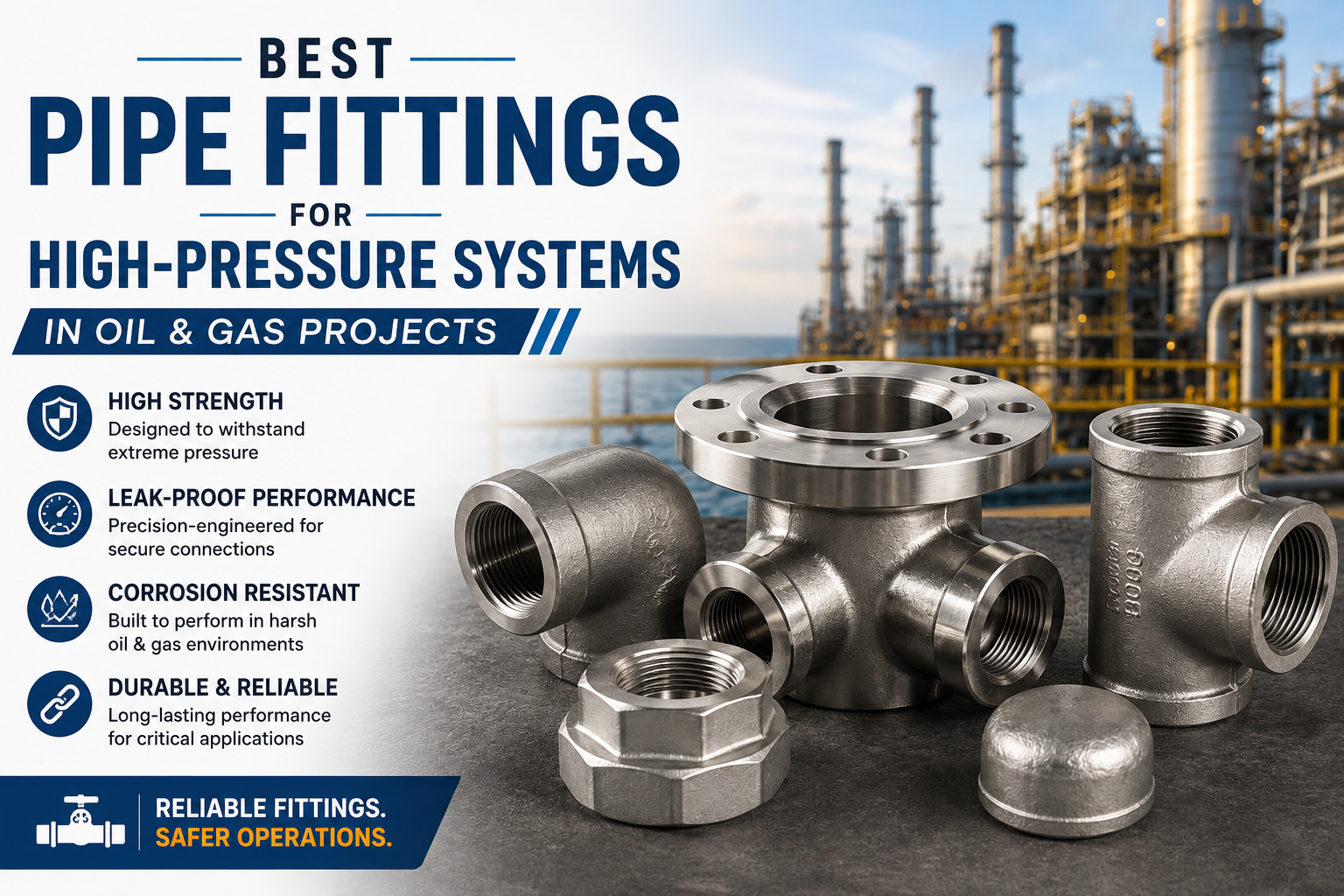
Forged pipe fittings for oil and gas service are produced by shaping heated billet under compressive force, which aligns the material’s grain structure and eliminates the porosity risk associated with cast components. This makes forged fittings the default choice for socket-weld and threaded connections in high-pressure classes, 3000#, 6000#, and 9000#, where consistent mechanical strength under cyclic loading is critical. Common forged grades include ASTM A105N for carbon steel and A182 F51/F53 for duplex and super duplex service in sour or offshore environments. Our certified pipe fittings inventory stocks these grades across a wide size range for fast release to site.
Stainless Steel Pipe Fittings for High Pressure
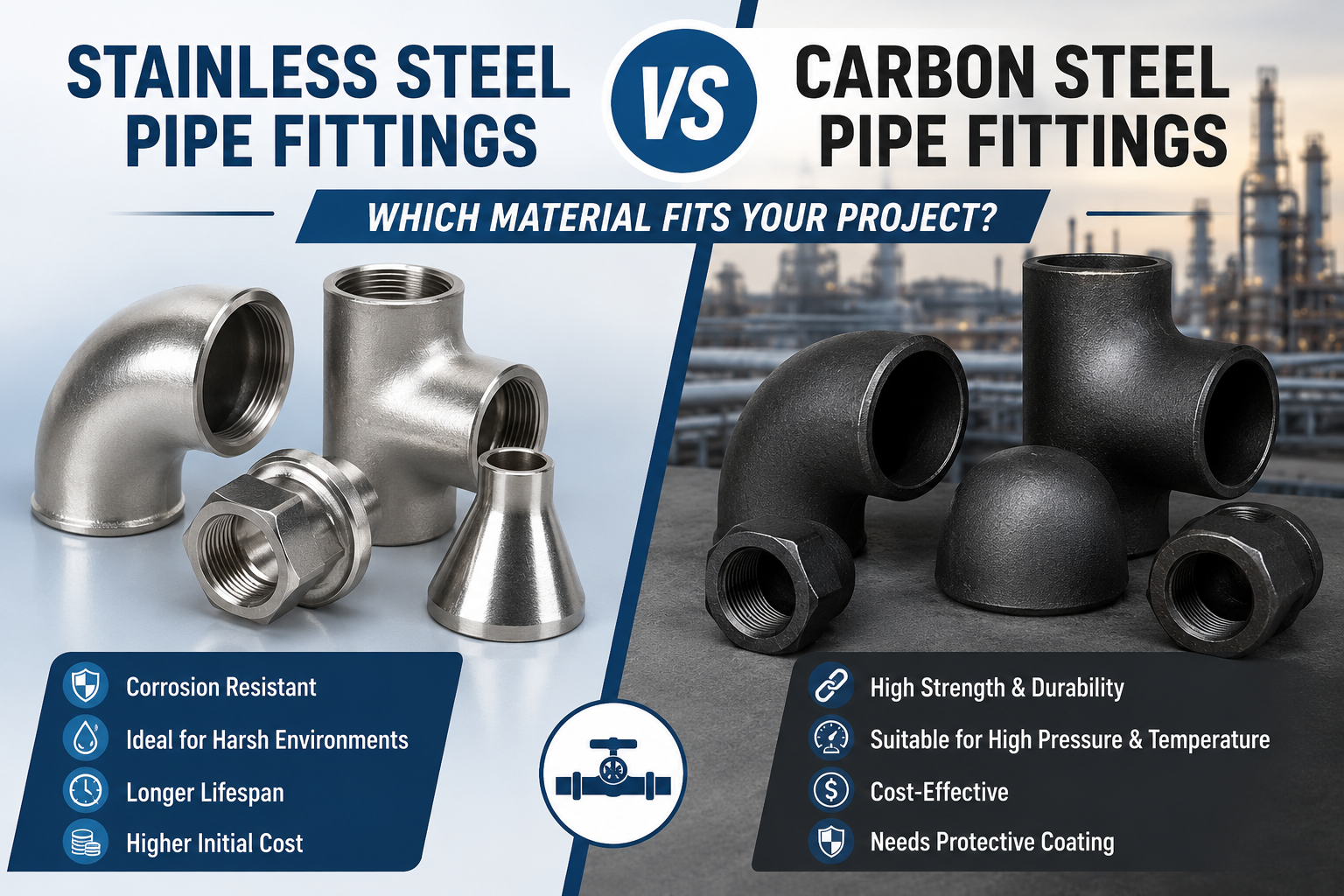
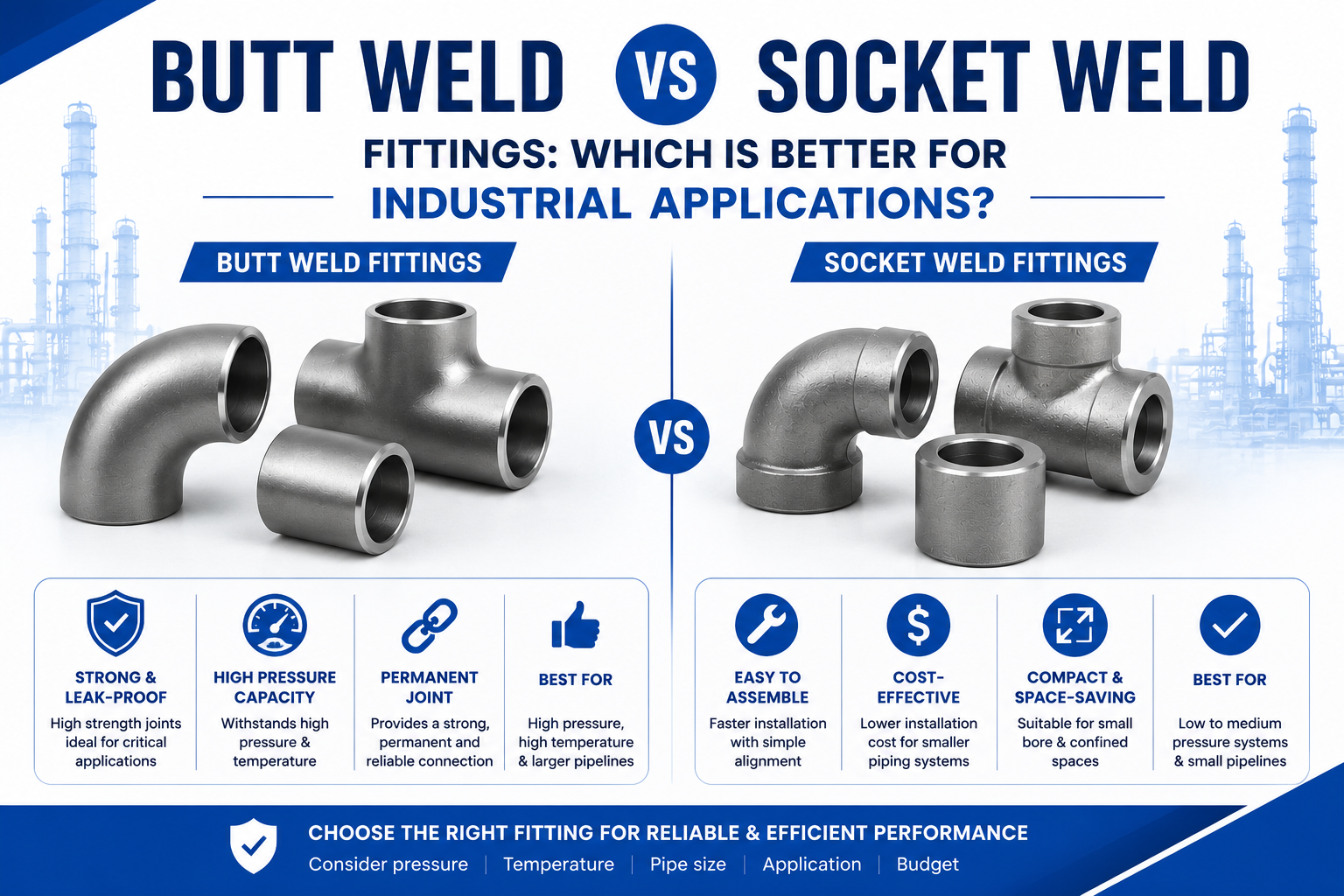
Stainless steel pipe fittings for high pressure service are specified wherever corrosion resistance matters as much as mechanical strength, sour gas lines, offshore platforms, and processing units handling aggressive chemicals. Grades like 316/316L offer strong resistance to chloride-induced corrosion, while duplex and super duplex stainless grades combine high strength with superior resistance to stress corrosion cracking, making them a common upgrade path on petrochemical projects operating in the UAE’s coastal and offshore environments. For background on how these connections are typically evaluated, our comparison of butt weld vs socket weld fittings covers the trade-offs in more depth.
High-Pressure Valve Fittings
High-pressure valve fittings, the connection points between valves and adjoining pipework, need to match the valve’s own pressure class exactly. A mismatch between a valve’s flange rating and its adjoining fitting is a common root cause of joint leakage during commissioning. Gate, ball, and check valves used in high-pressure hydrocarbon service typically pair with forged flanged or butt-weld fittings rated to the same class as our industrial flanges range, never a lower one.
Best Fittings for Oil and Gas Pipelines by Application
Different sections of an oil & gas pipeline call for different fitting types, and matching the fitting to the application is as important as matching the material grade.
- Wellhead and flowline connections: forged, high-class threaded or flanged fittings capable of handling pressure surges
- Trunk pipeline sections: butt-weld fittings per ASME B16.9, sized to match wall thickness on our full range of industrial pipes
- Compressor and pump station tie-ins: socket-weld fittings in smaller bores where vibration resistance matters
- Petrochemical process units: pipe fittings for petrochemical industry service, often specified in stainless or duplex grades for chemical compatibility
- Offshore and marine platforms: corrosion-resistant alloys such as Inconel 625/825, chosen for durability in saline, high-humidity environments
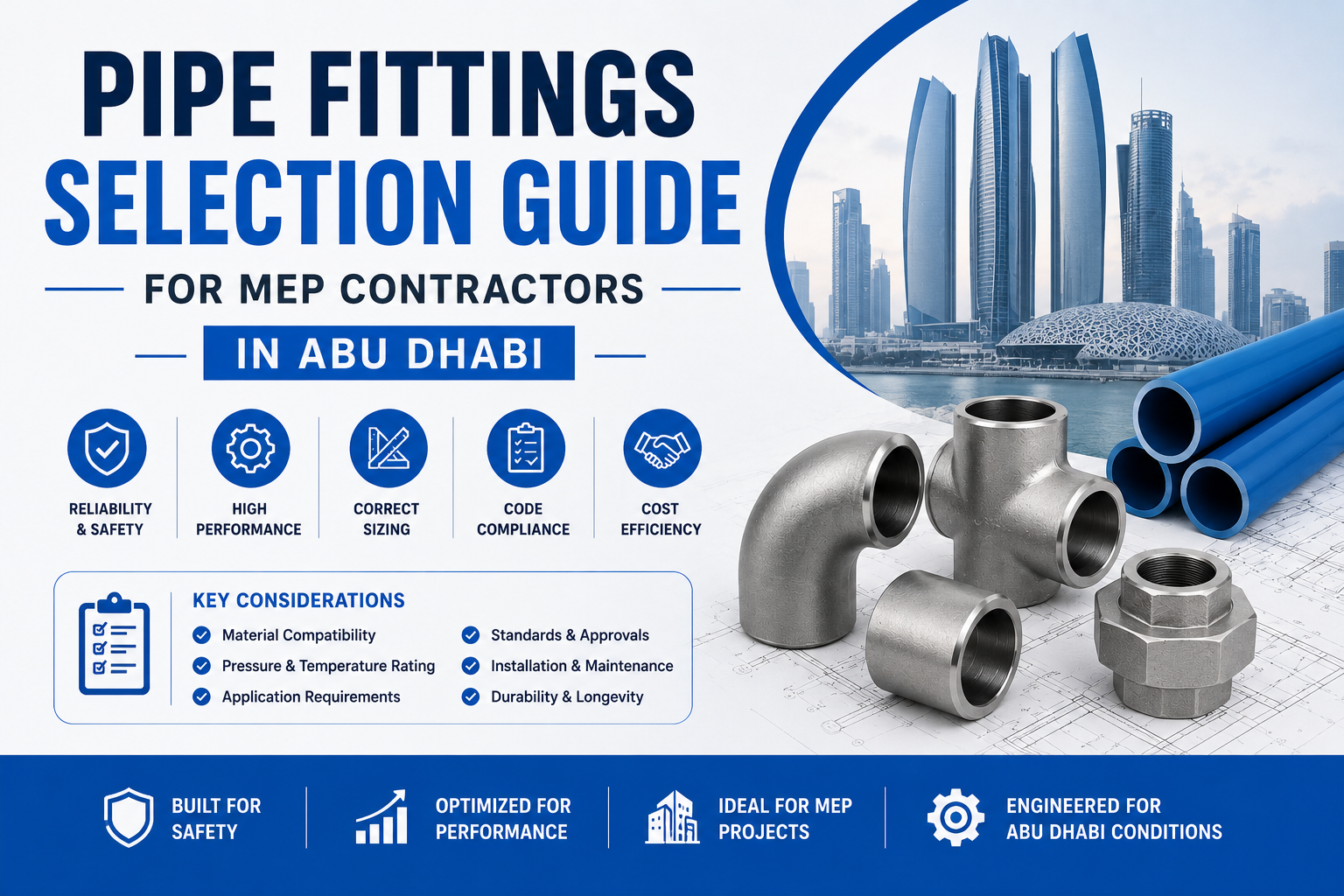
Matching fitting type to application isn’t optional on regulated projects. Client specifications for national oil companies and major EPCs typically dictate the fitting class and material by line number, leaving little room for substitution without a formal deviation request. Teams weighing MEP-adjacent packages alongside process lines may also find our pipe fittings selection guide for MEP contractors in Abu Dhabi useful for cross-checking selection criteria.
Leak-Proof Pipe Fittings for High-Pressure Systems: Design Considerations
Leak-proof pipe fittings for high-pressure systems depend on more than material selection. Joint design, weld procedure qualification, and installation practice all determine whether a fitting holds under real operating pressure.
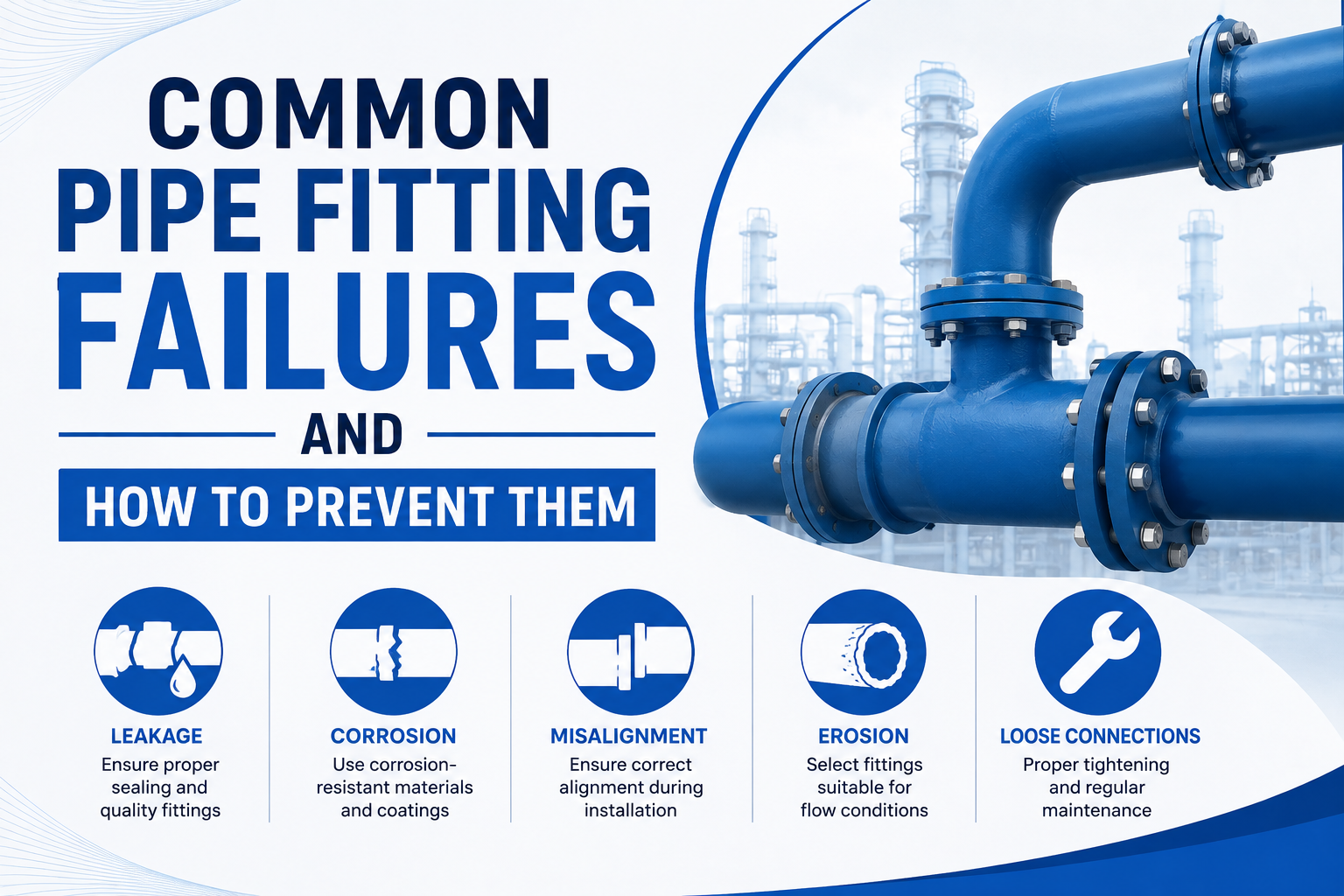
Butt-weld joints, when executed to a qualified welding procedure, offer the most reliable seal for high-pressure hydrocarbon service, since the full cross-section is fused rather than mechanically engaged. Socket-weld joints require a small expansion gap to accommodate thermal movement, and skipping this detail is a frequent cause of premature cracking, one of several common pipe fitting failures that show up during commissioning. Threaded connections, while faster to install, depend on thread engagement and sealant quality, and are rarely specified above moderate pressure for this reason.
Procurement teams reviewing fitting submittals should confirm that the manufacturer’s weld procedure specification and material test certificates are available before fittings are released to site, not after installation is already underway.
Choosing Durable Pipe Fittings for Gas Projects and Petrochemical Plants
Durable pipe fittings for gas projects need to withstand more than just pressure. Thermal cycling, vibration, and exposure to sour or corrosive media all shorten fitting life if the wrong grade is selected. A few practical guidelines help procurement and engineering teams avoid premature replacement:
- Confirm NACE MR0175 compliance for sour service lines carrying H2S
- Specify corrosion allowance on top of the calculated wall thickness for long-design-life assets
- Request impact testing certificates for low-temperature or winterized service
- Avoid mixing material grades within the same weld joint unless the transition is formally qualified
High-Pressure Pipeline Components: A Procurement Checklist
Before releasing a purchase order for high-pressure pipeline components, a short verification pass avoids the majority of site-level rejections:
- Confirm the fitting’s pressure class matches the line’s design pressure, not just its nominal size
- Verify material grade against ASTM standards and the project’s process datasheet
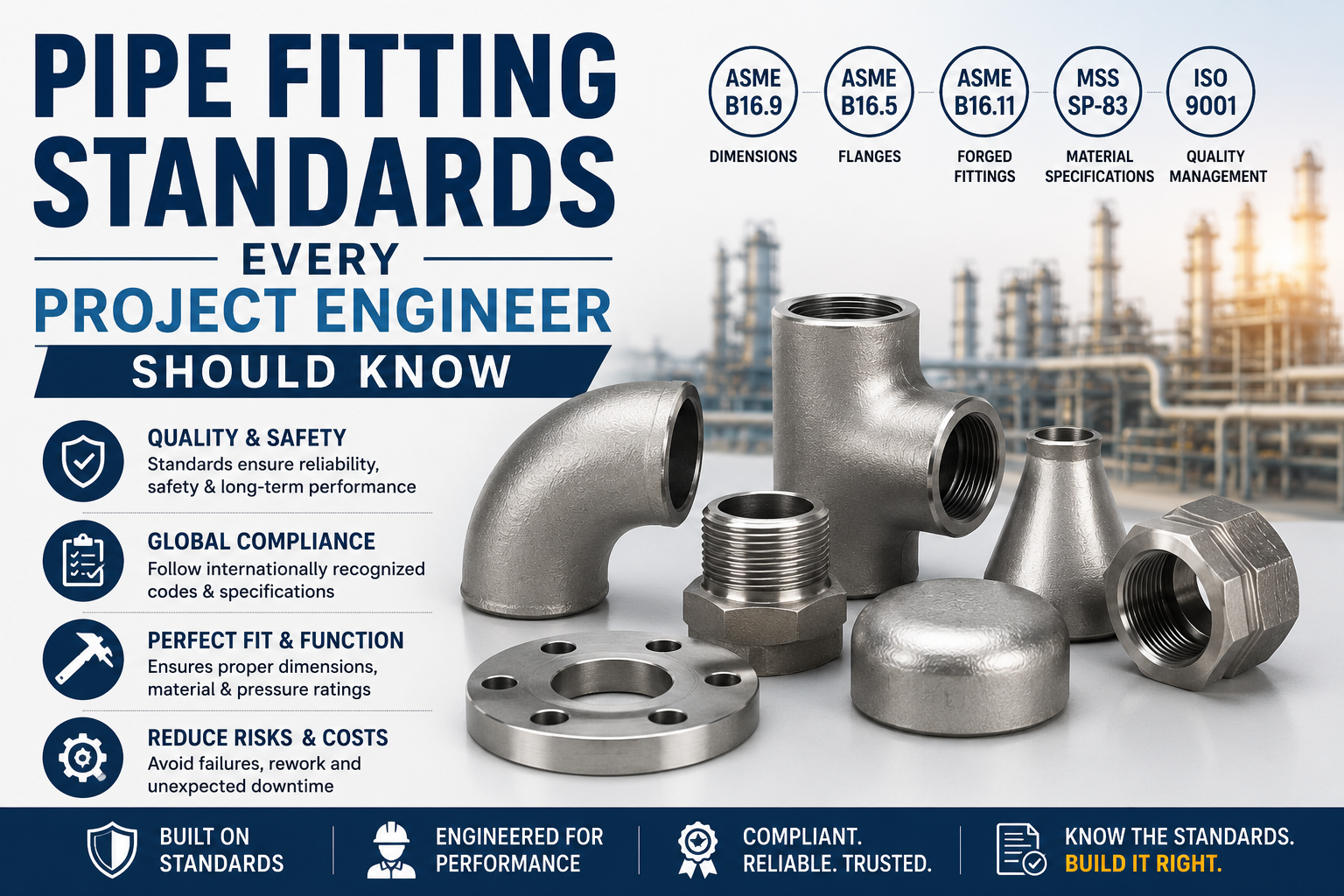
- Cross-check dimensional compliance with ASME B16.9 (butt-weld) or B16.11 (socket-weld/threaded)
- Request material test certificates and, for sour or offshore service, NACE compliance documentation
- Confirm third-party inspection requirements with the client or EPC contractor before shipment
Frequently Asked Questions
What are the best pipe fittings for high-pressure systems? Forged carbon steel, stainless steel, and duplex fittings manufactured to ASME B16.9/B16.11 dimensions and ASTM A105, A182, or A234 material grades are generally the best pipe fittings for high-pressure systems in oil & gas service.
Why are forged pipe fittings preferred for oil and gas high-pressure lines? Forging aligns the metal’s grain structure and removes porosity risk, giving forged fittings stronger, more consistent performance under cyclic pressure loading than cast alternatives.
When should stainless steel pipe fittings be used instead of carbon steel? Stainless and duplex grades are specified when corrosion resistance is critical, such as sour gas service, offshore platforms, or petrochemical processes handling aggressive chemicals.
What causes leaks in high-pressure pipe fittings? Most leaks trace back to incorrect pressure class selection, unqualified weld procedures, missed expansion gaps on socket-weld joints, or thread sealant failure on threaded connections.
Do high-pressure fittings need special certification? Yes. High-pressure and sour-service fittings typically require material test certificates, and for H2S service, NACE MR0175 compliance documentation before release to site.
Sourcing certified high-pressure pipe fittings for your next oil & gas or petrochemical project? Leema Engineering Works supplies forged, stainless steel, and duplex pipe fittings, pipes, and flanges with full material certification, serving procurement and engineering teams across Abu Dhabi and the wider UAE.
📍 Baniyas Najda Street, Al Danah, Zone 1, Abu Dhabi, United Arab Emirates 📞 +971 6 533 8167 | +971 50 425 1818 ✉️ sales@leemaeng.com