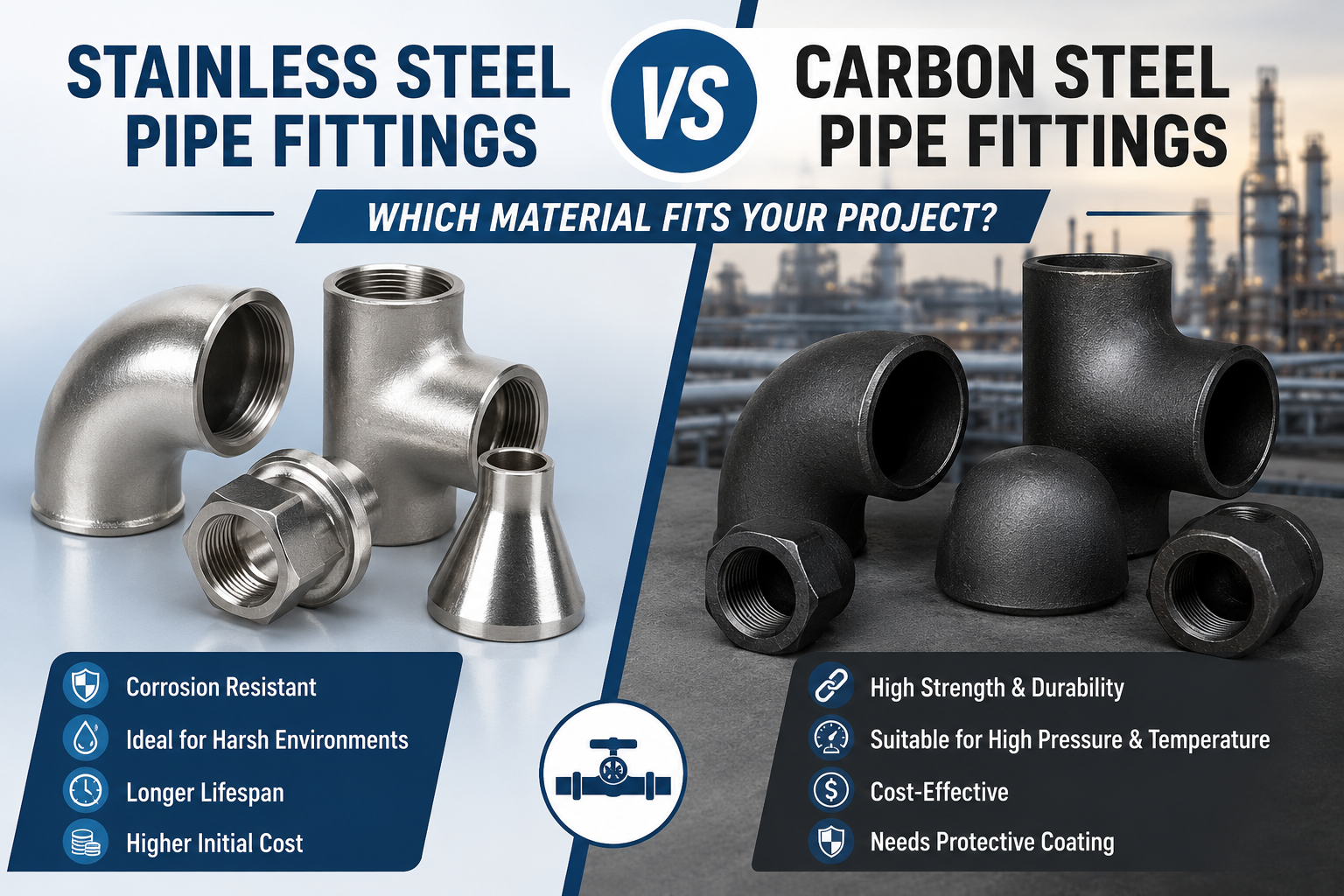
Choosing the right pipe fitting material is one of the most consequential decisions procurement managers, engineers, and contractors make on an industrial project, and getting it wrong is expensive to fix once fittings are installed. Each material performs differently under corrosion, pressure, temperature, and cost constraints.
This guide breaks down how these two materials actually compare, covering corrosion resistance, cost, durability, and pressure performance, so you can specify the right fitting material for your project in Abu Dhabi and across the UAE.
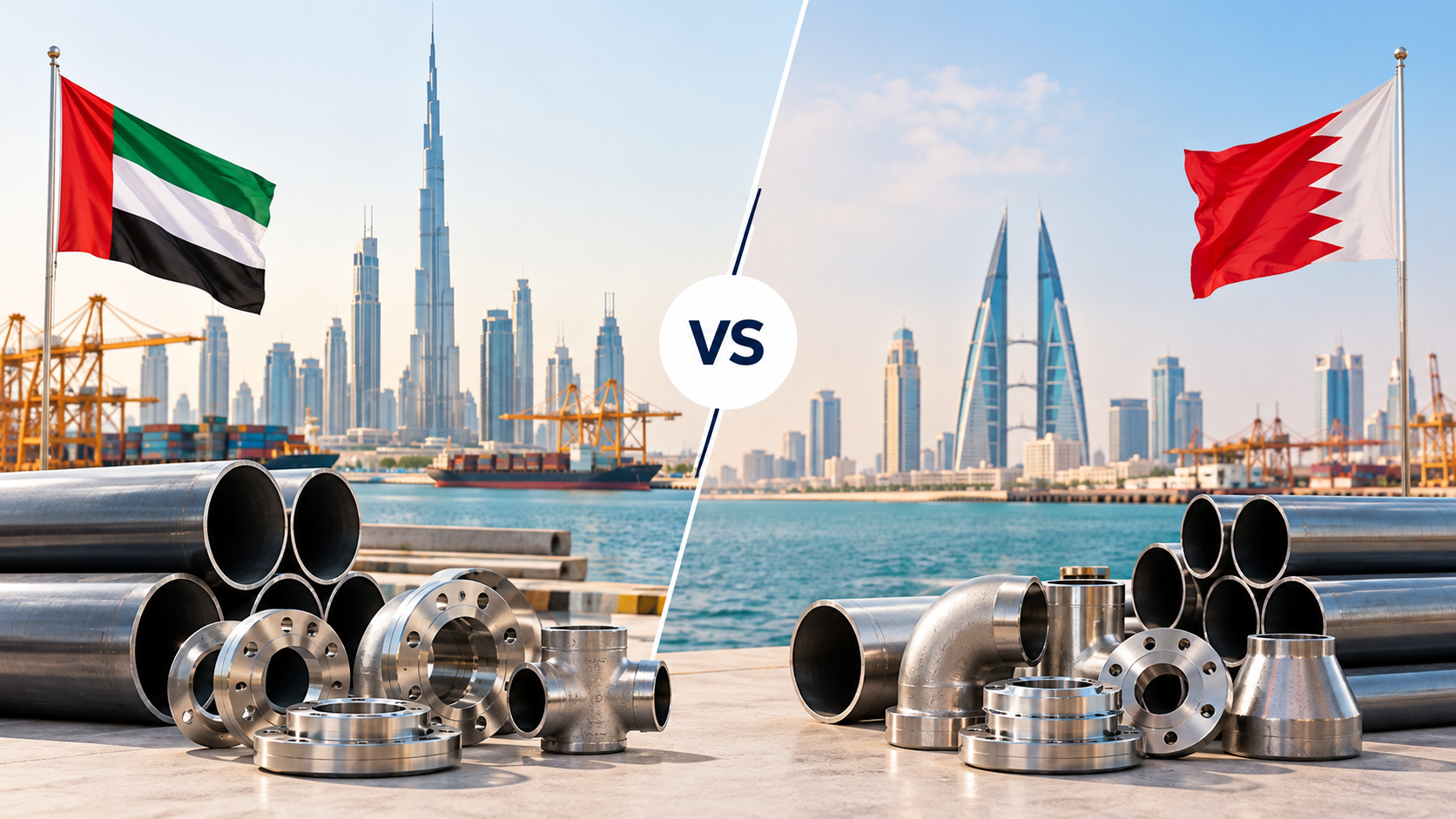
Stainless Steel Pipe Fittings vs Carbon Steel Pipe Fittings: The Core Comparison
At a fundamental level, this decision comes down to a trade-off between upfront cost and long-term performance under harsh conditions. Stainless steel fittings contain chromium, which forms a passive oxide layer that resists corrosion even in aggressive environments. Carbon steel fittings lack this protective layer, making them more vulnerable to rust and chemical attack, but they cost meaningfully less and offer strong mechanical strength for many standard applications.
Neither material is universally superior. The right choice depends on your operating environment, budget constraints, and how critical corrosion resistance is to your project’s long-term reliability.
Stainless Steel Pipe Fittings Corrosion Resistance: Why It Matters
Stainless steel pipe fittings corrosion resistance comes from chromium content, typically 10.5% or higher, which forms a thin, self-healing oxide layer on the metal’s surface. This layer regenerates automatically if scratched or damaged, giving stainless steel a genuine advantage in environments with moisture, chemicals, or salt exposure.
For projects in Abu Dhabi and across the UAE, this matters considerably given the region’s high humidity, coastal proximity, and exposure to sand and dust that can accelerate corrosion on unprotected metal. Facilities near the coast or handling corrosive process fluids typically see meaningfully longer service life from stainless steel fittings compared to carbon steel alternatives.
Carbon Steel Pipe Fittings Cost: The Budget Advantage
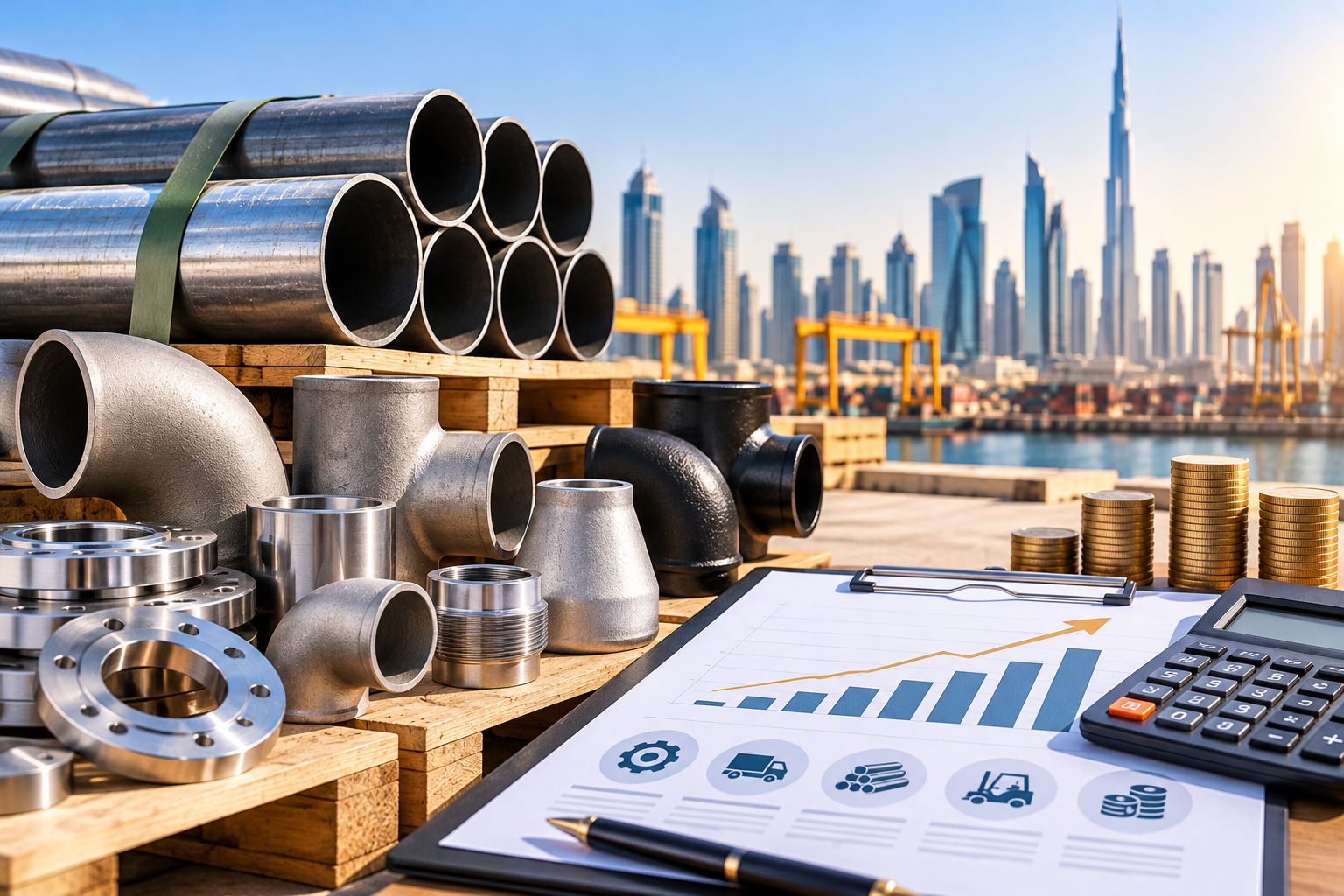
Carbon steel pipe fittings cost significantly less than stainless steel equivalents, often 30-50% lower depending on grade and fitting type, making them the default choice for projects where budget constraints outweigh corrosion concerns. This cost advantage compounds across large industrial projects requiring hundreds or thousands of fittings.
For applications where fittings won’t face significant moisture or chemical exposure, carbon steel delivers strong mechanical performance at a fraction of the stainless steel price.
Difference Between Stainless and Carbon Steel Fittings: Composition
The core difference between stainless and carbon steel fittings comes down to chromium content and resulting material properties. Stainless steel typically contains at least 10.5% chromium along with varying amounts of nickel and molybdenum depending on grade. Carbon steel contains primarily iron and carbon, resulting in a harder but more corrosion-prone material.
This compositional difference affects weldability, machinability, and temperature tolerance over the fitting’s service life.
Best Pipe Fitting Material for Industrial Use
The best pipe fitting material for industrial use depends heavily on the specific application. Chemical processing, food and beverage, pharmaceutical, and marine applications typically favor stainless steel given corrosion-sensitive requirements. Standard construction and structural applications without significant corrosion exposure often favor carbon steel for cost efficiency.
Our pipe fittings selection guide covers this decision framework across HVAC, plumbing, and industrial applications in more depth.
Stainless Steel Fittings for Oil and Gas
Stainless steel fittings for oil and gas applications are frequently specified given the industry’s exposure to corrosive process fluids, high pressure, and demanding operating conditions. Sour gas environments containing hydrogen sulfide require specific stainless steel grades engineered to resist sulfide stress cracking, a failure mode standard carbon steel handles poorly.
Given Abu Dhabi’s position as a major oil and gas hub, this application-specific material selection carries particular weight for procurement teams sourcing fittings for upstream and midstream projects across the region.
Carbon Steel Fittings Durability: What to Expect
Carbon steel fittings durability performs well in dry, low-corrosion environments, offering solid mechanical strength for structural and general industrial applications. In humid or chemically aggressive conditions, however, carbon steel fittings typically require protective coatings or regular maintenance to prevent premature rust.
Without proper protective coating, carbon steel fittings in Abu Dhabi’s climate can show meaningful corrosion within a shorter timeframe than comparable stainless steel installations.
Pipe Fitting Material Comparison: Weighing the Trade-Offs
A practical pipe fitting material comparison should weigh several factors together:
- Corrosion resistance: Stainless steel significantly outperforms carbon steel in humid, coastal, or chemically exposed environments
- Upfront cost: Carbon steel typically costs 30-50% less than comparable stainless steel fittings
- Long-term maintenance: Carbon steel often requires coatings or more frequent replacement in corrosive conditions, adding to lifecycle cost
- Temperature tolerance: Certain stainless steel grades handle higher temperatures more reliably than standard carbon steel
Stainless vs Carbon Steel Fittings Pressure Rating
Stainless vs carbon steel fittings pressure rating comparisons depend heavily on the specific grade and schedule selected rather than the base material alone. Both materials are manufactured to meet the same ASME and ASTM pressure class standards, meaning a properly specified fitting in either material can meet identical pressure requirements.
The practical difference emerges over time: carbon steel fittings in corrosive conditions can experience wall thickness reduction from corrosion, gradually compromising their effective pressure rating in ways stainless steel typically resists far longer.
Which Pipe Fitting Material Lasts Longer
Which pipe fitting material lasts longer depends entirely on operating environment, but in most real-world industrial conditions involving moisture, chemical exposure, or coastal climate, stainless steel fittings meaningfully outlast carbon steel equivalents. In fully dry, indoor, low-corrosion environments, the gap narrows considerably, and carbon steel can perform reliably for decades.
Industrial Pipe Fittings Material Guide: Making Your Decision
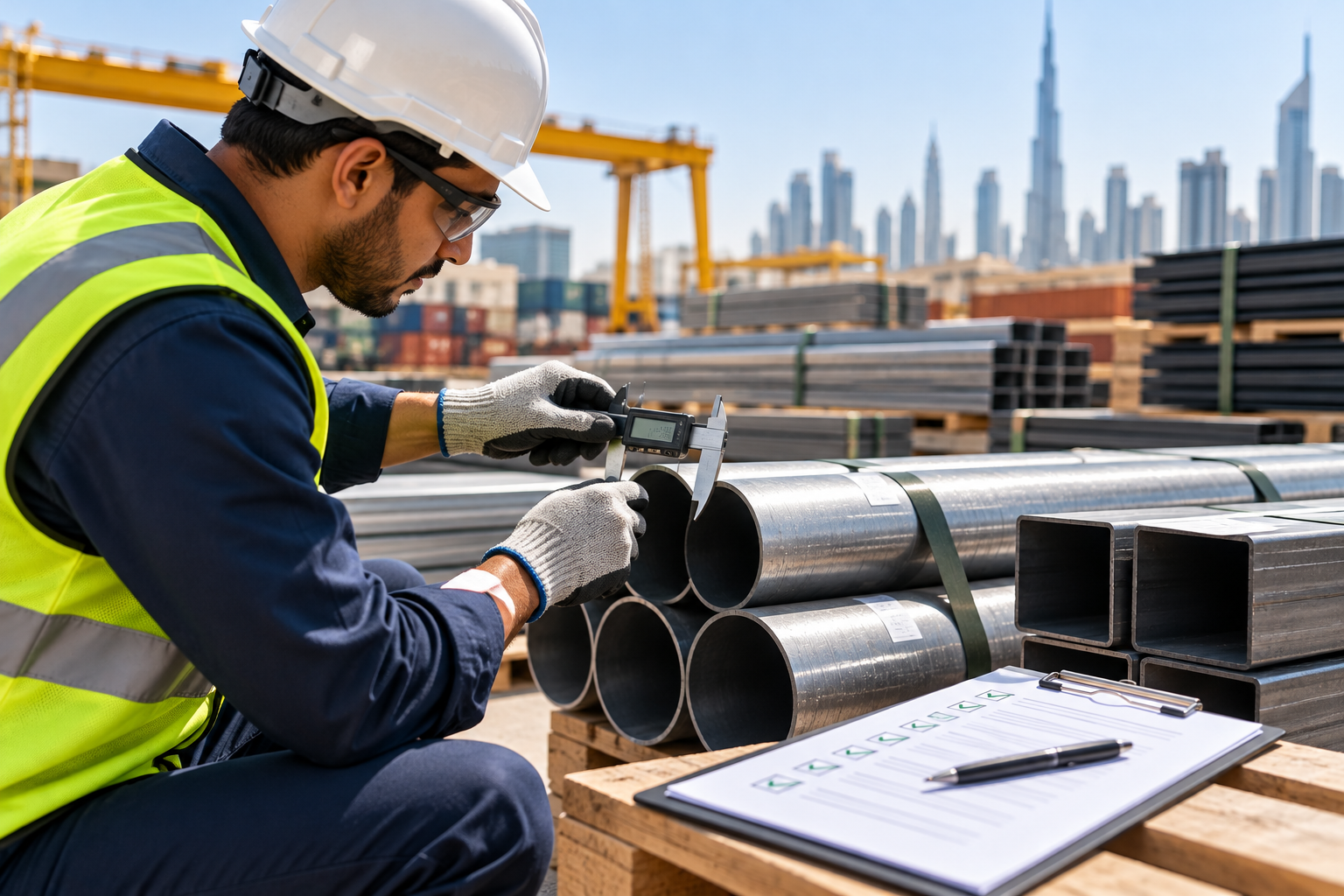
An industrial pipe fittings material guide worth following comes down to a structured evaluation: assess your operating environment’s corrosion exposure, calculate total lifecycle cost rather than just upfront price, confirm pressure and temperature requirements against the correct grade, and consult a supplier who can provide certified material data sheets.
For projects involving weld connections, our comparison of butt weld versus socket weld fittings covers another critical decision worth understanding alongside material choice. If you’re weighing broader failure risks, our guide on common pipe fitting failures and how to prevent them is worth reviewing before finalizing specifications.
Leema Engineering Works supplies both stainless steel and carbon steel pipe fittings, sourced from certified manufacturers, to contractors across Abu Dhabi, Sharjah, Dubai, and the wider UAE. For sector-specific requirements, our oil and gas industry page covers material specifications relevant to that sector. Explore our full range on the Leema Engineering home page, or contact our team directly to discuss the right material for your project.
Frequently Asked Questions
Is stainless steel always better than carbon steel for pipe fittings?
Not necessarily. Stainless steel offers superior corrosion resistance, but carbon steel remains a cost-effective, reliable choice for dry, low-corrosion applications where budget matters more than long-term corrosion performance.
How much more expensive is stainless steel compared to carbon steel fittings?
Stainless steel fittings typically cost 30-50% more than comparable carbon steel fittings, though the exact premium varies by grade, size, and fitting type.
Can carbon steel fittings be used in humid or coastal environments like Abu Dhabi?
Yes, but they typically require protective coatings and more frequent maintenance to prevent premature corrosion compared to stainless steel in the same conditions.
What stainless steel grade is best for oil and gas applications?
This depends on the specific process conditions, particularly whether sour gas or hydrogen sulfide exposure is present, which requires specific corrosion-resistant grades your supplier can help specify.
Do stainless steel and carbon steel fittings meet the same pressure ratings?
Yes, both materials can meet identical ASME and ASTM pressure class standards when properly specified, though carbon steel’s effective rating can degrade over time in corrosive conditions.
Ready to Specify the Right Pipe Fittings for Your Project?
Whether your project calls for stainless steel, carbon steel, or a combination of both, Leema Engineering Works supplies certified pipe fittings backed by full material documentation for industrial projects across the UAE.
Location – Abu Dhabi: Baniyas Najda Street – Al Danah – Zone 1 – Abu Dhabi
Phone: +971 6 533 8167, +971 50 425 1818
Email: sales@leemaeng.com